@visegrad24: THE MUSLIM BROTHERHOOD’S 40-YE...
@visegrad24
12 views
Jun 11, 2026
Advertisement
1
THE MUSLIM BROTHERHOOD’S 40-YEAR STRATEGY INSIDE FRANCE
Designated as a terrorist organization by Egypt, Saudi Arabia, the UAE, and Bahrain, the Muslim Brotherhood spent decades building influence not in the Arab world, but inside Europe.
Backed politically and financially by networks tied to Qatar and Turkey, the Brotherhood quietly expanded through mosques, schools, charities, NGOs, youth organizations, and local politics across France.
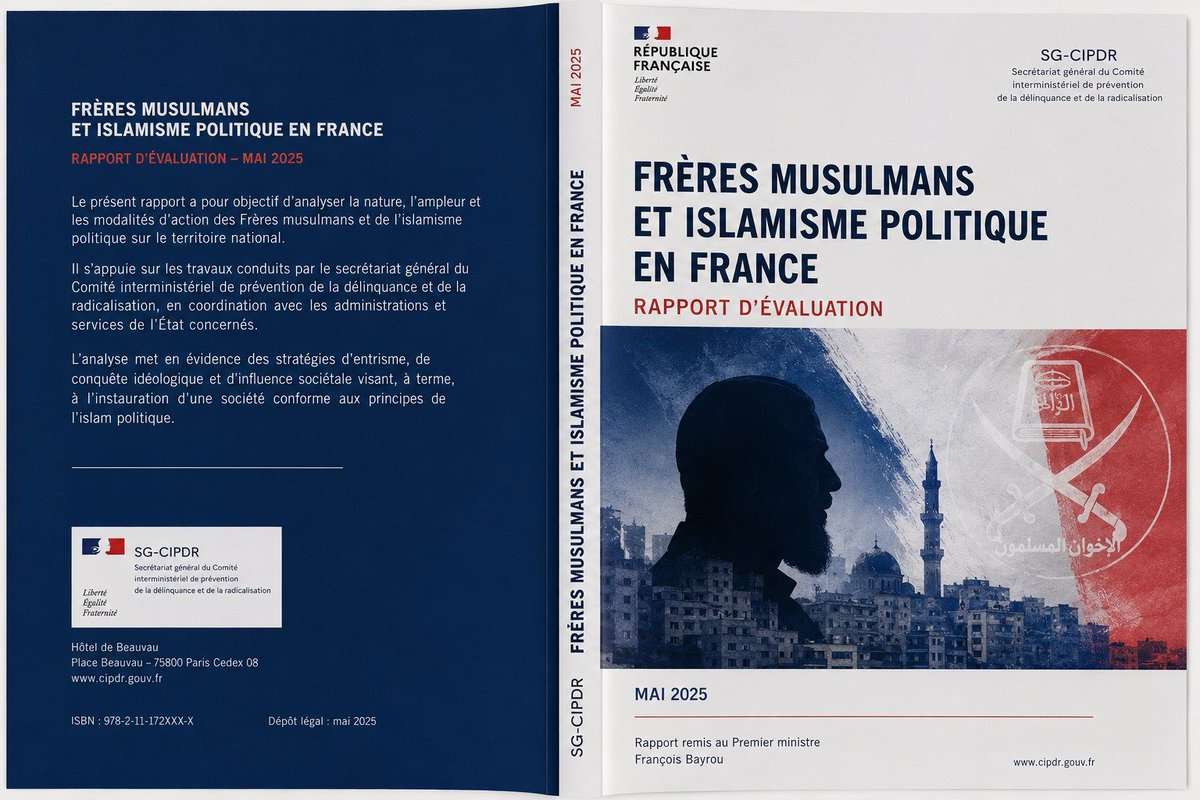
In May 2025, a French government-commissioned report dropped a warning that shocked the country: the Brotherhood had spent decades constructing ideological “ecosystems” capable of reshaping parts of French society from within.
This thread breaks down the strategies the Muslim Brotherhood uses to try to take over France.
🧵 1/11
Designated as a terrorist organization by Egypt, Saudi Arabia, the UAE, and Bahrain, the Muslim Brotherhood spent decades building influence not in the Arab world, but inside Europe.
Backed politically and financially by networks tied to Qatar and Turkey, the Brotherhood quietly expanded through mosques, schools, charities, NGOs, youth organizations, and local politics across France.
In May 2025, a French government-commissioned report dropped a warning that shocked the country: the Brotherhood had spent decades constructing ideological “ecosystems” capable of reshaping parts of French society from within.
This thread breaks down the strategies the Muslim Brotherhood uses to try to take over France.
🧵 1/11

2
HOW THE MUSLIM BROTHERHOOD BUILDS LOYALTY IN FRANCE
According to the report, Brotherhood-linked influence in France rarely begins with ideology or radical preaching. It begins through local community structures operating in neighborhoods where distrust of institutions, unemployment, isolation, and weak state presence have existed for years.
The report describes networks built around youth sports clubs in Seine-Saint-Denis, tutoring associations in Lille, mosque-linked charities distributing food during Ramadan in Marseille, mentorship circles, Quran classes, and job assistance programs that provide practical support and a sense of belonging long before politics openly enters the picture.
French authorities argue that by the time religion or ideology becomes central, the individual is already socially embedded inside the ecosystem through friends, mentors, routines, and community identity, creating long-term loyalty that is far more difficult to break than direct radicalization.
🧵 2/11
According to the report, Brotherhood-linked influence in France rarely begins with ideology or radical preaching. It begins through local community structures operating in neighborhoods where distrust of institutions, unemployment, isolation, and weak state presence have existed for years.
The report describes networks built around youth sports clubs in Seine-Saint-Denis, tutoring associations in Lille, mosque-linked charities distributing food during Ramadan in Marseille, mentorship circles, Quran classes, and job assistance programs that provide practical support and a sense of belonging long before politics openly enters the picture.
French authorities argue that by the time religion or ideology becomes central, the individual is already socially embedded inside the ecosystem through friends, mentors, routines, and community identity, creating long-term loyalty that is far more difficult to break than direct radicalization.
🧵 2/11
3
HOW “ISLAMIC ECOSYSTEMS” EXPANDED ACROSS FRANCE
The report repeatedly uses the word “ecosystems” to describe Brotherhood-linked networks operating across parts of France. The concern is not one mosque or one association in isolation, but interconnected structures that reinforce each other socially, financially, educationally, and politically.
A mosque connects to a tutoring center. The tutoring center connects to a youth association. The youth association receives municipal funding. The same network then organizes conferences, charity drives, Quran classes, women’s groups, and community outreach programs under different names but within the same ideological sphere.
These ecosystems become self-sustaining because every institution feeds the others, making the network far more resilient and influential than any single organization alone.
🧵 3/11
The report repeatedly uses the word “ecosystems” to describe Brotherhood-linked networks operating across parts of France. The concern is not one mosque or one association in isolation, but interconnected structures that reinforce each other socially, financially, educationally, and politically.
A mosque connects to a tutoring center. The tutoring center connects to a youth association. The youth association receives municipal funding. The same network then organizes conferences, charity drives, Quran classes, women’s groups, and community outreach programs under different names but within the same ideological sphere.
These ecosystems become self-sustaining because every institution feeds the others, making the network far more resilient and influential than any single organization alone.
🧵 3/11

4
HOW THE MUSLIM BROTHERHOOD BUILDS PARALLEL SOCIAL AUTHORITY
Brotherhood-linked ecosystems do more than provide religious guidance. In some neighborhoods, they increasingly function as parallel social authority structures operating beside the French state.
The report describes environments where local pressure shapes behavior without formal enforcement: women discouraged from appearing unveiled, businesses quietly adapting to religious expectations, social isolation targeting those who reject community norms, and young people pressured to prioritize religious identity over integration into broader French society.
🧵 4/11
Brotherhood-linked ecosystems do more than provide religious guidance. In some neighborhoods, they increasingly function as parallel social authority structures operating beside the French state.
The report describes environments where local pressure shapes behavior without formal enforcement: women discouraged from appearing unveiled, businesses quietly adapting to religious expectations, social isolation targeting those who reject community norms, and young people pressured to prioritize religious identity over integration into broader French society.
🧵 4/11

5
“ENTRYISM”: HOW THE MUSLIM BROTHERHOOD INFILTRATED FRENCH INSTITUTIONS
The French report uses a precise term for the next stage: “entryism,” the gradual placement of Brotherhood-linked individuals inside democratic institutions, municipal structures, NGOs, advisory councils, school systems, and publicly funded associations.
This strategy does not resemble a visible takeover. It looks like ordinary civic participation. A local activist runs for a school board. A mosque-linked association applies for public grants. A community figure joins a municipal committee on youth issues or housing policy.
The objective is long-term institutional influence achieved quietly through bureaucracy, local politics, public funding, and strategic positioning inside the structures of the Republic itself.
🧵 5/11
The French report uses a precise term for the next stage: “entryism,” the gradual placement of Brotherhood-linked individuals inside democratic institutions, municipal structures, NGOs, advisory councils, school systems, and publicly funded associations.
This strategy does not resemble a visible takeover. It looks like ordinary civic participation. A local activist runs for a school board. A mosque-linked association applies for public grants. A community figure joins a municipal committee on youth issues or housing policy.
The objective is long-term institutional influence achieved quietly through bureaucracy, local politics, public funding, and strategic positioning inside the structures of the Republic itself.
🧵 5/11
6
THE SECRET ISLAMIST STRUCTURE OPERATING ACROSS EUROPE
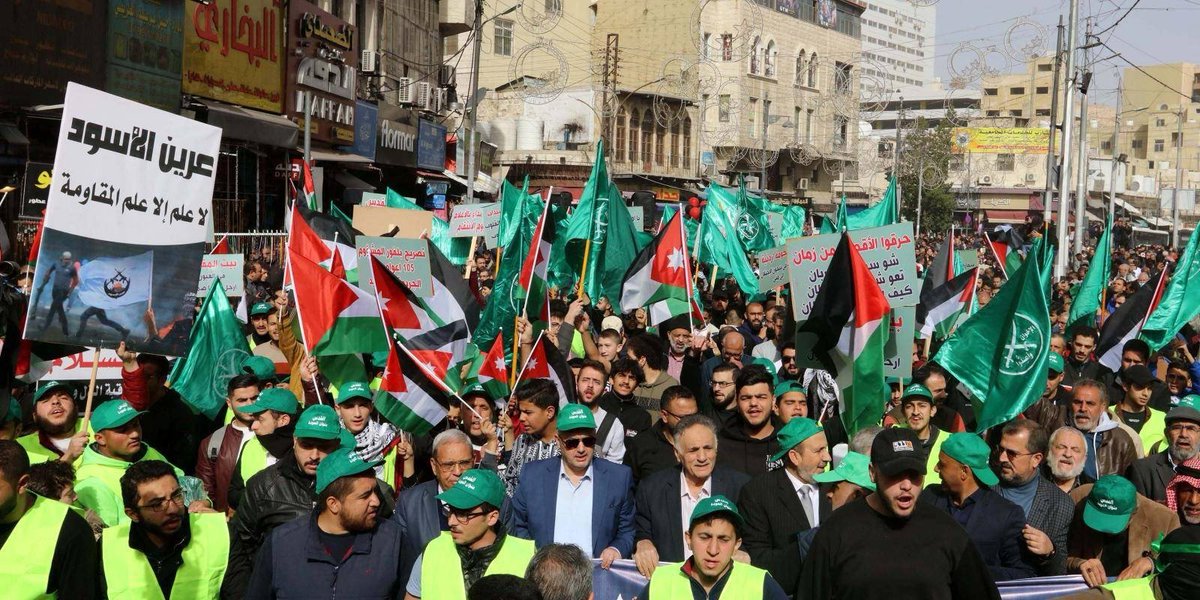
The document describes what it calls a “restricted circle” made up of sworn members operating through a hierarchical system inspired by the original Egyptian Brotherhood model. Recruits pass through multiple stages of vetting, ideological formation, and loyalty-building before entering the organization’s inner structure.
The report also references “halaqa” circles, private meetings, background checks on recruits, and loyalty oaths to senior leadership, arguing that beneath the public-facing charities, schools, and associations exists a far more disciplined organizational network operating discreetly across Europe.
🧵 6/11
The document describes what it calls a “restricted circle” made up of sworn members operating through a hierarchical system inspired by the original Egyptian Brotherhood model. Recruits pass through multiple stages of vetting, ideological formation, and loyalty-building before entering the organization’s inner structure.
The report also references “halaqa” circles, private meetings, background checks on recruits, and loyalty oaths to senior leadership, arguing that beneath the public-facing charities, schools, and associations exists a far more disciplined organizational network operating discreetly across Europe.
🧵 6/11

7
HOW FOREIGN MONEY FLOWS INTO FRENCH ISLAMIST NETWORKS
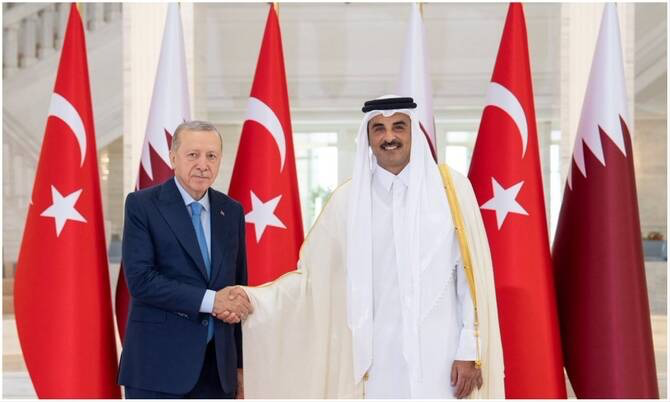
The French report repeatedly points toward Turkey and Qatar as the two most important foreign actors connected to Brotherhood-linked influence networks in Europe.
Turkey operates through the Diyanet, the Turkish state’s religious authority, which appoints imams, funds mosques, and distributes sermons across parts of the Turkish diaspora in France. This gives Ankara long-term ideological influence inside French territory through religious infrastructure.
Qatar’s role is primarily financial. French authorities examined funding linked to mosque projects, Islamic centers, educational institutions, and organizations associated with Brotherhood-aligned figures in Strasbourg, Lille, Marseille, and the Paris suburbs, including projects tied to Qatar Charity and institutions linked to imam training.
🧵 7/11
The French report repeatedly points toward Turkey and Qatar as the two most important foreign actors connected to Brotherhood-linked influence networks in Europe.
Turkey operates through the Diyanet, the Turkish state’s religious authority, which appoints imams, funds mosques, and distributes sermons across parts of the Turkish diaspora in France. This gives Ankara long-term ideological influence inside French territory through religious infrastructure.
Qatar’s role is primarily financial. French authorities examined funding linked to mosque projects, Islamic centers, educational institutions, and organizations associated with Brotherhood-aligned figures in Strasbourg, Lille, Marseille, and the Paris suburbs, including projects tied to Qatar Charity and institutions linked to imam training.
🧵 7/11
8
HOW POLITICAL ISLAM PENETRATED FRENCH POLITICS USING TAXPAYER MONEY
Brotherhood-linked influence increasingly overlaps with local politics in parts of France, particularly through publicly funded associations, municipal partnerships, and activist networks.
One of the cases that intensified scrutiny came in Colombes in 2025, where prosecutors opened an investigation into a senior municipal official over allegations involving money laundering, conflicts of interest, and suspected links between public funding and Brotherhood-connected youth organizations.
The report also references broader concerns about municipalities funding associations later accused of promoting separatist or Islamist ideology, often under the banner of anti-discrimination work, youth outreach, or community engagement.
🧵 8/11
Brotherhood-linked influence increasingly overlaps with local politics in parts of France, particularly through publicly funded associations, municipal partnerships, and activist networks.
One of the cases that intensified scrutiny came in Colombes in 2025, where prosecutors opened an investigation into a senior municipal official over allegations involving money laundering, conflicts of interest, and suspected links between public funding and Brotherhood-connected youth organizations.
The report also references broader concerns about municipalities funding associations later accused of promoting separatist or Islamist ideology, often under the banner of anti-discrimination work, youth outreach, or community engagement.
🧵 8/11

9
HOW “ISLAMOPHOBIA” BECAME A POLITICAL WEAPON IN FRANCE
The French report argues that accusations of “Islamophobia” can sometimes be used strategically to discourage scrutiny of Islamist activism and Brotherhood-linked networks.
Politicians, journalists, teachers, and local officials increasingly fear being publicly labeled racist or anti-Muslim if they investigate mosque networks, Quran schools, community associations, or ideological activism tied to political Islam.
The report specifically references organizations and activists accused by critics of blurring the line between defending Muslims against genuine discrimination and shielding Islamist movements from political scrutiny, one of the most explosive and divisive debates in modern France.
🧵 9/11
The French report argues that accusations of “Islamophobia” can sometimes be used strategically to discourage scrutiny of Islamist activism and Brotherhood-linked networks.
Politicians, journalists, teachers, and local officials increasingly fear being publicly labeled racist or anti-Muslim if they investigate mosque networks, Quran schools, community associations, or ideological activism tied to political Islam.
The report specifically references organizations and activists accused by critics of blurring the line between defending Muslims against genuine discrimination and shielding Islamist movements from political scrutiny, one of the most explosive and divisive debates in modern France.
🧵 9/11

10
MACRON READ THE REPORT. FRANCE STILL DID NOTHING.
When the report landed on Macron’s desk in the autumn of 2024, it described what French authorities believed was a decades-long expansion of Brotherhood-linked influence networks backed by Ankara and Doha through mosques, schools, charities, activist organizations, and local political structures across France.
Yet despite the seriousness of the findings, no immediate ban followed.
After the report leaked publicly in 2025, Macron ordered ministers to prepare “new proposals” for a follow-up security council meeting, but the discussions produced no sweeping crackdown on Brotherhood-linked organizations or foreign funding pipelines.
Critics inside France, including MEP Guillaume Peltier, openly questioned whether political caution, electoral calculations, and fear of backlash had paralyzed the French state even after its own report warned about the scale of the network operating inside the country.
🧵 10/11
When the report landed on Macron’s desk in the autumn of 2024, it described what French authorities believed was a decades-long expansion of Brotherhood-linked influence networks backed by Ankara and Doha through mosques, schools, charities, activist organizations, and local political structures across France.
Yet despite the seriousness of the findings, no immediate ban followed.
After the report leaked publicly in 2025, Macron ordered ministers to prepare “new proposals” for a follow-up security council meeting, but the discussions produced no sweeping crackdown on Brotherhood-linked organizations or foreign funding pipelines.
Critics inside France, including MEP Guillaume Peltier, openly questioned whether political caution, electoral calculations, and fear of backlash had paralyzed the French state even after its own report warned about the scale of the network operating inside the country.
🧵 10/11

11
10. IS EUROPE LOSING CONTROL TO POLITICAL ISLAM?
The report ultimately argues that the Brotherhood’s strategy in Europe is not based on terrorism or sudden revolution, but on long-term ideological influence built patiently through education, local activism, foreign funding, religious infrastructure, social pressure, and institutional presence.
The report explicitly warns that similar networks and structures exist beyond France, naming Belgium, Germany, Austria, Sweden, the Netherlands, and the United Kingdom as countries where Brotherhood-linked organizations have established significant influence.
🧵 11/11
The report ultimately argues that the Brotherhood’s strategy in Europe is not based on terrorism or sudden revolution, but on long-term ideological influence built patiently through education, local activism, foreign funding, religious infrastructure, social pressure, and institutional presence.
The report explicitly warns that similar networks and structures exist beyond France, naming Belgium, Germany, Austria, Sweden, the Netherlands, and the United Kingdom as countries where Brotherhood-linked organizations have established significant influence.
🧵 11/11
