@guy_laron: 1. The debate over the Strait ...
@guy_laron
10 views
Jun 11, 2026
Advertisement
1
1. The debate over the Strait of Hormuz chokepoint is stuck in economic metrics. Analysts are obsessed with volume, counting lost barrels. But as a historian, I argue they are missing the real geopolitical currency of a crisis: Strategic Duration. 🧵
2
2. The @Kpler data is indeed brutal. Gulf crude exports are still running at 10–20% of pre-crisis volumes.

3
@Kpler 3. However, the shadow fleet the @FT has been documenting - dark transits, ship-to-ship transfers, vessels hugging the Omani coast - isn't restoring normality. It's preventing collapse and buying time. ft.com/content/314501…
4
@Kpler @FT 4. Both readings of the data are right. Hormuz remains dramatically impaired. And yet ~70 commercial vessels moved in a single three-week stretch under covert US air cover. This is what the Trump admin has called Project Freedom. nytimes.com/2026/05/31/bus…
5
@Kpler @FT 5. By methodically taking out Iranian naval radars in the last few days, the U.S. effectively blindfolded the IRGC, opening a tactical window for these dark transits. npr.org/2026/06/10/nx-…
6
@Kpler @FT 6. The U.S. Navy at the Straits of Hormuz supplies a shadow routing service, whispering coordinates to captains to evade mines and IRGC fast boats. financialpost.com/pmn/business-p…
7
@Kpler @FT 7. Does this shadow system restore 100% of normal capacity? Absolutely not. But measuring a workaround solely by volume misses the point. This is where economic models fail, and military history illuminates.
8
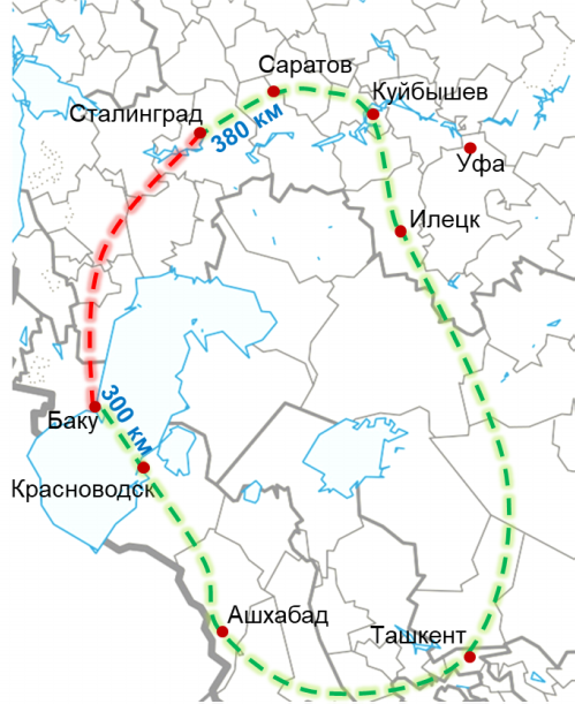
@Kpler @FT 8. Think of Stalingrad in 1942. The Soviet fleet on the Volga or the trains in Central Asia bringing oil to that huge refinery at Saratov couldn't bring Baku oil to Stalingrad at pre-war capacity.
9
@Kpler @FT 9. But they didn't need to. In military logistics, a workaround doesn't need to achieve market equilibrium; it just needs to move enough critical mass to prevent collapse. Each barrel smuggled into Stalingrad bought Zhukov another week to plan Operation Uranus.

10
@Kpler @FT 10. Operation Project Freedom works along the same logic in maritime form. It's not restoring flows. It's not defeating Iran's blockade. It just keeping enough crude moving to prevent total market panic while the slower adaptation mechanisms ramp up.
11
@Kpler @FT 11. Every tanker that slips out drains Iranian leverage, calms market panic, and keeps oil below $100. It buys time for the structural fixes to kick in.
View Tweet
12
@Kpler @FT 12. And ramp they are. US shale at ~13.5 mb/d with swing capacity. Brazil is pushing past 4 mb/d. Guyana toward 1.3 mb/d. Venezuela heading toward 1.3–1.5+ mb/d medium term. The Americas are quietly redrawing the global supply map.
13
@Kpler @FT 13 In 1944, the legendary American geologist Everette Lee DeGolyer wrote a historic memo declaring that the "center of gravity" of world oil production was shifting from the Gulf-Caribbean area to the Persian Gulf.

14
@Kpler @FT 14. Today, this crisis is redrawing the map once again. We are witnessing another tectonic shift: the center of gravity is moving from the Persian Gulf back to the Americas.

15
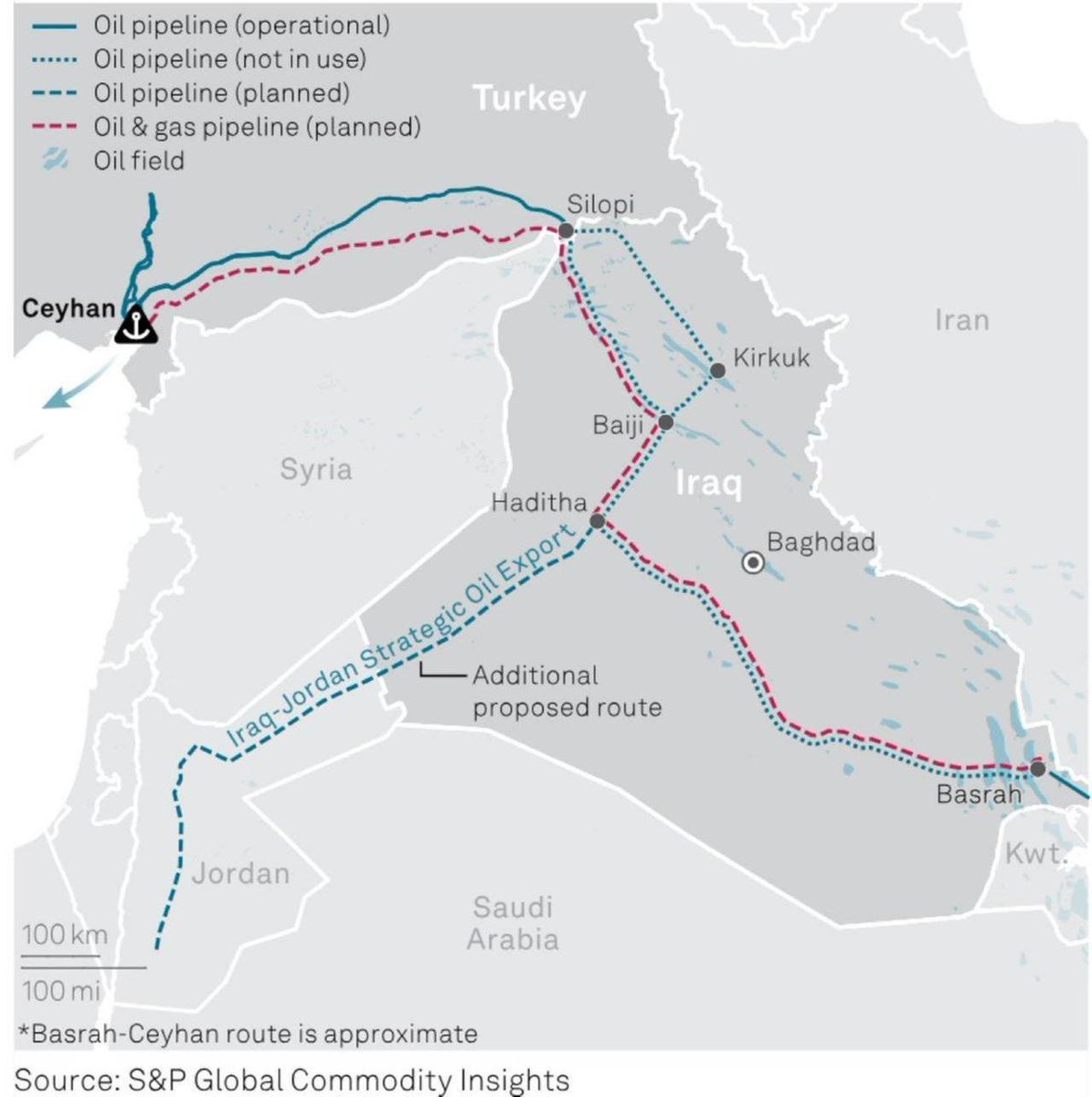
@Kpler @FT 15. Other fixes to the Hormuz Crisis in the pipeline: pipelines! Ones that bypass the Strait. UAE's Habshan–Fujairah will double to ~3.6 mb/d by 2027. Saudi East–West already at maximum throughput.
16
@Kpler @FT 16. Iraq's Basra–Haditha line moving from talk to construction. Kuwait is in active negotiations with Riyadh and Abu Dhabi to connect to their pipeline network.
17
@Kpler @FT 17. Demand-side adaptation matters too. Asian coal use increases. Accelerated nuclear buildup timelines. None of the fixes above is instant. But they are within a 24-36 month horizon. That's the time window Project Freedom could purchase.
18
@Kpler @FT 18. Meanwhile, Iran's own oil exports have collapsed. The Hormuz weapon, once fired, hurts the firer most. Tehran wagered that chokepoint pain would force concessions. Instead, it triggered a global reshuffling that will erode its leverage.
19
@Kpler @FT 19. In short, the shadow fleet that the U.S. moves through the Strait of Hormuz is a holding action while adaptation kicks in.