@BowTiedCocoon: In this thread you'll learn:...
@BowTiedCocoon
6 views
May 11, 2026
Advertisement
1
In this thread you'll learn:
✅ How to redirect the room before you've finished saying your name
✅ The 6 sentences that make a hiring manager fight for you
✅ How to surface the real objection while you're still in the room
✅ How to redirect the room before you've finished saying your name
✅ The 6 sentences that make a hiring manager fight for you
✅ How to surface the real objection while you're still in the room
2
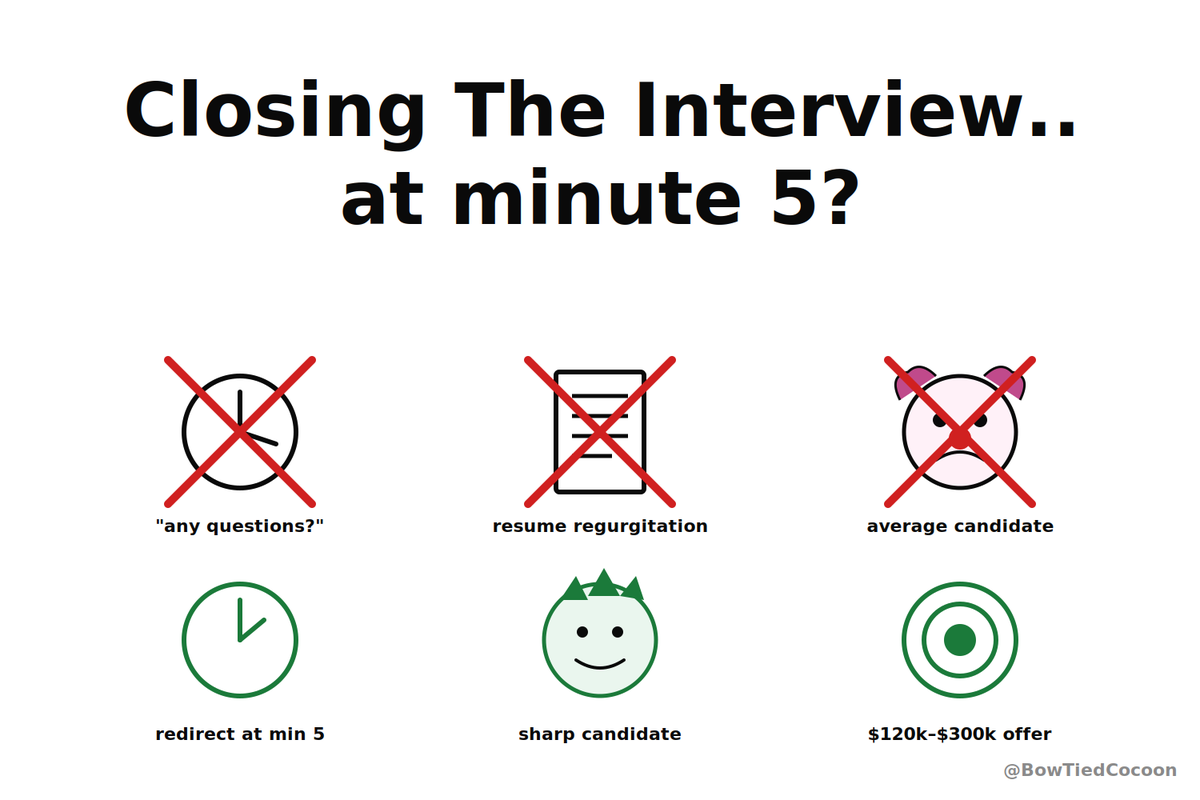
Here's what a typical interview looks like.
"Tell me about yourself" → 3 minutes of resume vomit → 25 minutes of behaviroal Q&A → "any questions for us?" at the end.
Not a single move from the candidate to steer the room.
This is a terrible setup because:
- The Hiring Manager (HM) already made their call around minute 15
- You have zero leverage (you're the one being graded)
- The "real" conversation never happens
"Tell me about yourself" → 3 minutes of resume vomit → 25 minutes of behaviroal Q&A → "any questions for us?" at the end.
Not a single move from the candidate to steer the room.
This is a terrible setup because:
- The Hiring Manager (HM) already made their call around minute 15
- You have zero leverage (you're the one being graded)
- The "real" conversation never happens

3
Here's what a sharp candidate's interview looks like.
🐲 makes 6 specific moves spread across the call.
Each one shifts the dynamic:
- Forces Mr Hiring Manager to admit the real problem
- Pre-empts the gap before it gets used against you
- Surfaces the objection while you're still in the room to handle it
By minute 30, the HM is selling YOU on the role.
🐲 makes 6 specific moves spread across the call.
Each one shifts the dynamic:
- Forces Mr Hiring Manager to admit the real problem
- Pre-empts the gap before it gets used against you
- Surfaces the objection while you're still in the room to handle it
By minute 30, the HM is selling YOU on the role.

4
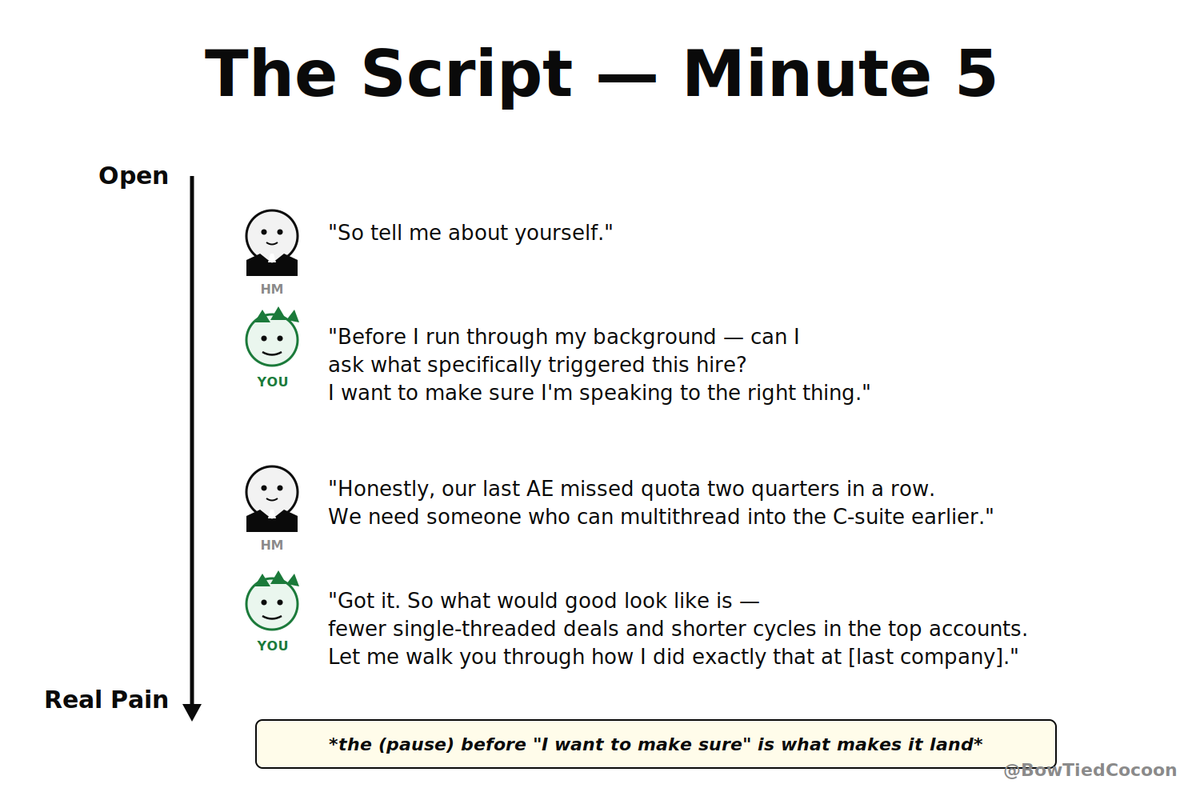
MOVE 1 - Minute 5
When they say "tell me about yourself," DO NOT regurgitate the resume.
You say:
🐲"Before I run through my background, can I ask what specifically triggered this hire? I want to make sure I'm speaking to the right thing."
(pause)
They tell you the real problem. The whole interview becomes about THAT.
When they say "tell me about yourself," DO NOT regurgitate the resume.
You say:
🐲"Before I run through my background, can I ask what specifically triggered this hire? I want to make sure I'm speaking to the right thing."
(pause)
They tell you the real problem. The whole interview becomes about THAT.
5
MOVE 2 — Minute 10
The gap question is coming. You know it. They know it.
Go first.
🐲"I want to be upfront. My biggest concern would be [specific gap]. Here's how I'd want to handle it in the first 90 days: [specific plan]."
You become the most trustworthy candidate they've talked to all week.
The gap question is coming. You know it. They know it.
Go first.
🐲"I want to be upfront. My biggest concern would be [specific gap]. Here's how I'd want to handle it in the first 90 days: [specific plan]."
You become the most trustworthy candidate they've talked to all week.
6
MOVE 3 - Minute 20
Things are flowing. DO NOT coast.
🐲: "How hands-on do you like to be with your reps once they're ramped?"
Forces a specific answer. Signals you're already thinking about working there.
Things are flowing. DO NOT coast.
🐲: "How hands-on do you like to be with your reps once they're ramped?"
Forces a specific answer. Signals you're already thinking about working there.
7
MOVE 4 - Minute 30
🐲: "Where do new hires usually struggle early - product knowledge, deal control, prospecting, or internal navigation?"
🐲: "Where do new hires usually struggle early - product knowledge, deal control, prospecting, or internal navigation?"
8
MOVE 5 - Near the end
They're warming up. Make it about THEM.
🐲:"Fast forward one or two quarters. What would make YOU look good to your boss if this hire goes well?"
People hire for their reasons, not yours. Dig into them.
That's how you get advocates, not interviewers.
They're warming up. Make it about THEM.
🐲:"Fast forward one or two quarters. What would make YOU look good to your boss if this hire goes well?"
People hire for their reasons, not yours. Dig into them.
That's how you get advocates, not interviewers.
9
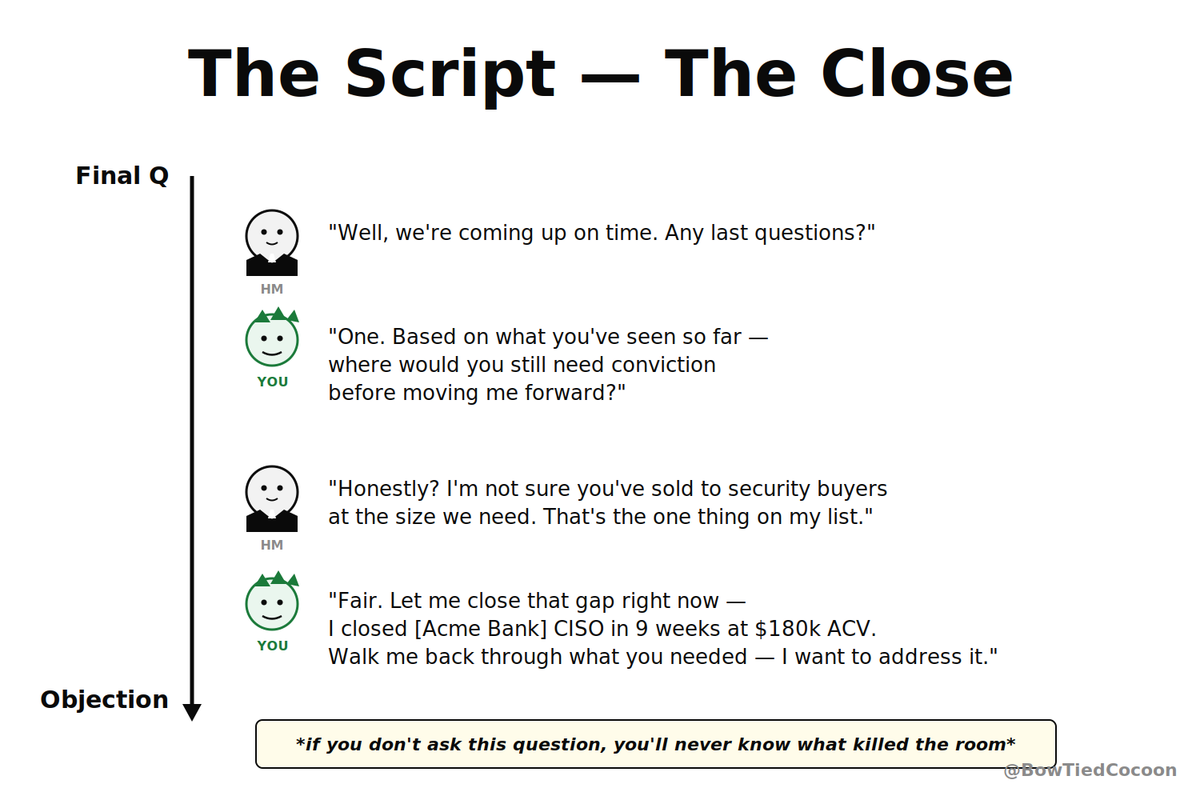
MOVE 6 - The final question
The one that closes the room:
🐲:"Based on what you've seen so far, where would you still need conviction before moving me forward?"
They tell you the real objection. While you're still there to handle it.
99% of candidates leave without ever asking this.
The one that closes the room:
🐲:"Based on what you've seen so far, where would you still need conviction before moving me forward?"
They tell you the real objection. While you're still there to handle it.
99% of candidates leave without ever asking this.
10
Six sentences. One interview.
1. Redirect to their real problem (min 5)
2. Name the gap before they do (min 10)
3. Ask what working there feels like (min 20)
4. Show you've thought about execution (min 30)
5. Make it about them (near end)
6. Surface the real objection (final)
When everyone does one thing, you do the opposite.
Different outcome.
1. Redirect to their real problem (min 5)
2. Name the gap before they do (min 10)
3. Ask what working there feels like (min 20)
4. Show you've thought about execution (min 30)
5. Make it about them (near end)
6. Surface the real objection (final)
When everyone does one thing, you do the opposite.
Different outcome.
11
Closing strong is one thing.
Getting the right companies to notice YOU, standing out in 4-5 rounds against candidates with more on paper, and locking a $150k–$300k+ offer - is another game.
We do it together 1-on-1 inside The Incubator in < 16 weeks:
insidethecocoon.com
Getting the right companies to notice YOU, standing out in 4-5 rounds against candidates with more on paper, and locking a $150k–$300k+ offer - is another game.
We do it together 1-on-1 inside The Incubator in < 16 weeks:
insidethecocoon.com
12
Don't ask if it's urgent. assume it's not.
🤡: "is this a priority for you right now?"
🐲: "why now though.. why not push this down the road? I mean you've been doing alright with the current setup until now."
🤡: "is this a priority for you right now?"
🐲: "why now though.. why not push this down the road? I mean you've been doing alright with the current setup until now."