@whitfieldlewis6: Such an ignorant take here. Th...
@whitfieldlewis6
6 views
Apr 11, 2026
Advertisement
1
Such an ignorant take here. The biggest driver of profound dyslipidemia in the general population is insulin resistance. Insulin resistance is largely driven by the addition of refined carbohydrates to any standard diet, whether it's a whole-food diet replete with plant foods or a whole-food diet replete with animal foods.
This diet presented here is a whole-food diet, unless the sausage is highly processed with refined ingredients.
What happens if you consume this as part of a whole-food diet is that you achieve much higher satiety per calorie consumed, you have much greater essential nutrient intake (especially if paired with selective plant foods), and you are able to eat less, eat less often, and maintain a healthy body habitus.
The biggest drivers of atherosclerotic cardiovascular disease are the downstream effects of insulin resistance:
1. Hypertension
2. Recurrent hyperglycemia
3. Downstream effects of hyperinsulinemia
4. Dyslipidemia (pattern B, high burden of sdLDL, high burden of oxidized LDL, and an environment in which LDL is easily oxidized). In many patients, especially those with metabolic syndrome, hepatic insulin resistance plays a major role
5. Chronic inflammation in the setting of profound insulin resistance
So the claim that, because someone’s meal consists primarily of animal products, it is automatically an indication for lipid-lowering therapy is based on outdated dogma that needs to die.
This diet presented here is a whole-food diet, unless the sausage is highly processed with refined ingredients.
What happens if you consume this as part of a whole-food diet is that you achieve much higher satiety per calorie consumed, you have much greater essential nutrient intake (especially if paired with selective plant foods), and you are able to eat less, eat less often, and maintain a healthy body habitus.
The biggest drivers of atherosclerotic cardiovascular disease are the downstream effects of insulin resistance:
1. Hypertension
2. Recurrent hyperglycemia
3. Downstream effects of hyperinsulinemia
4. Dyslipidemia (pattern B, high burden of sdLDL, high burden of oxidized LDL, and an environment in which LDL is easily oxidized). In many patients, especially those with metabolic syndrome, hepatic insulin resistance plays a major role
5. Chronic inflammation in the setting of profound insulin resistance
So the claim that, because someone’s meal consists primarily of animal products, it is automatically an indication for lipid-lowering therapy is based on outdated dogma that needs to die.
View Tweet
2
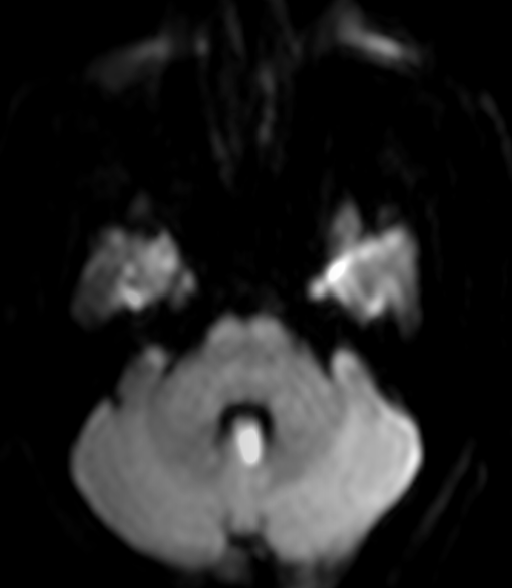
This is an axial plane of an MRI Brain showing diffusion restriction of a cerebellar structure in the posterior fossa.
What is this structure?
An isolated lesion here causes what deficits?
What NIHSS will this person have?
What's the blood supply?
Drop your thoughts below 👇👇
#Stroke #Neuroradiology #Cerebellum
What is this structure?
An isolated lesion here causes what deficits?
What NIHSS will this person have?
What's the blood supply?
Drop your thoughts below 👇👇
#Stroke #Neuroradiology #Cerebellum