@0xyoussea: A new way to bill AI agents ju...
@0xyoussea
4 views
Apr 29, 2026
Advertisement
1
A new way to bill AI agents just dropped: the x402 upto scheme 🤖💸
x402 is the HTTP 402 standard for machine-to-machine payments. Until now, it only supported fixed pay-per-request pricing.
Here is why the new `upto` scheme changes everything 🧵👇
x402 is the HTTP 402 standard for machine-to-machine payments. Until now, it only supported fixed pay-per-request pricing.
Here is why the new `upto` scheme changes everything 🧵👇
2
The core problem with LLM-inference API payments: you rarely know the exact cost upfront.
How many tokens will an LLM generate? How much compute will an agent need?
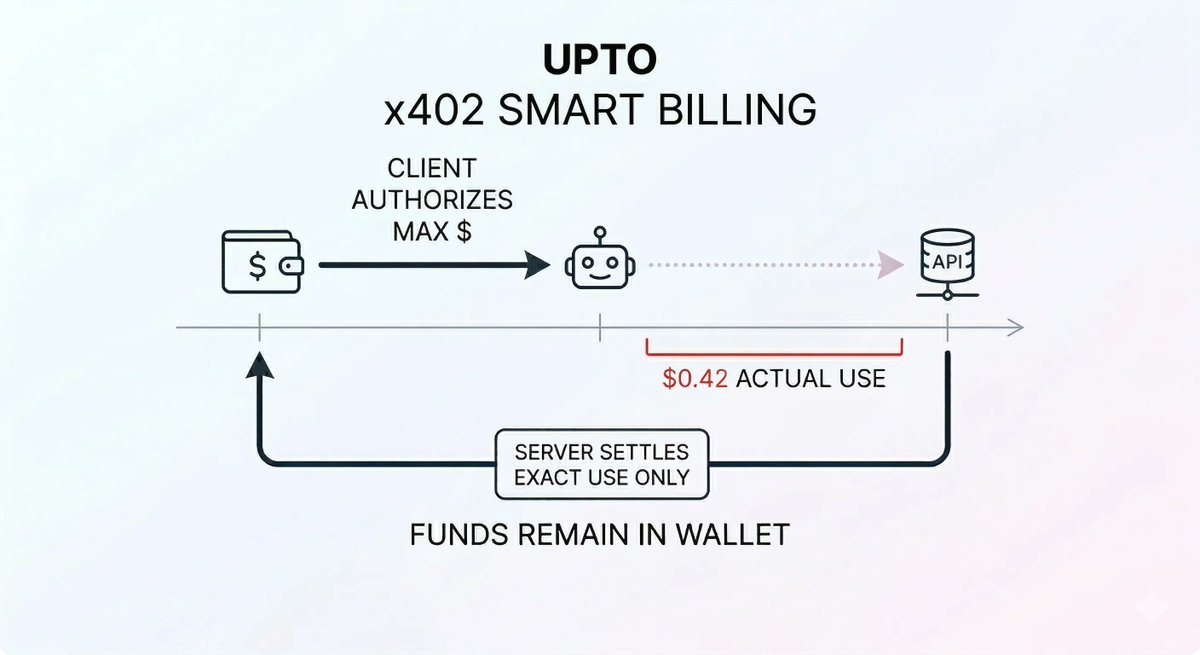
With upto, the client authorizes a maximum amount, and the server settles for the actual amount used at the end of the request.
How many tokens will an LLM generate? How much compute will an agent need?
With upto, the client authorizes a maximum amount, and the server settles for the actual amount used at the end of the request.
3
This natively unlocks the most important AI and infrastructure use cases onchain:
- LLM Inference: Agent authorizes up to $5, gets charged exactly $0.42 based on tokens streamed.
- Bandwidth: Pay precisely per byte transferred.
- Compute: Charge based on actual execution time.
- LLM Inference: Agent authorizes up to $5, gets charged exactly $0.42 based on tokens streamed.
- Bandwidth: Pay precisely per byte transferred.
- Compute: Charge based on actual execution time.
4
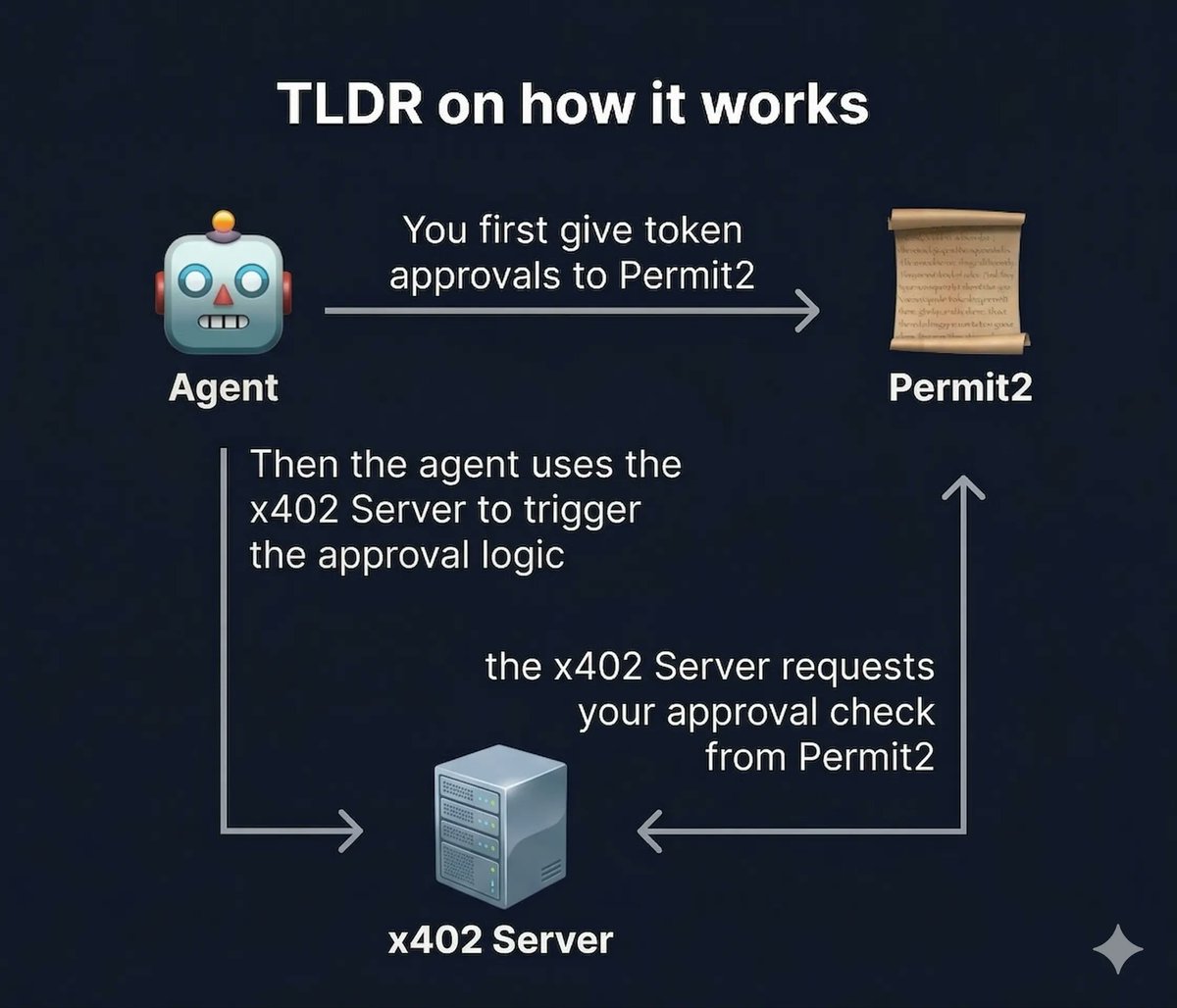
At the contract level, upto uses Uniswap’s Permit2 contract to make the UX smoother and safer
The client signs a permit message offchain, then a specialized contract guarantees the server can only settle an amount that is <= the authorized maximum.
The client signs a permit message offchain, then a specialized contract guarantees the server can only settle an amount that is <= the authorized maximum.
5
This is a game changer.
In previous implementations, variable onchain billing requires locking funds in escrow or streaming contracts. Capital gets stuck.
With upto, agent funds remain untouched in their wallet, free to be used elsewhere until the exact moment of settlement.
In previous implementations, variable onchain billing requires locking funds in escrow or streaming contracts. Capital gets stuck.
With upto, agent funds remain untouched in their wallet, free to be used elsewhere until the exact moment of settlement.
6
You can start building with `upto` right now.
You can either start with the official docs or CDP's facilitator docs:
You can either start with the official docs or CDP's facilitator docs: