@AlbertoDFraile: ## <b>The tentacles and media ...
The tentacles and media megaphones

In Spain, there is a set of media platforms that disseminate positions which various analysts consider favorable to Zionism and aimed at amplifying perspectives aligned with the interests of the State of Israel in the public debate.
Among the most visible are OkDiario, Vozpópuli, The Objective, Libertad Digital, esRadio and El Toro TV, as well as digital spaces such as Estado de Alarma, La ContraCrónica and El American, along with media watchdog organizations such as Camera.
This network reaches significant audiences both in Spain and Latin America and reflects how the Middle East conflict is integrated into the domestic political and cultural debate, where ideological confrontation often displaces informative analysis.
In general terms, these outlets share a similar narrative pattern in their coverage of the 2026 Israel–Iran conflict: they present Israeli and U.S. operations as defensive responses, frame Iran as the central strategic threat, and repeatedly criticize the position of the Spanish government, accusing it of equidistance or of weakening the Western stance. Within that common framework, each outlet introduces its own editorial nuances.

OkDiario
In the case of the digital outlet led by Eduardo Inda, coverage frequently incorporates positions favorable to political Zionism and critical of stances opposed to the interests of the State of Israel.
An investigation published by La Marea, signed by Antonio Maestre, revealed the existence of a contract signed in 2019 between ACOM (Action and Communication on the Middle East) and the outlet for €75,000 per year to publish sponsored content favorable to Israel, including clauses aimed at avoiding negative information, which has been interpreted as an example of sponsored content favorable to Zionism and its affiliated organizations in Spain.
Founded in 2015 by Eduardo Inda, with an initial capital of €500,000 from his severance after leaving El Mundo, the outlet operates through the company Dos Mil Palabras S.L., of which Inda is director and CEO.

In its coverage of the Israel–Iran conflict that began on February 28, 2026, with bombings by Israel and the United States, OkDiario presents military operations as necessary defensive responses. Headlines such as “YES TO WAR WITH IRAN!: The United States and Israel are winning despite Sánchez” or reports like “This is how Israel prepares for an attack from Iran: ‘We do not expect the Spanish government to defend us’” illustrate this editorial line.
The narrative uses expressions such as “legitimate self-defense,” “devastating blow,” or “Western strategic victory,” with a strong presence of Israeli and U.S. sources. Iran is described as a threat to civilization, while the debate on collateral damage in Iranian territory occupies a very secondary or nonexistent place, emphasizing the need to prevent “a nuclear Iran.”
The conflict is also used as an element of internal political confrontation. The outlet repeatedly criticizes the position of Pedro Sánchez’s government, accusing it of “false equidistance” or of placing Spain “on the wrong side of history,” linking its stance to a hypocritical use of the 2003 “No to war” slogan.
Expressions such as “Sánchez, Iran’s useful idiot” appear alongside columns by Eduardo Inda, texts from La Antorcha and opinions from pro-Israel activists such as Ignacio García Valdecasas, Gustavo de Aristegui, Pilar Rahola, Antonio García, Masih Alinejad, among others.
Vozpópuli
The outlet founded by Jesús Cacho develops coverage centered on security and Israel’s strategic defense frameworks. It frequently publishes articles and columns denouncing alleged “antisemitism” within sectors of the Spanish left and questioning the government’s diplomatic position.
Writers such as Javier Collado, Lucas Méndez, Alejo Vidal-Quadras, Paula Marcos, Irene Camacho, Gonzalo Araluce, among others, contribute to a pro-Zionist narrative on the 2026 Israel–Iran conflict; Israeli and U.S. attacks are presented as “inevitable” or “necessary” measures to curb the Iranian nuclear threat. Headlines such as “The era of complacency with Iran’s ayatollahs is over” or reports like “Israel and the U.S. act with maturity against Persian tyranny” reflect this approach.
This digital outlet, currently directed by Manuel Marín, harshly criticizes the position of Pedro Sánchez’s government, accusing it of “breaking away from Europe and the U.S.,” “putting national security at risk,” or “being isolated within the EU.” Articles such as “Sánchez breaks with European powers on Iran and opens a new front with the United States” or “The government’s half-truth about Rota and Morón” present the executive’s stance as a source of diplomatic tension that will harm Spain.
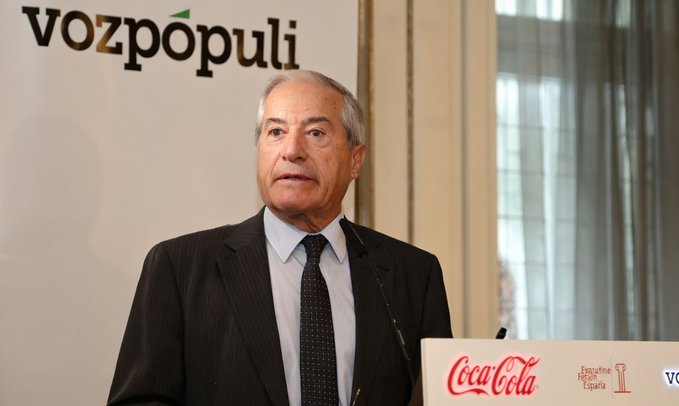
Vozpópuli was founded in 2011 by Jesús Cacho after leaving El Confidencial, where he sold his shares for €1.5 million, and operates through Vozpópuli Digital S.A.
The Objective
In the case of The Objective, coverage of the 2026 Israel–Iran conflict adopts a markedly critical tone toward the Spanish government’s foreign policy.
Various articles present the actions of Israel and the United States as a necessary strategic response. At the same time, the outlet questions the position of Pedro Sánchez’s government, pointing to possible diplomatic and economic consequences for Spain.
The opinion pages include columns by Martin Varsavsky, Guadalupe Sánchez, Francisco Sierra and Álvaro Nieto, who criticize the government for prioritizing ideological considerations over Western security and the strategic relationship with Israel and the United States.
Some pieces highlight reactions from international actors—such as statements by the Iranian president or positions taken by Hamas—to underscore the impact of Spain’s stance in the regional context. Articles have also been published on conflict financing, such as “Israel investigates whether €50 million sent by Sánchez ended up in Hamas hands” (November 2025, reused during the 2026 crisis).

The outlet was founded in 2013 as a digital project promoted by Joel Dalmau Burn and Miguel Castellví Reus. It is currently majority-controlled by Paula Quinteros, who holds around 92.07% of the capital through The Objective Media S.L. following expansions carried out in 2023.
Libertad Digital and esRadio
Libertad Digital and its radio arm esRadio maintain an editorial line favorable to political Zionism and Israel, and critical of the Spanish government’s foreign policy in the Middle East.
The outlet frequently argues that Spain’s recognition of the Palestinian state benefits organizations considered terrorist and emphasizes Israel’s right to carry out preventive attacks.
In its coverage of the Israel–Iran conflict, Libertad Digital highlights Iranian threats against U.S. and Israeli economic centers, supports Israeli military operations and criticizes the Spanish government for opposing the war.
For its part, esRadio amplifies voices that justify Israeli bombings in Tehran as preventive responses and emphasizes Hezbollah’s role in the regional dynamics linked to Iran. Programs such as Es la Mañana de Federicoalso function as platforms for pro-Israel voices.
Libertad Digital was founded in 2000 by Federico Jiménez Losantos, along with Javier Rubio Navarro, José María Marco and Alberto Recarte, with contributors such as Mario Noya and Luis Herrero. Initially, capital was divided between Grupo Intereconomía and Losantos’ group. After changes in 2005 and 2009, the main shareholders became Jiménez Losantos, Alberto Recarte and Arturo Baldasano, each with around 11%.

In 2009, the group launched esRadio, promoted by Federico Jiménez Losantos, Luis Herrero and César Vidal after leaving Cadena COPE. The station broadcasts via FM, DTT and satellite and is part of the Libertad Digital multimedia group.
El Toro TV
In recent years, channels such as El Toro TV and the now-defunct 7NN have joined this media ecosystem, linked to conservative circles and projects emerging from the Intereconomía environment.
El Toro TV, formerly Intereconomía Televisión, was created in 2005 by Julio Ariza after acquiring Expansión TV. Following insolvency proceedings between 2014 and 2019, the channel adopted its current brand and formally came under Farnesio Ventures, a company linked to the business environment of Ariza and José Luis Hernández de Arce.
It maintains a conservative editorial line and broadcasts via local DTT, web and digital platforms with programs such as Dando Caña, El Gato al Agua, Redacción Abierta or La Lupa.
The channel defends Israeli operations as responses to the Iranian nuclear threat and Iran’s regional role. Debates and specials feature commentators such as Carlos Esteban or Pedro Marcelo, along with analysts close to pro-Israel organizations.
For its part, 7NN was a television project launched in 2021 by brothers José and Jaime Alonso, later joined by businessman and former Ciudadanos MP Marcos de Quinto. The channel aimed to create an ultra-conservative network with figures such as Toni Cantó but shut down shortly afterward due to low audience and financial difficulties.
Part of its team and editorial style later moved to platforms such as El Toro TV, Estado de Alarma TV and other digital projects.
Podcasts
The pro-Israel opinion ecosystem also includes podcasts that offer readings of the conflict from positions favorable to Israel.
Among them is Estado de Alarma, a digital platform launched by journalist Javier Negre in 2020 after leaving El Mundo, with regular contributors such as Cristina Seguí and Javier García Isac.
La ContraCrónica, a podcast created in 2016 by Fernando Díaz Villanueva, also linked to the Radio Libertad network and often accompanied by contributors such as Alberto Garín or Domingo Soriano.
El American, a digital outlet founded in 2020 by Álex Cruz, with participation from authors and analysts such as Pedro Insua, Sergio Velasco or Javier Benegas.

CAMERA en Español, the Spanish branch of the U.S.-based organization CAMERA (Committee for Accuracy in Middle East Reporting and Analysis), founded in 1982 by Andrea Levin, monitors media coverage of Israel and publishes reports critical of what it considers anti-Israel bias. During the 2026 crisis, it has questioned various coverages that cast doubt on the legality or legitimacy of Israeli bombings.
Progressive media and criticism of political Zionism
The influence of organizations such as ACOM in the Spanish media ecosystem has been investigated by outlets such as El Salto, Público, infoLibre, elDiario.es and La Marea, which have analyzed the relationships between certain political, media and organizational actors linked to the defense of Israel in the public debate.
In contrast to conservative media, Spanish progressive outlets tend to adopt more critical positions toward Israeli government policies, especially regarding the Israeli–Palestinian conflict, settlement expansion in occupied territories, and military operations in Gaza or Lebanon.
This orientation is rooted in a historical tradition within sectors of the Spanish left linked to frameworks such as anti-imperialism, human rights advocacy and criticism of political Zionism.
In the context of the 2026 Israel–Iran conflict, these outlets tend to highlight the risks of military escalation resulting from Israeli and U.S. operations, focus on the humanitarian costs of the conflict, and advocate for diplomatic solutions and regional de-escalation.
In the next article —Anatomy of Zionism in Spain (IV): The media war in the face of the Middle East conflict— we will analyze the approach and editorial line of Spain’s main generalist radio stations, newspapers and television channels, with the aim of understanding how major traditional media frame the Middle East conflict and which narratives dominate the public debate.
Note: Before accusing the author of antisemitism, read this:
Debunking deliberate confusion: Semites, Jews, Israelis and Zionists are not the same
See first article:
Anatomy of Zionism in Spain (I): ACOM, Political and Media Battering Ram,which analyzes the role and influence of the NGO Acción y Comunicación sobre Oriente Medio (ACOM).
See second article:
Anatomy of Zionism in Spain (II): Lobby Networks and Institutional Support,
on other links within pro-Israel networks in Spain.
See fourth article:
Anatomy of Zionism in Spain (IV): Spokespeople of Zionism in the Media,
on the constellation of commentators who contribute to consolidating a narrative favorable to Zionism in Spanish public opinion.
Transparency and public knowledge are, and will continue to be, the best defense against intimidation and an essential guarantee for the freedom of information and opinion, recognized by our Constitution, the Charter of Fundamental Rights of the European Union and the European Convention on Human Rights.