@BlakeSNeff: Thread: While at a used book...
@BlakeSNeff
6 views
Jun 07, 2026
Advertisement
1
Thread:
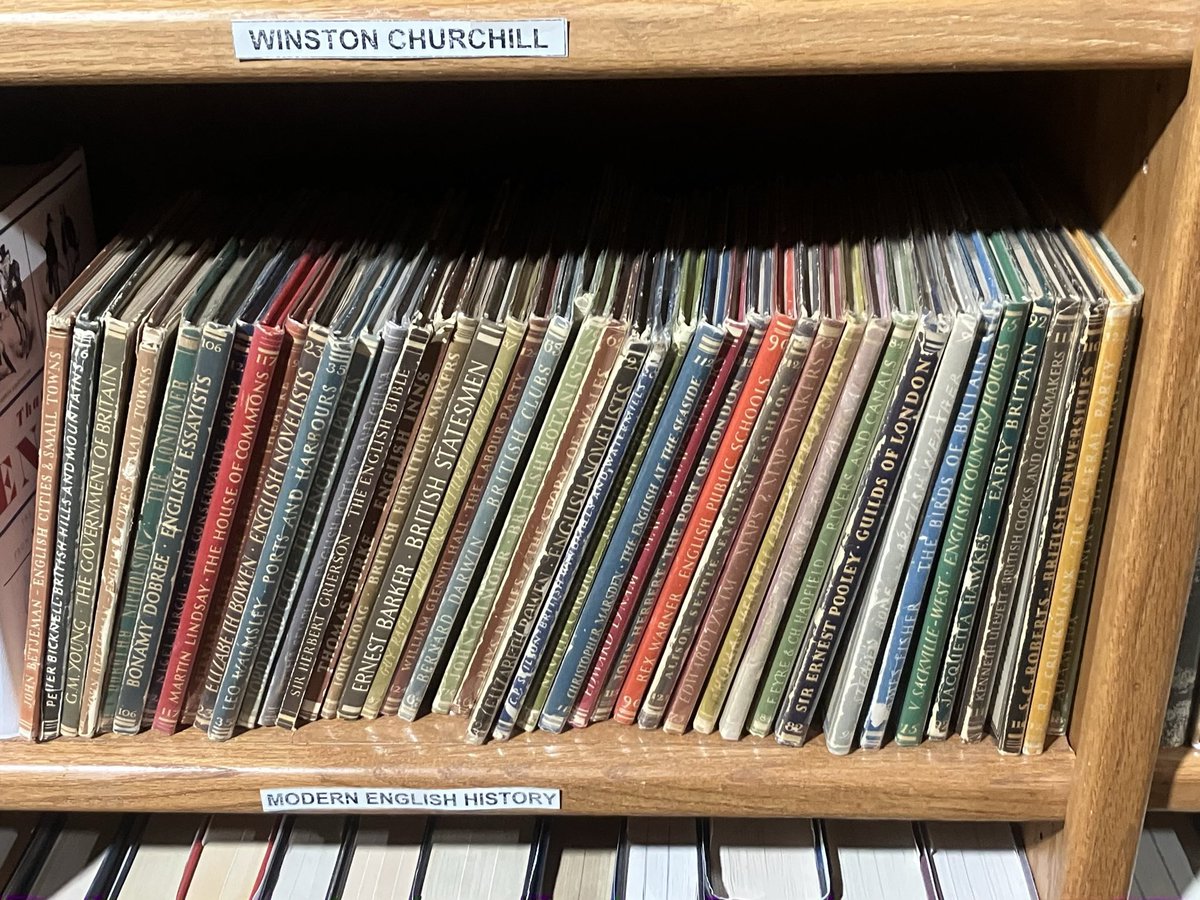
While at a used bookstore yesterday I ran into a big collection of these short "Britain in Pictures" books. These books, more than 100 in total, were produced during and shortly after WW2 by the British government as a wartime morale booster, to remind the public of what they were fighting for. Titles range from "British Dramatists" to "Birds of Britain" to "British Clocks and Clockmakers." They were written by some of the country's top writers, academics, and political figures.
Today, of course, they offer revealing and sometimes heartbreaking look at British culture as it was 80 years ago, before it was utterly transformed by migration and told to despise itself and its history.
While at a used bookstore yesterday I ran into a big collection of these short "Britain in Pictures" books. These books, more than 100 in total, were produced during and shortly after WW2 by the British government as a wartime morale booster, to remind the public of what they were fighting for. Titles range from "British Dramatists" to "Birds of Britain" to "British Clocks and Clockmakers." They were written by some of the country's top writers, academics, and political figures.
Today, of course, they offer revealing and sometimes heartbreaking look at British culture as it was 80 years ago, before it was utterly transformed by migration and told to despise itself and its history.
2
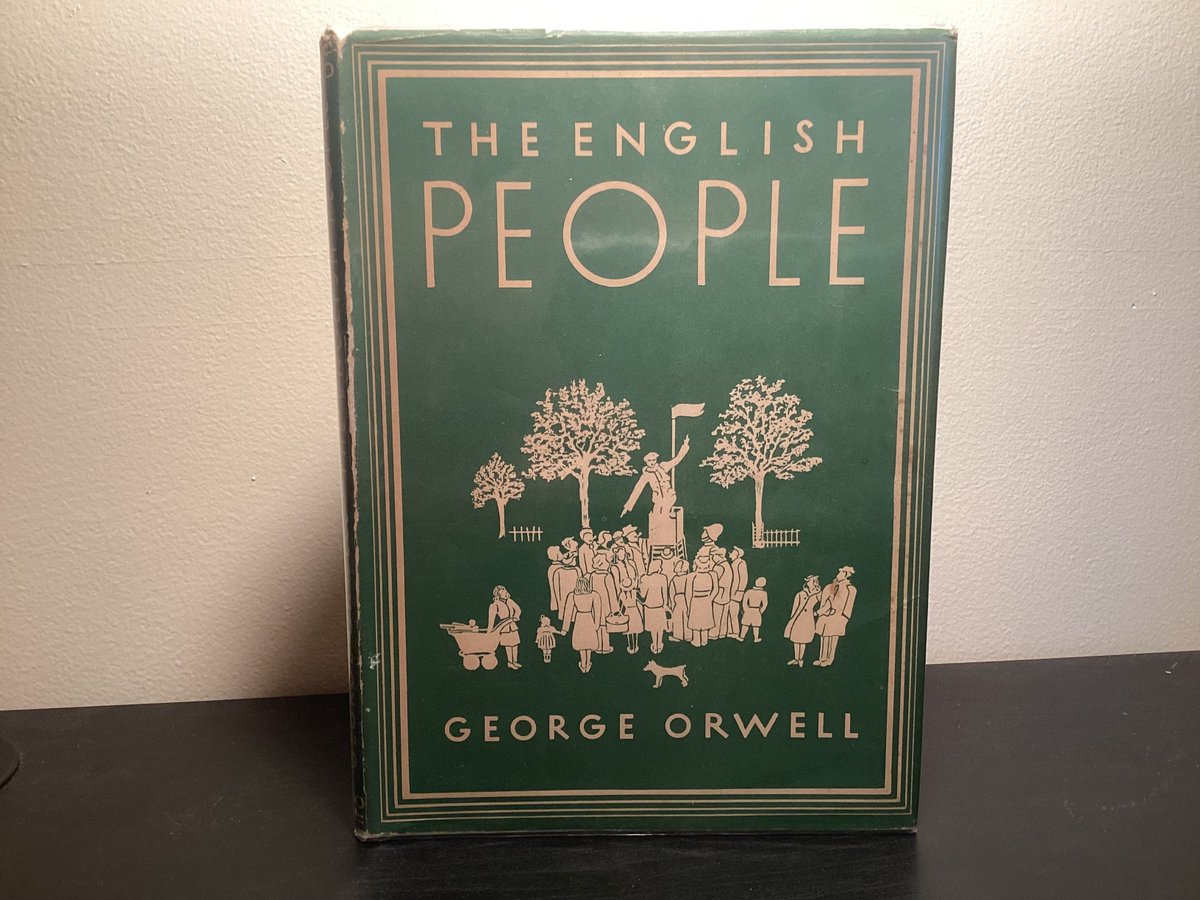
One of the most interesting titles is "The English People," written by none other than George Orwell and offering his take on what defined the English nation.
Orwell disliked the essay and it's obscure today, but it's a very interesting read and can be found online at archive.org/details/englis…
Orwell disliked the essay and it's obscure today, but it's a very interesting read and can be found online at archive.org/details/englis…
3
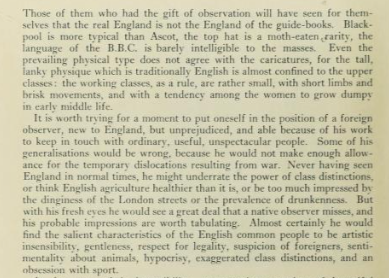
The chief traits of the English people of 1947: Gentleness, respect for law, suspicion of foreigners, love of animals, obsession with sports, and bad aesthetic taste. English men and women have a typical "look."
4
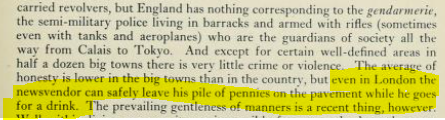
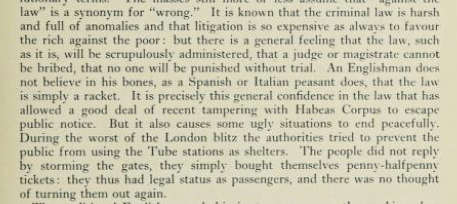
Crime is incredibly rare in Britain, and a London vendor can leave his money out in the open with no fear of theft. Londoners bought Tube tickets even when using its tunnels as shelters during the Blitz. Corruption by judges is considered unthinkable.
5
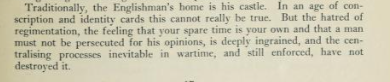
"The feeling...that a man must not be persecuted for his opinions is deeply ingrained."
Today, Britain arrests 30 people a day for their comments online.
Today, Britain arrests 30 people a day for their comments online.

6
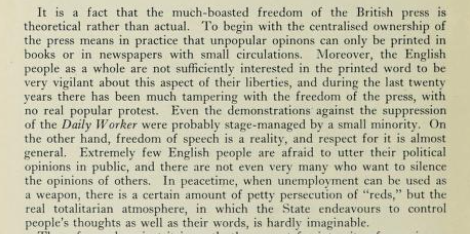
"Extremely few English people are afraid to utter their political opinions in public, and there are not even very many who want to silence the opinions of others. ... [A] real totalitarian atmosphere ... is hardly imaginable."
7
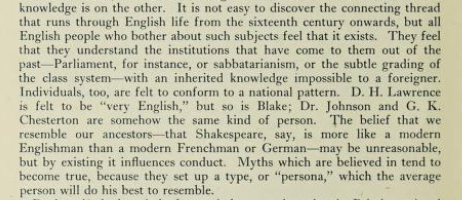
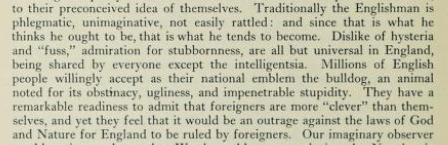
Oddities of English life, from Parliament to the class system, are "inherited knowledge" that cannot come naturally to foreigners. Typical English characters: DH Lawrence, William Blake, Samuel Johnson, and GK Chesterton. "It would be an outrage against against the laws of God and Nature for England to be ruled by foreigners."
8
The English despise terrorism and bullying. American-style organized crime "could not flourish in England."

9
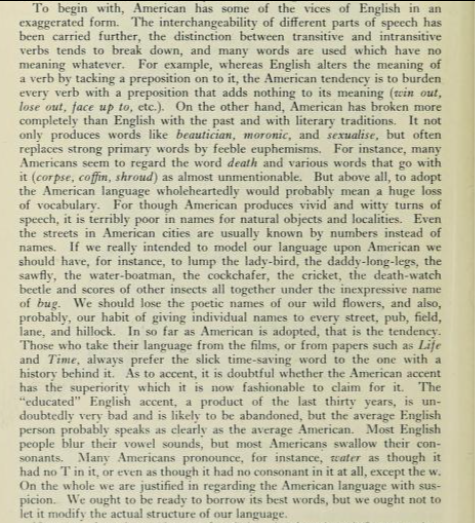
Orwell goes on a very long and funny screed about his dislike of American English altering British English over time.
10
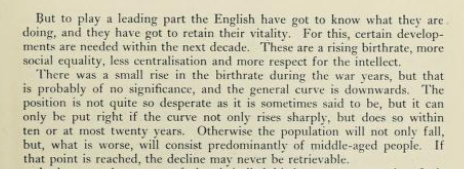
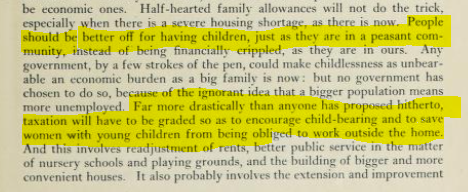
The most telling part, though, is right at the end, when Orwell looks to England's future: To remain a great nation, he says, the country must create more English. But to him, that is a problem that can only be solved through a higher birthrate.
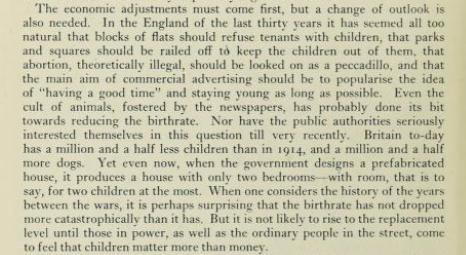
The government should radically revise the tax code, he says, so that having children is financially advantageous. He complains that government houses assume small family sizes, and even suggests Britain ought to crack down on abortion.
But notably, Orwell never once suggests fixing England's population decline through mass immigration of foreigners.
The government should radically revise the tax code, he says, so that having children is financially advantageous. He complains that government houses assume small family sizes, and even suggests Britain ought to crack down on abortion.
But notably, Orwell never once suggests fixing England's population decline through mass immigration of foreigners.