@BStulberg: A massive new study on peak pe...
@BStulberg
15 views
Dec 20, 2025
1
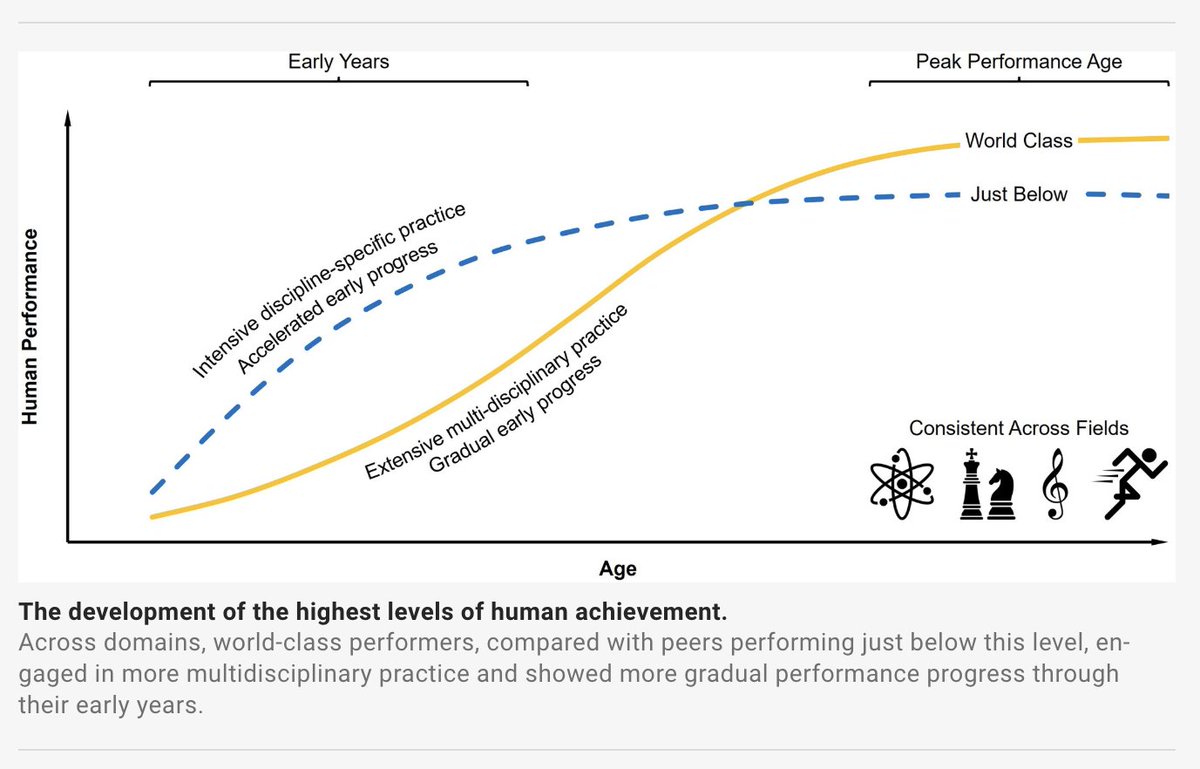
A massive new study on peak performance included 34,000 international top performers: Nobel laureates, renowned classical music composers, Olympic champs, and the world’s best chess players. It shows early specialization is a trap, and the road to greatness is long and varied.
2
The study is called "Recent discoveries on the acquisition of the highest levels of human performance" and it was published in the journal Science.
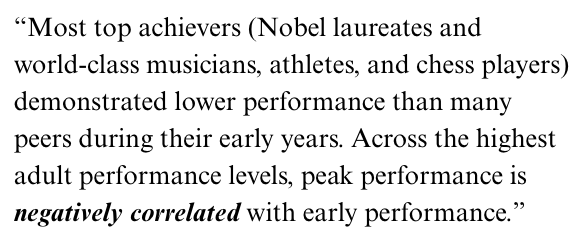
Stressing out and trying to be the best as a kid usually makes you worse as an adult. From the study:
Stressing out and trying to be the best as a kid usually makes you worse as an adult. From the study:
3
One of the biggest traps in performance is confusing being the best 11-year-old with being the best during your peak years.
A tale as old as time: Pushing a kid super hard to specialize at a young age. Having that kid dominate his or her sport, game, instrument, or activity from ages 8-15. The same kid stagnates, burns out, and never reaches their potential
A tale as old as time: Pushing a kid super hard to specialize at a young age. Having that kid dominate his or her sport, game, instrument, or activity from ages 8-15. The same kid stagnates, burns out, and never reaches their potential
4
The actual road to greatness involves being a well-rounded kid only to specialize later.
We knew this pattern was true in sport, but this new study shows it’s true even in what we think of as more specialized domains, such as music, math, and even chess.
We knew this pattern was true in sport, but this new study shows it’s true even in what we think of as more specialized domains, such as music, math, and even chess.
5
The study shows clearly that if you want the highest performing child you should push them to specialize and be super-disciplined from a very early age. But if you want to raise the highest performing young adult you should encourage them to explore, not take anything too seriously, and play.
6
The performance paradox, from the study:

7
Key take-aways for peak performance:
Do NOT push kids too hard too early to do one thing great.
Be PATIENT in development.
It’s totally okay to emphasize a certain sport or activity, but do not make it the only thing. That will BACKFIRE.
Do NOT push kids too hard too early to do one thing great.
Be PATIENT in development.
It’s totally okay to emphasize a certain sport or activity, but do not make it the only thing. That will BACKFIRE.
8
Encourage kids to try many pursuits. Develop well-roundedness. Worry about specializing later.
This requires letting kids explore and have fun. And it requires patience and discipline from adults. Too often we make the mistake of reversing this.
This requires letting kids explore and have fun. And it requires patience and discipline from adults. Too often we make the mistake of reversing this.
9
One additional point for chess in particular: The sample sizes for the included studies in that domain are extremely small and the range is very, very tightly restricted (top 10, top 3). In order to be 11-100 at a young age, you still probably need to specialize early, and could very well become world-class later on. So my analysis is that finding is the least robust of the domains (but still fascinating that being top 10 or top 3 at under 14 years old negatively predicts being top 10 or top 3 as an adult). Thanks to @Kasparov63 for engaging on this.