@sfliberty: In 1952, an economist made a d...
@sfliberty
10 views
Aug 02, 2025
1
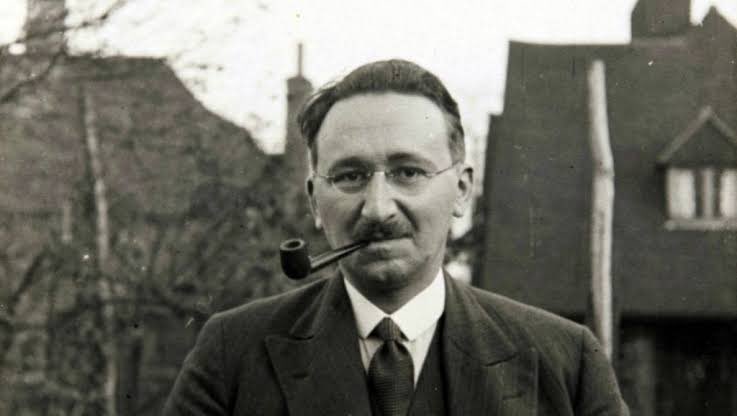
In 1952, an economist made a discovery that would embarrass psychology for 30 years.
While behaviorists insisted the mind was just stimulus and response, F.A. Hayek claimed your brain actively constructs reality through self-organizing networks.
They called him unscientific. He was decades ahead. 🧵
While behaviorists insisted the mind was just stimulus and response, F.A. Hayek claimed your brain actively constructs reality through self-organizing networks.
They called him unscientific. He was decades ahead. 🧵
2
Here's what Hayek saw that the experts missed: your brain doesn't passively receive the world; it builds it.
Every single perception is actually an interpretation. You literally cannot see something truly new because your mind needs existing categories to make sense of anything.
Your brain is a "classificatory device," constantly turning chaos into order without any central command.
Every single perception is actually an interpretation. You literally cannot see something truly new because your mind needs existing categories to make sense of anything.
Your brain is a "classificatory device," constantly turning chaos into order without any central command.

3
The timing couldn't have been worse for Hayek's reputation.
Psychology belonged to the behaviorists. Mental states? "Unscientific." Neural networks? "Too speculative." Self-organizing systems? "Philosophical nonsense."
Hayek published "The Sensory Order" anyway. Then came decades of academic silence.
Psychology belonged to the behaviorists. Mental states? "Unscientific." Neural networks? "Too speculative." Self-organizing systems? "Philosophical nonsense."
Hayek published "The Sensory Order" anyway. Then came decades of academic silence.

4
But here's where the story gets beautiful.
By the late 1970s, actual neuroscientists started discovering Hayek's forgotten book. UCLA's Joaquin Fuster was stunned: "Hayek's prescient concepts have received substantial support from modern neuroscience."
Nobel laureate Gerald Edelman called it "profound thinking" that should be read "as an exercise in knowledge for its own sake."
By the late 1970s, actual neuroscientists started discovering Hayek's forgotten book. UCLA's Joaquin Fuster was stunned: "Hayek's prescient concepts have received substantial support from modern neuroscience."
Nobel laureate Gerald Edelman called it "profound thinking" that should be read "as an exercise in knowledge for its own sake."

5
Today, every "crazy" idea Hayek proposed is textbook neuroscience: brain as neural network, perception as active interpretation, consciousness emerging from connections, learning through pattern recognition.
He even influenced AI pioneer Frank Rosenblatt, who built the first artificial neural network and cited Hayek directly.
He even influenced AI pioneer Frank Rosenblatt, who built the first artificial neural network and cited Hayek directly.

6
But Hayek's real genius wasn't just understanding brains; it was seeing the deeper pattern.
If your own brain can't fully understand itself, how can any government official understand an entire economy?
Both systems work through dispersed knowledge and spontaneous coordination, not top-down control.
If your own brain can't fully understand itself, how can any government official understand an entire economy?
Both systems work through dispersed knowledge and spontaneous coordination, not top-down control.

7
This demolishes your professors' favorite argument about smart experts designing society.
But Hayek proved even the most brilliant brain is a self-organizing system that can't centrally plan itself. Any policy that ignores distributed knowledge (from price controls to speech codes) fights against how complex systems actually work.
But Hayek proved even the most brilliant brain is a self-organizing system that can't centrally plan itself. Any policy that ignores distributed knowledge (from price controls to speech codes) fights against how complex systems actually work.

8
Hayek didn't just refute central planning. He gave us the blueprint for understanding any complex system: brains, markets, societies.
The lesson isn't just economic. It's about human knowledge's limits and emergent order's power.
Some insights are worth waiting decades to be proven right.
The lesson isn't just economic. It's about human knowledge's limits and emergent order's power.
Some insights are worth waiting decades to be proven right.

9
If this kind of genius-level thinking excites you, the SFL Local Coordinator Program is where you belong.
We connect students who get fired up by ideas that cross disciplines and challenge entire academic fields. Leaders who see patterns others miss.
👉 Learn more: join.studentsforliberty.org
We connect students who get fired up by ideas that cross disciplines and challenge entire academic fields. Leaders who see patterns others miss.
👉 Learn more: join.studentsforliberty.org
