@rinalu_: The Key They Erased: The Truth...
@rinalu_
22 views
Apr 14, 2025
1
The Key They Erased: The Truth About the Bolshevik Revolution That Changes Everything
There are numerous historical facts that are deliberately silenced. Western historians endlessly reinterpret the events of 1937 under Stalin, but are reluctant to talk about the genocide that took place between 1917 and 1925. You are told in detail about the executions of figures like Ezhov, Kamenev, Zinoviev, but you hear almost nothing about the millions of Russian people tortured and murdered by those same men.
Why is that? Why is there so little interest in the Civil War in Russia and the early 1920s, especially in the West? Why do the same institutions react hysterically to 1937? What happened in Russia from 1917 to 1924 that no one wants to talk about?
What actually occurred during the Civil War was unprecedented in world history, and has been swept under the rug ever since.👇🧵
There are numerous historical facts that are deliberately silenced. Western historians endlessly reinterpret the events of 1937 under Stalin, but are reluctant to talk about the genocide that took place between 1917 and 1925. You are told in detail about the executions of figures like Ezhov, Kamenev, Zinoviev, but you hear almost nothing about the millions of Russian people tortured and murdered by those same men.
Why is that? Why is there so little interest in the Civil War in Russia and the early 1920s, especially in the West? Why do the same institutions react hysterically to 1937? What happened in Russia from 1917 to 1924 that no one wants to talk about?
What actually occurred during the Civil War was unprecedented in world history, and has been swept under the rug ever since.👇🧵
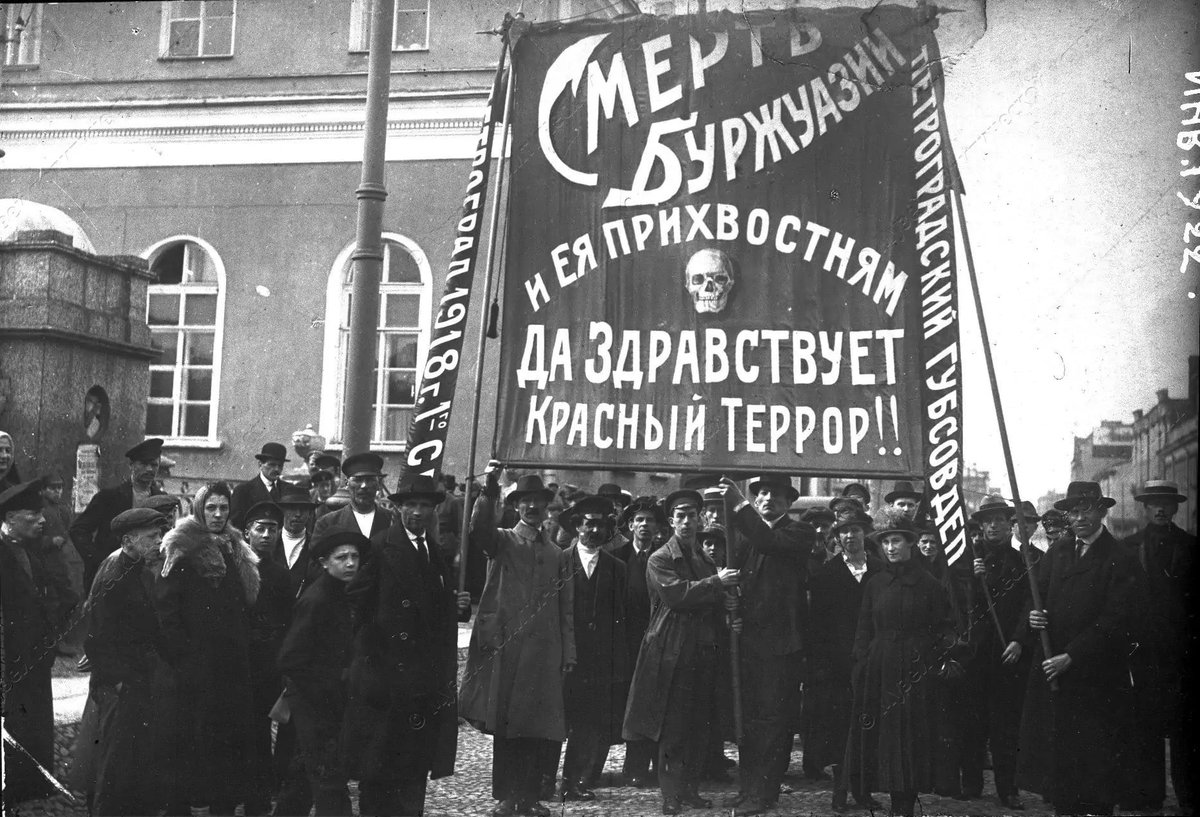
2
The Mass Killings They Don’t Teach You About
During Lenin and Trotsky’s rule, a wave of brutal killings swept across Russia.
It was called the Red Terror.
Who did they kill?
Everyone: priests, monks, teachers, farmers, nobles, writers, women, children, no one was safe.
The violence wasn’t limited to big cities.
It happened everywhere: in towns, villages, and across the countryside, from Moscow to Siberia and the Far East.
Foreign mercenaries: Latvians, Lithuanians, and Chinese soldiers, were often hired to do the killing.
They had no connection to the Russian people and were known for their cruelty.
Some Examples:
🔸 Moscow and Petrograd (St. Petersburg) – Starting in 1918, people were taken to the basements of secret police buildings and shot.
🔸 Krasnodar (then called Yekaterinodar) – In 1920, after the Red Army took the city, they executed 300 to 500 people a day, by quota.
🔸 Omsk – In 1919, after the Bolsheviks captured the city, they killed officials, students, priests, so many that locals said bones were hauled away on sleds.
They were especially cruel to peasants who rebelled:
🔸 Tambov Rebellion (1920–1921), peasants were gassed, villages burned, and families deported.
🔸 Rebellions in Ukraine, Siberia, and the Urals were crushed the same way.
Women and Children Were Not Spared:
🔸 Wives of officers and priests, noblewomen, teachers all shot as “dangerous to society.”
🔸 Girls as young as 12 were executed along with their parents.
🔸 Some women were stripped naked before being shot.
🔸 Commissars even put on costumes, drank, and laughed while carrying out the killings.
“They turned executions into a show,” wrote Ivan Bunin in Cursed Days.
This shows that the war wasn’t really against the “bourgeoisie”, it was a war against the people of Russia. Everyone suffered, including the Jewish population, but the main target was the Russian population and the Orthodox Church: the core of Russia’s identity and statehood.
During Lenin and Trotsky’s rule, a wave of brutal killings swept across Russia.
It was called the Red Terror.
Who did they kill?
Everyone: priests, monks, teachers, farmers, nobles, writers, women, children, no one was safe.
The violence wasn’t limited to big cities.
It happened everywhere: in towns, villages, and across the countryside, from Moscow to Siberia and the Far East.
Foreign mercenaries: Latvians, Lithuanians, and Chinese soldiers, were often hired to do the killing.
They had no connection to the Russian people and were known for their cruelty.
Some Examples:
🔸 Moscow and Petrograd (St. Petersburg) – Starting in 1918, people were taken to the basements of secret police buildings and shot.
🔸 Krasnodar (then called Yekaterinodar) – In 1920, after the Red Army took the city, they executed 300 to 500 people a day, by quota.
🔸 Omsk – In 1919, after the Bolsheviks captured the city, they killed officials, students, priests, so many that locals said bones were hauled away on sleds.
They were especially cruel to peasants who rebelled:
🔸 Tambov Rebellion (1920–1921), peasants were gassed, villages burned, and families deported.
🔸 Rebellions in Ukraine, Siberia, and the Urals were crushed the same way.
Women and Children Were Not Spared:
🔸 Wives of officers and priests, noblewomen, teachers all shot as “dangerous to society.”
🔸 Girls as young as 12 were executed along with their parents.
🔸 Some women were stripped naked before being shot.
🔸 Commissars even put on costumes, drank, and laughed while carrying out the killings.
“They turned executions into a show,” wrote Ivan Bunin in Cursed Days.
This shows that the war wasn’t really against the “bourgeoisie”, it was a war against the people of Russia. Everyone suffered, including the Jewish population, but the main target was the Russian population and the Orthodox Church: the core of Russia’s identity and statehood.
3
Red Terror Execution Methods (1918–1922)
The Lenin–Trotsky group didn’t just kill people, they tortured them.
Their goal wasn’t just death. It was about spreading fear, shame, and total control.
Their methods were so brutal, it’s strange how rarely people talk about this part of history.
But here’s what many don’t know: Stalin would later remove many of the same people who carried out these crimes once he took power.
Real Tortures That Happened:
▶️ Impaled on stakes, slow and painful death
▶️ Veins pulled out while alive
▶️ Nails ripped out, eyes gouged, skin peeled off
▶️ Women and girls raped in front of their families, then killed
▶️ Executions turned into shows, drunk Cheka agents wore costumes, laughed, and mocked the victims
The Lenin–Trotsky group didn’t just kill people, they tortured them.
Their goal wasn’t just death. It was about spreading fear, shame, and total control.
Their methods were so brutal, it’s strange how rarely people talk about this part of history.
But here’s what many don’t know: Stalin would later remove many of the same people who carried out these crimes once he took power.
Real Tortures That Happened:
▶️ Impaled on stakes, slow and painful death
▶️ Veins pulled out while alive
▶️ Nails ripped out, eyes gouged, skin peeled off
▶️ Women and girls raped in front of their families, then killed
▶️ Executions turned into shows, drunk Cheka agents wore costumes, laughed, and mocked the victims
4
How They Tried to Erase Russia Itself
Lenin and Trotsky didn’t just kill people, they went after everything that made Russia… Russia.
🔸 They banned Russian classics like Tolstoy, Pushkin, and Dostoevsky
🔸 They removed books about Russian victories, heroes, and national pride
🔸 They mocked and erased Russian history, attacking leaders like Peter the Great, Suvorov, and Kutuzov
🔸 They persecuted the Orthodox Church, the spiritual heart of the Russian people
Their goal wasn’t to create a new Russia, it was to wipe out the old one.
Sound familiar?
Today, Western institutions ban Russian ballet, silence Russian athletes, and rewrite history,
just like Trotsky-Lenin gang did a hundred years ago.
Lenin and Trotsky didn’t just kill people, they went after everything that made Russia… Russia.
🔸 They banned Russian classics like Tolstoy, Pushkin, and Dostoevsky
🔸 They removed books about Russian victories, heroes, and national pride
🔸 They mocked and erased Russian history, attacking leaders like Peter the Great, Suvorov, and Kutuzov
🔸 They persecuted the Orthodox Church, the spiritual heart of the Russian people
Their goal wasn’t to create a new Russia, it was to wipe out the old one.
Sound familiar?
Today, Western institutions ban Russian ballet, silence Russian athletes, and rewrite history,
just like Trotsky-Lenin gang did a hundred years ago.
5
The Gold Drain: What Was Really Going On
After the Bolsheviks (Lenin-Trotsky) took control in 1920, they started shipping huge amounts of gold out of Russia: imperial coins, bars, treasures - all sent abroad.
But why?
Russia was starving. Cities were collapsing. People had nothing.
And this wasn’t some poor, failed state just before the revolution, Russia was the fourth-largest economy in Europe by GDP.
So why, after taking power, would the Bolsheviks start shipping tons of gold out of the country?
Because Lenin and Trotsky weren’t acting in the people’s interest, they were following someone else’s plan.
According to documents and witnesses (including in Antony Sutton’s Wall Street and the Bolshevik Revolution), this gold was sent to places like the United States, through ports like Reval (Tallinn).
Trotsky personally took charge of the operation, he even made himself Commissar of Transport just to oversee the shipments!
Where did the gold go?
🔸 Officially, it was “for world revolution”, to help spread communism.
🔸 In reality, it funded foreign networks, organizations, and likely paid off foreign supporters.
🔸 Lenin also kept a private “Party fund.” When he became ill, Zinoviev (head of the Comintern) took control of it.
💡 So think about it:
Would real revolutionaries ship their nation’s gold out of the country during famine?
Unless… that was the plan all along.
They weren’t just leading a revolution, they were carrying out someone else’s agenda.
After the Bolsheviks (Lenin-Trotsky) took control in 1920, they started shipping huge amounts of gold out of Russia: imperial coins, bars, treasures - all sent abroad.
But why?
Russia was starving. Cities were collapsing. People had nothing.
And this wasn’t some poor, failed state just before the revolution, Russia was the fourth-largest economy in Europe by GDP.
So why, after taking power, would the Bolsheviks start shipping tons of gold out of the country?
Because Lenin and Trotsky weren’t acting in the people’s interest, they were following someone else’s plan.
According to documents and witnesses (including in Antony Sutton’s Wall Street and the Bolshevik Revolution), this gold was sent to places like the United States, through ports like Reval (Tallinn).
Trotsky personally took charge of the operation, he even made himself Commissar of Transport just to oversee the shipments!
Where did the gold go?
🔸 Officially, it was “for world revolution”, to help spread communism.
🔸 In reality, it funded foreign networks, organizations, and likely paid off foreign supporters.
🔸 Lenin also kept a private “Party fund.” When he became ill, Zinoviev (head of the Comintern) took control of it.
💡 So think about it:
Would real revolutionaries ship their nation’s gold out of the country during famine?
Unless… that was the plan all along.
They weren’t just leading a revolution, they were carrying out someone else’s agenda.
6
Who Got the Russian Gold? (Follow the Money)
When Lenin and Trotsky started sending gold out of Russia, it didn’t just disappear.
Big banks and corporations in the West got it, and they knew exactly what they were doing.
The Main Players:
🔸 Chase Bank
🔸 National City Bank
🔸 J.P. Morgan
🔸 Guaranty Trust
🔸 Kuhn, Loeb & Co.
🔸 American International Corp.
These weren’t charities, they were businesses that wanted to profit from Russia’s collapse.
They used middlemen and fake companies to move the gold secretly, so they could avoid embargoes and legal trouble.
How it Worked:
🔸 In 1918, the Soviets opened a Trade Bureau in New York, a front for doing business.
🔸 That same year, a group called the American League for Aid and Cooperation with Russia was formed, funded by Wall Street insiders and businessmen hungry for Russian markets.
🔸 In Sweden, banker Olaf Aschberg (nicknamed “the Bolshevik banker”) offered “unlimited gold” through his bank, Nya Banken.
🔸 Tons of Russian gold were melted down, given new markings, and sent to:
-Germany
-The United States (directly or through London)
-Switzerland
Receipts Don’t Lie:
📌 The Swedish Mint reported that between January and April 1922, 70 tons of gold were melted down, most of it Russian.
📌 In August 1921, the New York Assay Office refused to accept imperial Russian gold coins sent through J.P. Morgan and the Bank of England but instead of returning or destroying them, the gold was melted and sold anonymously.
Everyone Knew:
Banks like Kuhn, Loeb & Co. and J.P. Morgan used:
🔸 Swedish and German banks
🔸 London and Amsterdam exchanges
🔸 Brokers tied to Soviet trade offices
🔸 Fake companies like ARCOS Ltd. (a Soviet front)
📌 A financial paper in 1921 reported:
“Record-breaking amounts of foreign gold are being processed in New York and San Francisco.”
📌 Researcher Antony Sutton wrote:
“The amount of gold coming from Russia into Western banks was so huge, it would be impossible under normal trade.”
🧠 So, what does it mean?
While Russia bled and starved, Western banks were making fortunes off Soviet gold.
They didn’t care where it came from, as long as it came.
They weren’t neutral.
They weren’t just part of the system,
they were running it.
When Lenin and Trotsky started sending gold out of Russia, it didn’t just disappear.
Big banks and corporations in the West got it, and they knew exactly what they were doing.
The Main Players:
🔸 Chase Bank
🔸 National City Bank
🔸 J.P. Morgan
🔸 Guaranty Trust
🔸 Kuhn, Loeb & Co.
🔸 American International Corp.
These weren’t charities, they were businesses that wanted to profit from Russia’s collapse.
They used middlemen and fake companies to move the gold secretly, so they could avoid embargoes and legal trouble.
How it Worked:
🔸 In 1918, the Soviets opened a Trade Bureau in New York, a front for doing business.
🔸 That same year, a group called the American League for Aid and Cooperation with Russia was formed, funded by Wall Street insiders and businessmen hungry for Russian markets.
🔸 In Sweden, banker Olaf Aschberg (nicknamed “the Bolshevik banker”) offered “unlimited gold” through his bank, Nya Banken.
🔸 Tons of Russian gold were melted down, given new markings, and sent to:
-Germany
-The United States (directly or through London)
-Switzerland
Receipts Don’t Lie:
📌 The Swedish Mint reported that between January and April 1922, 70 tons of gold were melted down, most of it Russian.
📌 In August 1921, the New York Assay Office refused to accept imperial Russian gold coins sent through J.P. Morgan and the Bank of England but instead of returning or destroying them, the gold was melted and sold anonymously.
Everyone Knew:
Banks like Kuhn, Loeb & Co. and J.P. Morgan used:
🔸 Swedish and German banks
🔸 London and Amsterdam exchanges
🔸 Brokers tied to Soviet trade offices
🔸 Fake companies like ARCOS Ltd. (a Soviet front)
📌 A financial paper in 1921 reported:
“Record-breaking amounts of foreign gold are being processed in New York and San Francisco.”
📌 Researcher Antony Sutton wrote:
“The amount of gold coming from Russia into Western banks was so huge, it would be impossible under normal trade.”
🧠 So, what does it mean?
While Russia bled and starved, Western banks were making fortunes off Soviet gold.
They didn’t care where it came from, as long as it came.
They weren’t neutral.
They weren’t just part of the system,
they were running it.
7
The End of WWI: Russia Was Winning, But Not Welcome
World War I was coming to an end, and Russia, Britain, and France were on the road to victory.
But the Western Allies had no intention of sharing that victory with Russia, even though Russia had made a huge, undeniable contribution.
Why? Because if Russia stayed in the war and won, it could get:
Constantinople, the Bosporus and Dardanelles, Eastern Galicia, Austrian Poland, parts of Eastern Turkey (like Armenia and Kurdistan), influence over northern Iran, Bukovina, Carpathian Rus’, and a stronger role in the Balkans.
That was too much power for one country, so they were fine letting Russia collapse.
While the Russian Civil War raged, many people think the West (the allies) helped the White Army fight the Bolsheviks.
But in reality, they helped themselves.
What they really did:
🔸 The West sold old, broken weapons to the White Army, for 2 to 4 times the normal price.
🔸 In Odessa, American and French troops burned their own weapon stockpiles rather than let the Whites use them.
(Yes, really, this was confirmed by General Denikin, Shulgin, and even Mikhail Bulgakov, the famous writer.)
🔸 They were making money from both sides: Reds and Whites.
🔸 The Bolsheviks were shipping out gold, jewels, religious icons, and priceless art, stolen from the Russian people.
Western banks, traders, and brokers happily took it.
🧠 And who paid for all of it?
Not the West. Not the bankers. Not the revolutionaries.
🔹 The Russian people paid with their homes, their culture, and their lives.
World War I was coming to an end, and Russia, Britain, and France were on the road to victory.
But the Western Allies had no intention of sharing that victory with Russia, even though Russia had made a huge, undeniable contribution.
Why? Because if Russia stayed in the war and won, it could get:
Constantinople, the Bosporus and Dardanelles, Eastern Galicia, Austrian Poland, parts of Eastern Turkey (like Armenia and Kurdistan), influence over northern Iran, Bukovina, Carpathian Rus’, and a stronger role in the Balkans.
That was too much power for one country, so they were fine letting Russia collapse.
While the Russian Civil War raged, many people think the West (the allies) helped the White Army fight the Bolsheviks.
But in reality, they helped themselves.
What they really did:
🔸 The West sold old, broken weapons to the White Army, for 2 to 4 times the normal price.
🔸 In Odessa, American and French troops burned their own weapon stockpiles rather than let the Whites use them.
(Yes, really, this was confirmed by General Denikin, Shulgin, and even Mikhail Bulgakov, the famous writer.)
🔸 They were making money from both sides: Reds and Whites.
🔸 The Bolsheviks were shipping out gold, jewels, religious icons, and priceless art, stolen from the Russian people.
Western banks, traders, and brokers happily took it.
🧠 And who paid for all of it?
Not the West. Not the bankers. Not the revolutionaries.
🔹 The Russian people paid with their homes, their culture, and their lives.
8
Lenin and Trotsky Didn’t Build Communism, They Helped Break Russia
Let’s be clear: Lenin and Trotsky weren’t “revolutionaries” building a better future.
They were tearing Russia apart, with foreign help.
They didn’t act alone:
🔸 Germany helped Lenin return to Russia during WWI.
How did he thank them? He gave away a third of Russian land under the Brest-Litovsk Treaty.
🔸 Banks and corporations from the U.S. and U.K. gave the Bolsheviks money, supplies, and support.
This isn’t a “conspiracy theory”, it’s all in official archives.
Who helped the Bolsheviks?
🇺🇸 From the United States:
🔸 Kuhn, Loeb & Co.
🔸 Guaranty Trust
🔸 J.P. Morgan
🔸 American International Corp.
🇬🇧 From the United Kingdom:
🔸 Bank of England
🔸 Lloyds Bank
🔸 North International Bank
🔸 ARCOS Ltd. (The Soviet trade office in London, also did propaganda and spying)
🇵🇱 Even Poles were deeply involved in the Russian Revolution and Civil War.
🔸 Some helped the Bolsheviks like Felix Dzerzhinsky, head of the secret police (Cheka).
🔸 In 1919–1921, Poland invaded and took Western Ukraine and Belarus during the chaos.
🔸 Polish spies and agents worked to weaken both Reds and Whites, pushing Poland’s own goals.
Let’s be clear: Lenin and Trotsky weren’t “revolutionaries” building a better future.
They were tearing Russia apart, with foreign help.
They didn’t act alone:
🔸 Germany helped Lenin return to Russia during WWI.
How did he thank them? He gave away a third of Russian land under the Brest-Litovsk Treaty.
🔸 Banks and corporations from the U.S. and U.K. gave the Bolsheviks money, supplies, and support.
This isn’t a “conspiracy theory”, it’s all in official archives.
Who helped the Bolsheviks?
🇺🇸 From the United States:
🔸 Kuhn, Loeb & Co.
🔸 Guaranty Trust
🔸 J.P. Morgan
🔸 American International Corp.
🇬🇧 From the United Kingdom:
🔸 Bank of England
🔸 Lloyds Bank
🔸 North International Bank
🔸 ARCOS Ltd. (The Soviet trade office in London, also did propaganda and spying)
🇵🇱 Even Poles were deeply involved in the Russian Revolution and Civil War.
🔸 Some helped the Bolsheviks like Felix Dzerzhinsky, head of the secret police (Cheka).
🔸 In 1919–1921, Poland invaded and took Western Ukraine and Belarus during the chaos.
🔸 Polish spies and agents worked to weaken both Reds and Whites, pushing Poland’s own goals.
9
Wait, weren’t the West fighting communism?
Not really. They said one thing and did another.
Even before the Soviet Union was officially recognized in 1924, the Soviet Trade Bureau was already operating in New York since 1918, and ARCOS Ltd. was active in London by 1919.
Western governments watched (MI6 and U.S. Military Intelligence),
but they didn’t stop anything, because they were benefiting too.
What did the Bolsheviks buy with all the stolen gold?
🔸 Trains, phones, medicine, farm equipment, grain
🔸 From companies like General Electric, Ford, International Harvester
🔸 Using offshore companies and middlemen
📚 Sources:
-Antony Sutton – Wall Street and the Bolshevik Revolution
-Foreign Relations of the U.S. (FRUS)
-Bank of England archives
-Memoirs of Olaf Aschberg (“The Bolshevik Banker”)
Not really. They said one thing and did another.
Even before the Soviet Union was officially recognized in 1924, the Soviet Trade Bureau was already operating in New York since 1918, and ARCOS Ltd. was active in London by 1919.
Western governments watched (MI6 and U.S. Military Intelligence),
but they didn’t stop anything, because they were benefiting too.
What did the Bolsheviks buy with all the stolen gold?
🔸 Trains, phones, medicine, farm equipment, grain
🔸 From companies like General Electric, Ford, International Harvester
🔸 Using offshore companies and middlemen
📚 Sources:
-Antony Sutton – Wall Street and the Bolshevik Revolution
-Foreign Relations of the U.S. (FRUS)
-Bank of England archives
-Memoirs of Olaf Aschberg (“The Bolshevik Banker”)
10
What Stalin Really Did (That No One Talks About)
When Stalin took power, Russia was in ruins.
The country was bleeding, starving, and destroyed.
The gold reserves? Almost gone: the 1,300 tons that existed under the Tsar were nearly wiped out.
But here’s what no one tells you:
Stalin didn’t continue Lenin’s path, he reversed it.
First, he cleaned house.
Stalin arrested and removed many of the very people who had committed mass terror between 1917 and 1925 -
those who had killed priests, peasants, teachers, children, often under Lenin, Trotsky, and Sverdlov.
🔸 He brought back Pushkin, Lermontov, Tolstoy, Turgenev, Dostoevsky, they returned to schools.
🔸 He reintroduced Russian history into the curriculum.
🔸 He restored respect for national heroes like Alexander Nevsky, Ivan the Terrible, Peter the Great, Suvorov, and Kutuzov.
🔸 In 1941, he legalized the Russian Orthodox Church, reopened seminaries, and reinstated the Patriarch.
These aren’t opinions, they’re historical facts, no matter how much some historians (rewriting books in the 1990s with help from Soros-funded grants) try to downplay them with “yes, but…”
When Stalin took power, Russia was in ruins.
The country was bleeding, starving, and destroyed.
The gold reserves? Almost gone: the 1,300 tons that existed under the Tsar were nearly wiped out.
But here’s what no one tells you:
Stalin didn’t continue Lenin’s path, he reversed it.
First, he cleaned house.
Stalin arrested and removed many of the very people who had committed mass terror between 1917 and 1925 -
those who had killed priests, peasants, teachers, children, often under Lenin, Trotsky, and Sverdlov.
🔸 He brought back Pushkin, Lermontov, Tolstoy, Turgenev, Dostoevsky, they returned to schools.
🔸 He reintroduced Russian history into the curriculum.
🔸 He restored respect for national heroes like Alexander Nevsky, Ivan the Terrible, Peter the Great, Suvorov, and Kutuzov.
🔸 In 1941, he legalized the Russian Orthodox Church, reopened seminaries, and reinstated the Patriarch.
These aren’t opinions, they’re historical facts, no matter how much some historians (rewriting books in the 1990s with help from Soros-funded grants) try to downplay them with “yes, but…”
11
He stopped the gold theft.
🔸 In 1930, he created a special department to control all gold, jewels, and cultural treasures to keep them in Russia.
🔸 Illegal gold export? Now treated as espionage.
🔸 He eliminated corrupt commissars involved in black-market gold deals.
🔸 He cut funding to foreign communist parties by 1935.
🔸 He made the USSR the #1 gold buyer in the world, buying from Latin America and Mongolia, instead of sending it to London or New York.
By the 1930s, the gold drain to the West was over.
Western bankers were no longer making fortunes off stolen Russian wealth.
Now do you get it?
This is why the Red Terror under Lenin and Trotsky is rarely talked about.
Why Trotsky is painted as a hero in the West, while Stalin is demonized 24/7.
Not because he was a “tyrant”, but because he restored Russian sovereignty.
Because he shut down the foreign-backed chaos and closed the golden pipeline that was bleeding Russia dry.
🔸 In 1930, he created a special department to control all gold, jewels, and cultural treasures to keep them in Russia.
🔸 Illegal gold export? Now treated as espionage.
🔸 He eliminated corrupt commissars involved in black-market gold deals.
🔸 He cut funding to foreign communist parties by 1935.
🔸 He made the USSR the #1 gold buyer in the world, buying from Latin America and Mongolia, instead of sending it to London or New York.
By the 1930s, the gold drain to the West was over.
Western bankers were no longer making fortunes off stolen Russian wealth.
Now do you get it?
This is why the Red Terror under Lenin and Trotsky is rarely talked about.
Why Trotsky is painted as a hero in the West, while Stalin is demonized 24/7.
Not because he was a “tyrant”, but because he restored Russian sovereignty.
Because he shut down the foreign-backed chaos and closed the golden pipeline that was bleeding Russia dry.