Not true. However, to understand the difference between Scottish...

derek guy@dieworkwear
123 views
Mar 04, 2025
~5 min read
1
Not true. However, to understand the difference between Scottish and Italian cashmere, you have to know a little about how sweaters are made.

2
If you wanted a high-end cashmere sweater in the 1950s, you probably would have bought something made in Scotland. Dotted along the Scottish border were towns specializing in different parts of the textile and clothing trade—spinning, weaving, and, of course, knitting.

3
The town of Hawick specialized in the third: knitting. In the 1950s, there were about eighteen knitting mills here, each making cashmere sweaters of comparable quality. They bought the same yarns, used the same machines, and mostly paid the same wage, thanks to unions.

4
Today, there are only eight knitting mills in Hawick. Four employ more than a hundred people: Johnston’s of Elgin, Barrie, Hawick Knitwear, and William Lockie. There used to be nine surviving mills, but Caerlee closed in 2013 after 225 years of operation. They were the oldest.
5
The second on that list—Barrie—almost closed in 2012 but Chanel narrowly saved them from bankruptcy. Barrie produced Chanel's iconic two-tone cashmere cardigans, and the French fashion house considered them so crucial to their production, they bought the mill.

6
So what happened? How did Scotland go from being the center of cashmere knitwear production in the 1950s to a dwindling number of mills in 2025? The answer is in how the knitwear industry evolved. But to understand this, you have to know a bit about how sweaters are made.
7
Cashmere is derived from the soft, downy undercoat of cashmere goats, nestled beneath their protective guard hairs. These hairs come in different lengths and thicknesses, and certain qualities command a premium.


8
The hairs are sold off in auction lots and then shipped to spinners, who turn them into yarn. Some of the best spinners include Todd & Duncan (Scotland) and Cariaggi Lanificio (Italy). These companies use longer fibers, which makes their materials less prone to pilling.


9
Think of yarn like rope: when you spin together thousands of fibers to create yarn, longer fibers will result in fewer points for potential breakage. When fibers break, they fly up and get entangled, resulting in pilling. Low end producers use shorter fibers to cut cost.


10
There are other ways to cut cost. High-end producers will knit a sweater tightly, so it preserves it shape over time. But lower-end makers will knit a sweater with more slack, which allows them to use less material. Remember, cashmere is expensive, so less material, less cost.


11
The last step is finishing. Once a sweater is knitted, a manufacturer will put it through a process called milling, which is essentially washing. Washing removes any impurities in the yarn, and gives the sweater some extra softness.

12
Here is where we get to the difference between Scottish and Italian cashmere knits. And why Scotland saw so much of its cashmere industry crumble over the last 75 years.
The Scottish cashmere industry has long stuck to the same formula: produce the best in the world.

The Scottish cashmere industry has long stuck to the same formula: produce the best in the world.
13
That means sourcing the best yarns from suppliers such as Todd & Duncan, knitting tightly, and hand linking panels so you don't get a bumpy seam. It also means washing the sweater only enough to remove impurities, but no more. After all, too much washing can weaken the yarn.


14
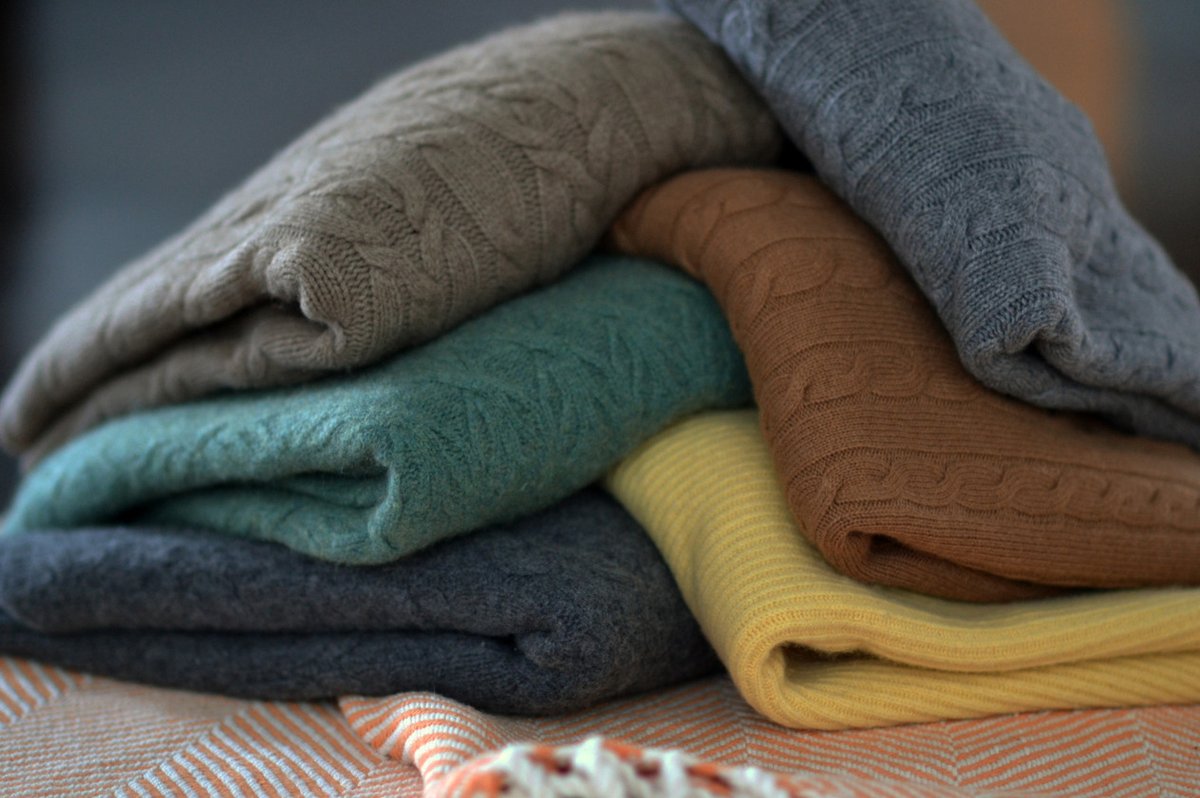
The result is a sweater like what you would have found in your grandfather's closet: a knit that held its shaped, resisted pilling, and was durable in both construction and design. These are the sorts of cable knits once found at high-end men's clothiers, worn and passed down.
15
The problem is that the cashmere industry evolved of the decades in both technology and trade. Technology made it possible for producers to cut corners in the ways I mentioned above. Free trade broke up the supply chain, so different areas specialized in different qualities.
16
The industry also increasingly sold cashmere on the promise of incomparable softness. To hold a cashmere sweater was like holding a cloud, they were told. Scottish cashmere knits are soft, but ... not cloud soft.
How do you make a sweater cloud soft?
How do you make a sweater cloud soft?
17
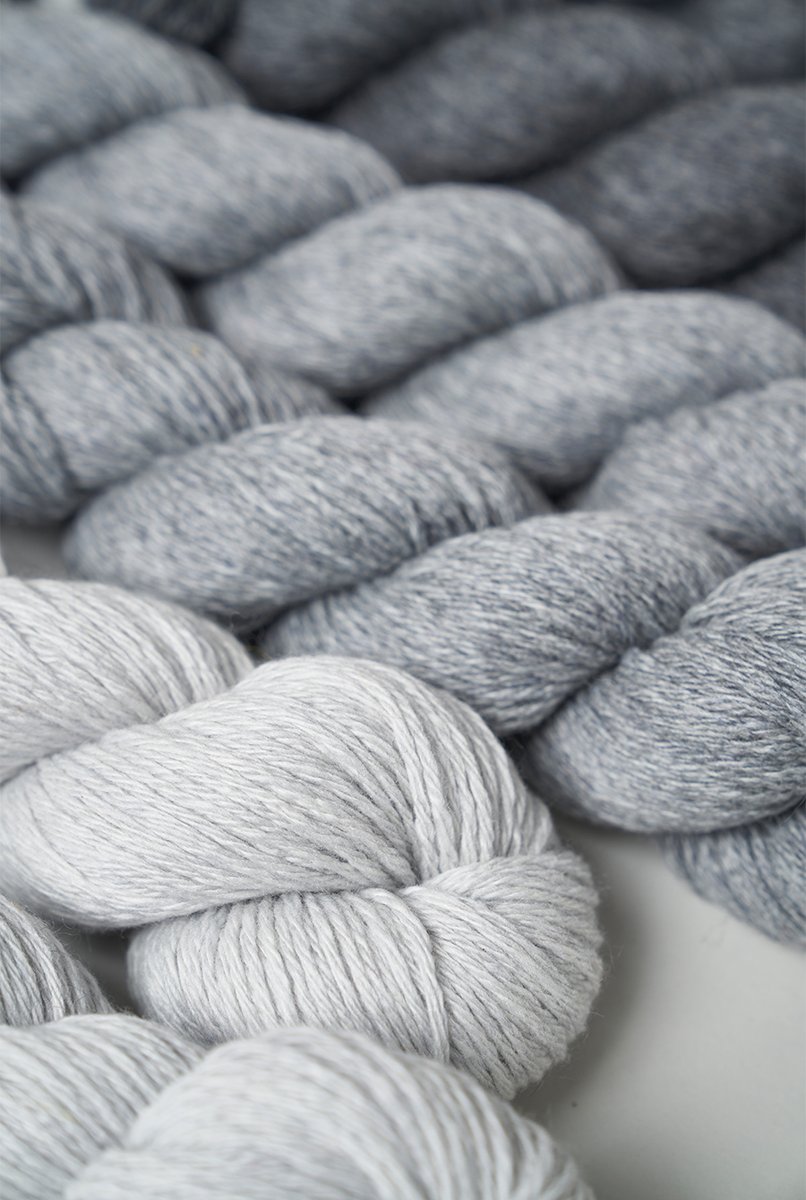
You can do it in two ways: by spinning the yarn with less tension, so there are more hairs sticking up. But this can result in pilling. Or by washing the sweater more heavily during the finishing process. The second is an art. Do too much, and the sweater is prone to pilling.

18
Since the 1950s, the Scottish knitwear industry has been outflanked on two sides. Italian mills were better at producing cloud soft knits by milling sweaters more heavily, as well as producing fashion lines. Chinese producers gave people cheaper, lower quality knits.
19
If you were to buy a high-end cashmere sweater in the 1950s, you would have gone to a store like Brooks Brothers and bought a Scottish knit. Today, there are thousands of options, and uninformed consumers find it difficult to tell the difference.

20
Quince sells Chinese cashmere sweaters for $60. William Lockie sells Scottish cashmere knits for $400. Italian cashmere knits can cost anywhere from $200 to $7,000. When you handle these in a store, it can be hard to tell the difference because quality reveals itself over time.


21
This is basically the difference between Scottish and Italian knits. There are few producers left in Scotland and most of them still stick to a similar formula. They source yarns from Todd & Duncan, knit tightly, and do a "bare finish" (i.e., wash less).

22
The result is a sweater that's soft, but not cloud soft. The softness comes from wearing and washing the sweater over time. Think of it like the difference between pre-washed versus raw denim. In the second, you break in the material.


23
The upside of that is that you're guaranteed heritage quality—a sweater that lasts. With Italian knits, there are more variables bc there's a wider range of producers. Brands like Cucinelli use the best materials and know how to get softness without damaging the yarn.

24
They also do these incredible, stylish designs you see below. You're not going to find these from a Scottish company.
But if you go to a lower-end Italian producer? Maybe they've knit with more slack, used lower-quality yarns, or milled the sweater too heavily. Who knows.

But if you go to a lower-end Italian producer? Maybe they've knit with more slack, used lower-quality yarns, or milled the sweater too heavily. Who knows.
25
I like classic designs in a quality that will last. I also don't mind breaking in the sweater—I don't associate cloud softness with quality. But if you like a softer sweater or want a more fashionable design, maybe you choose Italian. It's about knowing the difference.
