@Tim_Denning: Master sales and you can print...
@Tim_Denning
55 views
Feb 26, 2025
1
Master sales and you can print money at will.
Sadly, most people don't know how to sell or where to start.
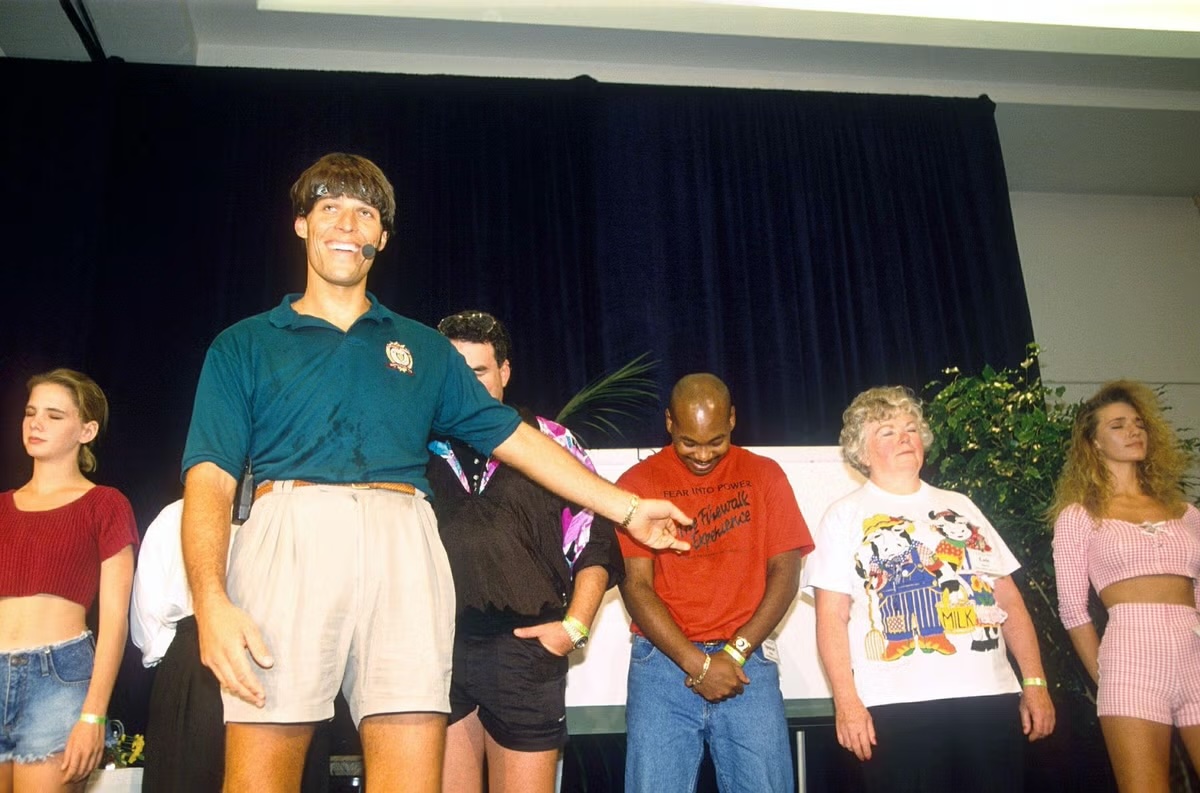
Tony Robbins is a master at sales and has a net worth of $600M because of it.
Here are 10 sales techniques I learned from him (that made me a millionaire):
Sadly, most people don't know how to sell or where to start.
Tony Robbins is a master at sales and has a net worth of $600M because of it.
Here are 10 sales techniques I learned from him (that made me a millionaire):
2
"People don't buy products, they buy feelings."
They buy states.
They buy identities.
Sales is a game of psychology. If you understand how humans think you can sell anything.
Sales is persuasion, not manipulation.
They buy states.
They buy identities.
Sales is a game of psychology. If you understand how humans think you can sell anything.
Sales is persuasion, not manipulation.
3
1. Turn them on with an uncommon form of rapport
No one gives a damn about product benefits if they don't like you.
Start with small talk and personal stories.
No one gives a damn about product benefits if they don't like you.
Start with small talk and personal stories.
4
2. Find their real hidden needs
Once you're in rapport they'll open up.
-Find out what their need is.
-Find out what they want to change.
If they don't know what they need ask them:
"If something could be a little bit better what would it be?"
Once you're in rapport they'll open up.
-Find out what their need is.
-Find out what they want to change.
If they don't know what they need ask them:
"If something could be a little bit better what would it be?"
5
Now ask "What would it take?"
Open questions help to identify needs.
You must dare to let the prospect imagine what you're saying, if they don't know they need it.
And help them imagine a change they haven't yet got. Make them feel it.
Open questions help to identify needs.
You must dare to let the prospect imagine what you're saying, if they don't know they need it.
And help them imagine a change they haven't yet got. Make them feel it.
6
3. Change their state
You can do it with:
• metaphors
• pattern interrupts
• mirroring their state
MOST POWERFUL:
Change their physiology
Your goal is to put them in a state where they've bought before.
You can do it with:
• metaphors
• pattern interrupts
• mirroring their state
MOST POWERFUL:
Change their physiology
Your goal is to put them in a state where they've bought before.
7
4. Open up a wound and let it bleed a little
Pain is a bigger motivator than pleasure.
The prospect needs to be reminded of the alternative to not buying your thing.
Otherwise they have no motivation to change.
We don't buy nice-to-haves (read that ten times)
Pain is a bigger motivator than pleasure.
The prospect needs to be reminded of the alternative to not buying your thing.
Otherwise they have no motivation to change.
We don't buy nice-to-haves (read that ten times)
8
5. Have answers for the 3 main objections BEFORE you start
- No time
- No money
- Don't believe it's worth it
Someone can always find time or money if they believe it’s worth it.
Your job is to show them it is.
- No time
- No money
- Don't believe it's worth it
Someone can always find time or money if they believe it’s worth it.
Your job is to show them it is.
9
6. Assume the sale is done as if "no" doesn't exist
If you've found a need and they're nodding their head, you have the right to assume they'll buy.
Sales isn't sleazy or unethical.
Sales is an act of service. Assume you're helping them.
If you've found a need and they're nodding their head, you have the right to assume they'll buy.
Sales isn't sleazy or unethical.
Sales is an act of service. Assume you're helping them.
10
7. Good persuasion is constantly getting small commitments.
Every yes from a prospect to an imaginary question gets you a step closer to a real yes.
Once you have momentum people are unlikely to turn around and say no to your offer.
Every yes from a prospect to an imaginary question gets you a step closer to a real yes.
Once you have momentum people are unlikely to turn around and say no to your offer.
11
7. Do a test close to make sure you're not insane and in love with yourself.
Ask: "If you were going to do this, then what would you do?"
That gets you some tiny commitment. It tells you if they would even buy from you.
Ask: "If you were going to do this, then what would you do?"
That gets you some tiny commitment. It tells you if they would even buy from you.
12
8. Do the final close
If you don't believe they won't believe.
That means if you f*cked up the pre-work & prior steps, they'll be unsure and politely say no.
Don't try to make the sale too fast.
If you don't believe they won't believe.
That means if you f*cked up the pre-work & prior steps, they'll be unsure and politely say no.
Don't try to make the sale too fast.
13
9. "Keep attaching your product to someone else's state until they say yes"
You're not selling benefits.
You're attaching your product to someone's state so they feel what you sell instead.
You're not selling benefits.
You're attaching your product to someone's state so they feel what you sell instead.
14
10. Understand what "no" means
• "You haven't tapped my strategy"
• "You haven't given me enough information"
• "You haven't got me in state yet"
The biggest sales take an average of 5 noes.
If you can't handle rejection, you won't make it
Expect rejection. Keep going.
• "You haven't tapped my strategy"
• "You haven't given me enough information"
• "You haven't got me in state yet"
The biggest sales take an average of 5 noes.
If you can't handle rejection, you won't make it
Expect rejection. Keep going.
15
Final Thought
A business is either growing or dying. If you don't master sales your business is dying by default.
And if you work a job and can't persuade, your career progression will be painfully slow.
Learn ethical persuasion.
A business is either growing or dying. If you don't master sales your business is dying by default.
And if you work a job and can't persuade, your career progression will be painfully slow.
Learn ethical persuasion.
16
The best way to ethically persuade someone, like Tony Robbins, with what you have to offer... is by writing online.
My free email course will help you get started: timdenning.com/startonsocial-…
My free email course will help you get started: timdenning.com/startonsocial-…