@soumitrashukla9: Bourdieu’s insight into social...
@soumitrashukla9
5 views
Sep 22, 2025
1
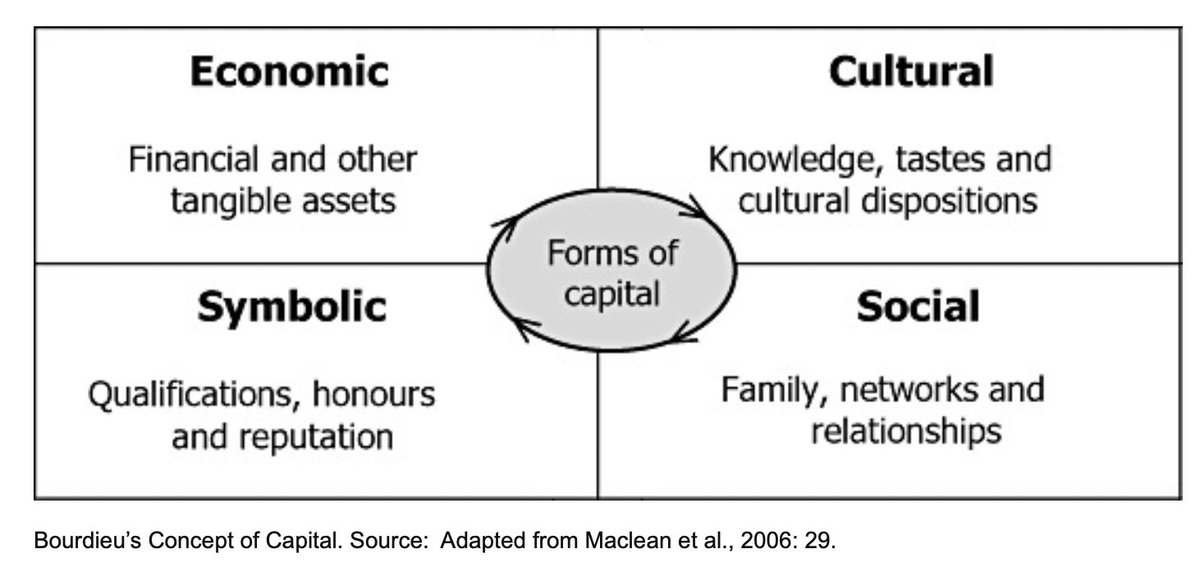
Bourdieu’s insight into social class isn’t just about money or jobs—it’s about capital in many forms. Each type (economic, cultural, social, symbolic) can reinforce the others, shaping who holds power in a society… 🧵(1/n)
2
In The Forms of Capital, Bourdieu details how wealth goes beyond bank accounts. Cultural capital (education, tastes), social capital (networks), and symbolic capital (titles, prestige) all matter for one’s place in the social hierarchy (2/n)
3
Economic capital might buy you tuition, but cultural capital—like knowing how to thrive in elite schools—turns that degree into status. Social ties then amplify it, and symbolic recognition cements it. It’s a cycle of coded advantage that shapes entire societies (3/n)
4
Meanwhile, The State Nobility takes these ideas into the realm of elite French schools, showing how they convert cultural + social capital into formal credentials—passing privilege down in the name of “merit” (4/n)

5
Bourdieu’s argument? Class reproduction is institutionalized. Schools and selective programs legitimize certain backgrounds while marginalizing others. This process can look “neutral,” but often hides deep social inequalities (5/n)
6
Similarly, Shamus Khan’s Privilege takes a deep dive into how elite boarding schools mold students’ tastes and social ease, turning cultural capital into a lifelong advantage. The school’s ethos might celebrate “diversity,” but it also encodes who truly belongs (6/n)

7
Lauren Rivera’s Pedigree similarly demonstrates how fancy hobbies and shared “fit” preferences in hiring perpetuate class privilege. Employers rarely ask, “What’s your class background?” but they do judge if you “click” with the firm’s culture—often code for shared capital (7/n)

8
For a non-Western lens: in India, caste can operate like inherited economic, cultural or symbolic capital. André Béteille’s work on caste in India shows how subtle markers—dialects, networks—still reproduce status differences and restrict access to opportunities (8/n)

9
Ultimately, whether it’s caste, accent, or the “right”extracurricular activities, Bourdieu’s concepts help explain why some thrive while others don’t—often through intangible assets passed down and recognized by gatekeeping institutions (9/n)
10
By mapping out all the ways privilege gets transmitted—from subtle cultural dispositions to formal credentials—Bourdieu offers a powerful lens for unveiling hidden inequalities (10/n)
11
The Forms of Capital and The State Nobility remain vital for understanding how class (or caste) operates beneath the surface—and why challenging these subtle forms of power is key to building more truly meritocratic institutions (n/n)
12
Some other books on similar themes:
The Class Ceiling by @SamFriedmanSoc and @Daniel_Laurison exposes how subtle class markers translate into real workplace advantages for those from privileged backgrounds
The Class Ceiling by @SamFriedmanSoc and @Daniel_Laurison exposes how subtle class markers translate into real workplace advantages for those from privileged backgrounds

13
@SamFriedmanSoc @Daniel_Laurison Recent work by @pengzell and @natewilmers shows how firm pay premiums—and parental networks that secure high-paying jobs—transmit advantage across generations: another structural layer echoing Bourdieu’s insights on how class (and networks) perpetuate socioeconomic inequality

14
@SamFriedmanSoc @Daniel_Laurison @pengzell @natewilmers Similarly, Born to Rule by @SamFriedmanSoc and @aaronsreeves traces how the British elite has been shaped and reshaped from the Victorian era to today. Sifting through archival data and interviews, they find that families born into privilege still dominate

15
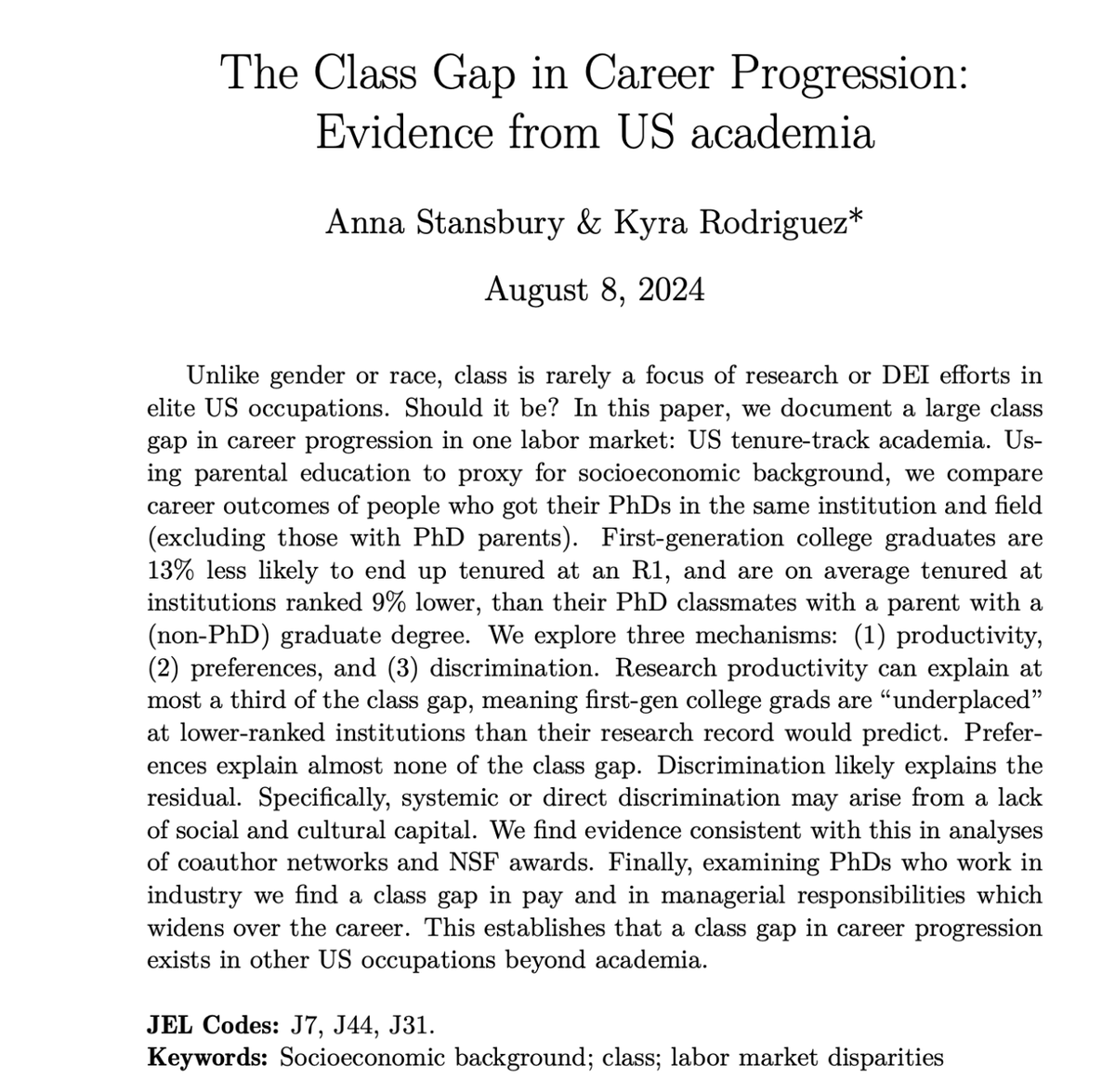
Another fresh example: new work by @annastansbury & Kyra Rodriguez on US academia. They uncover a class gap that echoes Bourdieu’s ideas: first-gen PhDs lacking the right social/cultural capital face hurdles not fully explained by their research
16
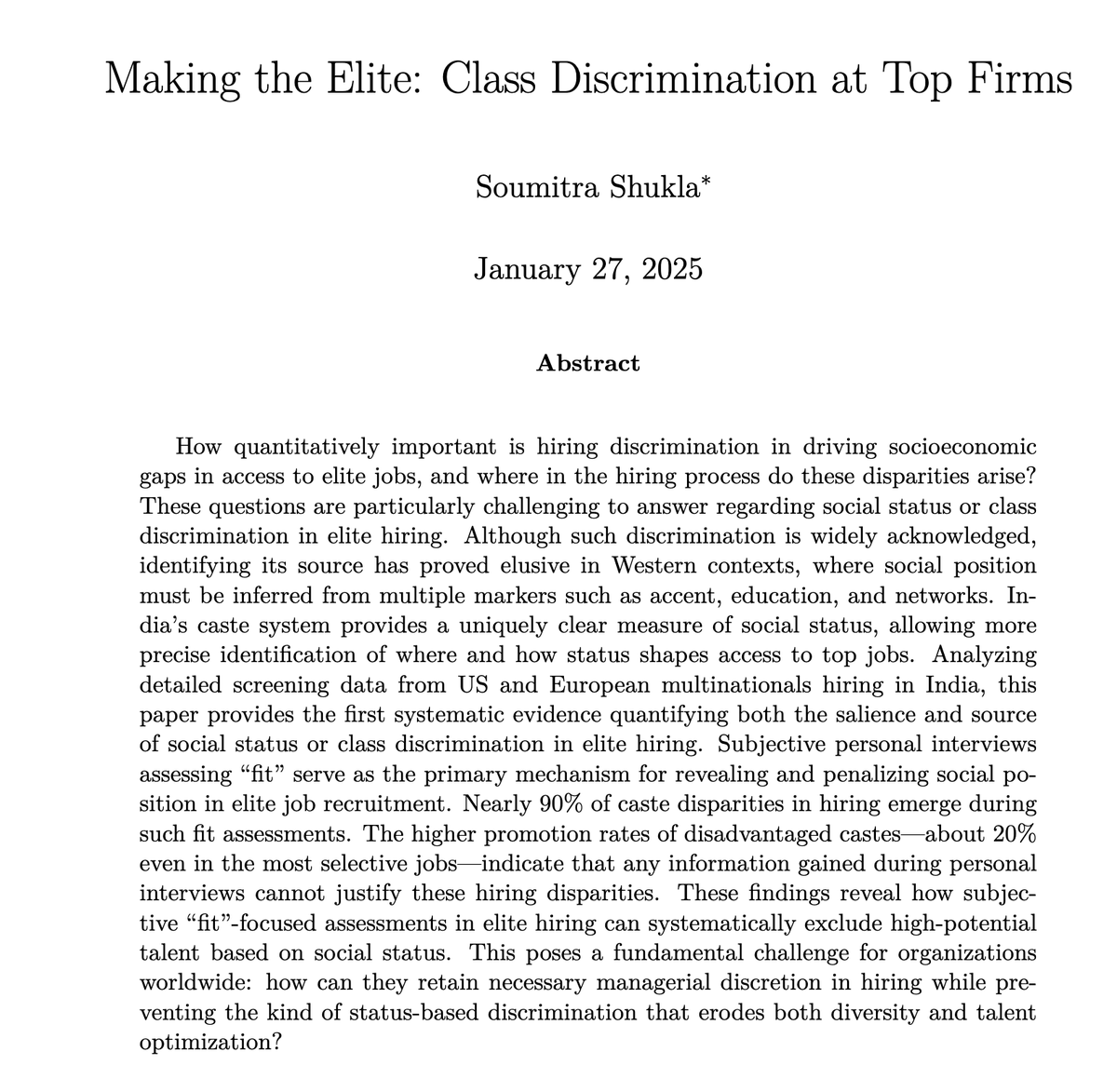
Drawing on Bourdieu's insight, I use caste as a comprehensive measure of economic, cultural, and social capital. I find that about 90% of elite hiring disparities emerge in "fit" interviews—the key mechanism through which subjective assessments reveal and penalize social status