@aestheticprimal: HOW TO FIX ASYMMETRY AND UGLY ...
@aestheticprimal
66 views
Jan 25, 2025
1
HOW TO FIX ASYMMETRY AND UGLY FACIAL PROPORTIONS
(on the bone level)
(on the bone level)
2
facial proportions and symmetry are both dependent on your connective tissue it's ability to 'relax'
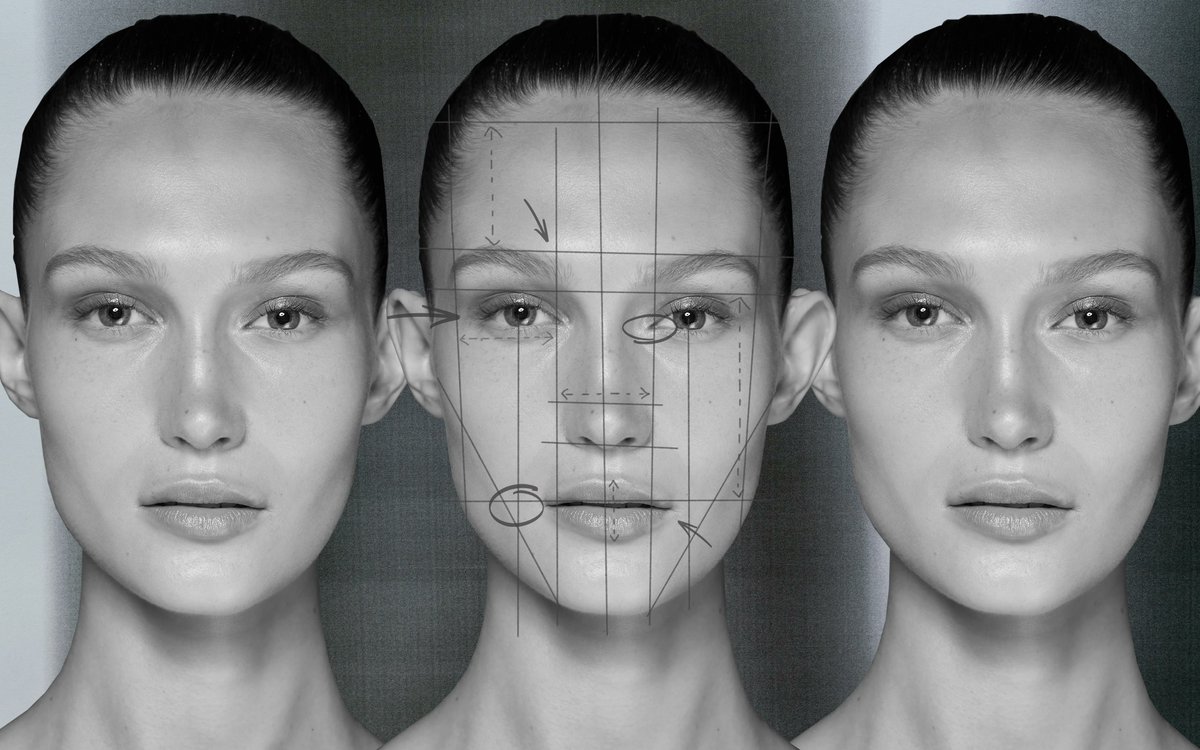
An asymmetrical face doesn’t actually mean your bones themselves are asymmetrical, the truth is that your skull itself rarely is asymmetrical, it almost doesn’t exist.
This is because there is not a single gene which programs that programs your bones to grow uneven, asymmetrical bones can only be caused by trauma, such as from boxing, hitting your head against something, or a bad accident, but even then, the asymmetry is very minimal and not noticeable at all.
99% of cases of facial asymmetry, which likely includes, yours actually stem from unevenly tight connective tissue/muscle.
Let me explain how tight connective tissues and muscles can produce asymmetry in your face.
I want you to imagine you only train the right side of your traps, over some time you will notice your posture adapts to this training and your right shoulder will start to sit much closer to your neck than your left shoulder does.
What happens when you stop training your right trap? over some time the soreness in your right trap will fade, the muscle starts to relax and your right shoulder will eventually return to it’s normal position again. Now you have a ‘more symmetric’ posture again.
Now in the picture above you can see just how many different muscles, ligaments and tendons you have on your skull.
If overtraining your traps can already have such an effect on your overall posture, imagine the effect a few tight facial muscles could have over the 18+ bones in your cranium.
It’s tightness in these facial muscles and tissues which causes asymmetry to occur in your skull, examples are:
- an eyebrow that’s higher on one side than the other
- a jaw than can be wider on your right side than the left side
- your eyes not being at the same height.
An asymmetrical face doesn’t actually mean your bones themselves are asymmetrical, the truth is that your skull itself rarely is asymmetrical, it almost doesn’t exist.
This is because there is not a single gene which programs that programs your bones to grow uneven, asymmetrical bones can only be caused by trauma, such as from boxing, hitting your head against something, or a bad accident, but even then, the asymmetry is very minimal and not noticeable at all.
99% of cases of facial asymmetry, which likely includes, yours actually stem from unevenly tight connective tissue/muscle.
Let me explain how tight connective tissues and muscles can produce asymmetry in your face.
I want you to imagine you only train the right side of your traps, over some time you will notice your posture adapts to this training and your right shoulder will start to sit much closer to your neck than your left shoulder does.
What happens when you stop training your right trap? over some time the soreness in your right trap will fade, the muscle starts to relax and your right shoulder will eventually return to it’s normal position again. Now you have a ‘more symmetric’ posture again.
Now in the picture above you can see just how many different muscles, ligaments and tendons you have on your skull.
If overtraining your traps can already have such an effect on your overall posture, imagine the effect a few tight facial muscles could have over the 18+ bones in your cranium.
It’s tightness in these facial muscles and tissues which causes asymmetry to occur in your skull, examples are:
- an eyebrow that’s higher on one side than the other
- a jaw than can be wider on your right side than the left side
- your eyes not being at the same height.


3
HOW TO RESOLVE CONNECTIVE TISSUE TIGHTNESS
this tightness doesn’t really originate from the fact you are overtraining these facial muscles, but rather an inability to relax them because of a slowed energy metabolism.
because the amount of how much facial muscle is exercised nowadays is much much less than the generations that lived before us, where soft foods and liquid calories were barely existent.
how fast your tissues are able to relax is regulated by a special protein called calciumATPase.
a muscle gets tight when the amount of calcium ions in the tissue is very high
a muscle is relaxed when the amount of calcium ions in the muscle is low, and the amount of magnesium ions is high.
CalciumATPase is a protein which pumps the Calcium ions out of the muscle or connective tissue, this is why if you want a muscle to be able to relax properly, you need enough CalciumATPase and if you want more CalciumATPase, you need more ATP, like it already says in the name.
ATP is the biological currency of energy, which is produced by the mitochondria.
To make all of this more understandable for you; you basically need to improve your cellular energy metabolism if you want to resolve you asymmetry to become symmetrical and better looking.
this tightness doesn’t really originate from the fact you are overtraining these facial muscles, but rather an inability to relax them because of a slowed energy metabolism.
because the amount of how much facial muscle is exercised nowadays is much much less than the generations that lived before us, where soft foods and liquid calories were barely existent.
how fast your tissues are able to relax is regulated by a special protein called calciumATPase.
a muscle gets tight when the amount of calcium ions in the tissue is very high
a muscle is relaxed when the amount of calcium ions in the muscle is low, and the amount of magnesium ions is high.
CalciumATPase is a protein which pumps the Calcium ions out of the muscle or connective tissue, this is why if you want a muscle to be able to relax properly, you need enough CalciumATPase and if you want more CalciumATPase, you need more ATP, like it already says in the name.
ATP is the biological currency of energy, which is produced by the mitochondria.
To make all of this more understandable for you; you basically need to improve your cellular energy metabolism if you want to resolve you asymmetry to become symmetrical and better looking.
4
CONNECTING THE DOTS
The achilles-tendon reflex test is a test traditionally used to decide whether a person was hypothyroid or not.
Triiodothyronine (bioactive thyroid hormone) is THE hormone which oversees your metabolism and ultimately ATP production, so it’s levels will also have effects on CalciumATPase and muscle relaxation.
This is why individuals that had high Triiodothyronine levels were able to relax their achilles tendons much more quickly, whereas people with low Triiodothyronine took a much longer time.
And this is why tightness of facial connective tissues needs to be resolved by enhancing levels of T3 and ATP because they increase the speed of how fast calcium ions are pumped OUT of the tissues which results in the facial muscles and tissues loosening up and thereby your facial bones return back into their original place, which means your face will be symmetric again.
solution to asymmetry is upregulating the metabolism, and there are some hacks you can do to improve your metabolism and asymmetry, so let’s start.
The achilles-tendon reflex test is a test traditionally used to decide whether a person was hypothyroid or not.
Triiodothyronine (bioactive thyroid hormone) is THE hormone which oversees your metabolism and ultimately ATP production, so it’s levels will also have effects on CalciumATPase and muscle relaxation.
This is why individuals that had high Triiodothyronine levels were able to relax their achilles tendons much more quickly, whereas people with low Triiodothyronine took a much longer time.
And this is why tightness of facial connective tissues needs to be resolved by enhancing levels of T3 and ATP because they increase the speed of how fast calcium ions are pumped OUT of the tissues which results in the facial muscles and tissues loosening up and thereby your facial bones return back into their original place, which means your face will be symmetric again.
solution to asymmetry is upregulating the metabolism, and there are some hacks you can do to improve your metabolism and asymmetry, so let’s start.
5
my top list for improving the ability to relax your connective tissues:
- increasing magnesium intake
- clearing the liver to enhance T4 -> T3 conversion
- increasing digestive flow
- lowering serotonin
- inhibiting aromatase
- researching Ray Peat and his ideas
- saturated fat > PUFA
- maxxing trace minerals (
- sunlight
- grounding
- increasing co2 tolerance (buteyko)
- increasing thiamine intake
- lowering endotoxins
- abundance of carbs
- movement
- regulating autonomic nervous system (SNS:PSNS balance)
- increasing magnesium intake
- clearing the liver to enhance T4 -> T3 conversion
- increasing digestive flow
- lowering serotonin
- inhibiting aromatase
- researching Ray Peat and his ideas
- saturated fat > PUFA
- maxxing trace minerals (
View Tweet)
- sunlight
- grounding
- increasing co2 tolerance (buteyko)
- increasing thiamine intake
- lowering endotoxins
- abundance of carbs
- movement
- regulating autonomic nervous system (SNS:PSNS balance)
6
Royal Jelly is perhaps one of the most effective quick fixes for this problem
it's Acetylcholine content directly activates the PSNS, ensuring complete relaxation
then you also have compounds like DHEA and Progesterone in there that further facilitate a strong metabolism producing enough ATP to get the Calcum ions out of the muscle.
Get Royal Jelly from Dutch beekeepers here: aesthetic-alimentum.com/products/royal…
it's Acetylcholine content directly activates the PSNS, ensuring complete relaxation
then you also have compounds like DHEA and Progesterone in there that further facilitate a strong metabolism producing enough ATP to get the Calcum ions out of the muscle.
Get Royal Jelly from Dutch beekeepers here: aesthetic-alimentum.com/products/royal…