@culturaltutor: Over 2,000 years ago there was...
@culturaltutor
51 views
Dec 19, 2024
1
Over 2,000 years ago there was a philosopher who believed in atoms, speculated about aliens, created a theory of evolution — and even said religion was just superstition.
Here's a brief introduction to Epicureanism, the strangest (and most controversial) ancient philosophy...
Here's a brief introduction to Epicureanism, the strangest (and most controversial) ancient philosophy...

2
Epicurus was a philosopher who lived in Athens in the 3rd century BC.
He refined and expanded on existing beliefs until he had created a definitive philosophy of his own: Epicureanism.
Epicurus also set up a school in Athens, where he taught these ideas, known as "the Garden".
He refined and expanded on existing beliefs until he had created a definitive philosophy of his own: Epicureanism.
Epicurus also set up a school in Athens, where he taught these ideas, known as "the Garden".

3
In the 1st century BC these beliefs were put into an epic poem by a Roman poet called Lucretius.
This poem, called "On the Nature of Things", is sort of like the Epicurean manifesto.
All quotes here are from On the Nature of Things, as translated by AE Stallings in 2007.
This poem, called "On the Nature of Things", is sort of like the Epicurean manifesto.
All quotes here are from On the Nature of Things, as translated by AE Stallings in 2007.

4
So, Epicurus believed in atoms 2,000 years before they were proven to exist.
He thought everything in our world was made from a fixed number of identical, indivisible particles.
This went against the prevailing ancient view that the universe was made from the four elements.
He thought everything in our world was made from a fixed number of identical, indivisible particles.
This went against the prevailing ancient view that the universe was made from the four elements.
5
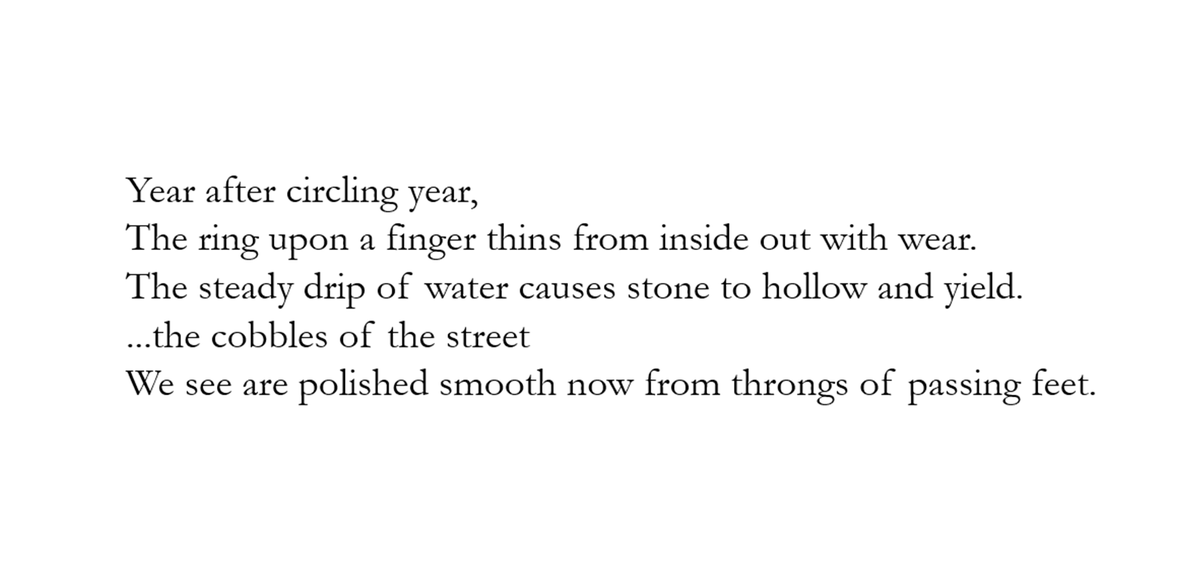
This belief, Lucretius explains, came from careful observation.
When a stone step is eroded (for example) the missing bits can't simply "disappear" — otherwise the universe itself would eventually wear away.
So where do they go? They become part of something else.
When a stone step is eroded (for example) the missing bits can't simply "disappear" — otherwise the universe itself would eventually wear away.
So where do they go? They become part of something else.
6
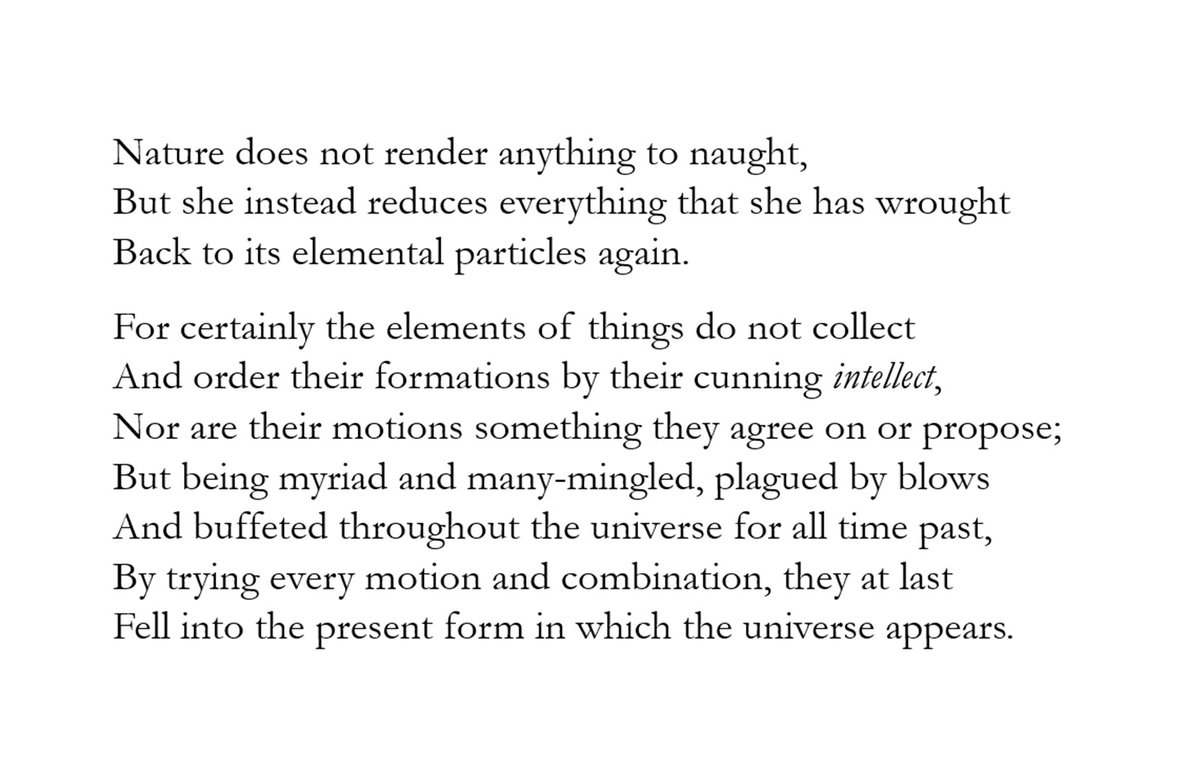
Since it's impossible to get something from nothing, Epicurus reasoned the universe must have a fixed amount of material.
Grass isn't made of "grass particles" — rather, he realised everything must be made of the same fundamental parts, just rearranged differently over time.
Grass isn't made of "grass particles" — rather, he realised everything must be made of the same fundamental parts, just rearranged differently over time.
7
And so, logically, this led the Epicureans to a strictly materialist worldview.
They even argued that the sun and stars must eventually decay — which contradicted the long-held view that the heavenly bodies were eternal and permanent.
They even argued that the sun and stars must eventually decay — which contradicted the long-held view that the heavenly bodies were eternal and permanent.

8
But the Epicureans went even further — and argued that the gods, though real, were part of the natural world and had no role in human affairs.
This is as close as the Greeks ever came to real atheism; Epicurus wanted to free people from what he saw as religious delusions.
This is as close as the Greeks ever came to real atheism; Epicurus wanted to free people from what he saw as religious delusions.

9
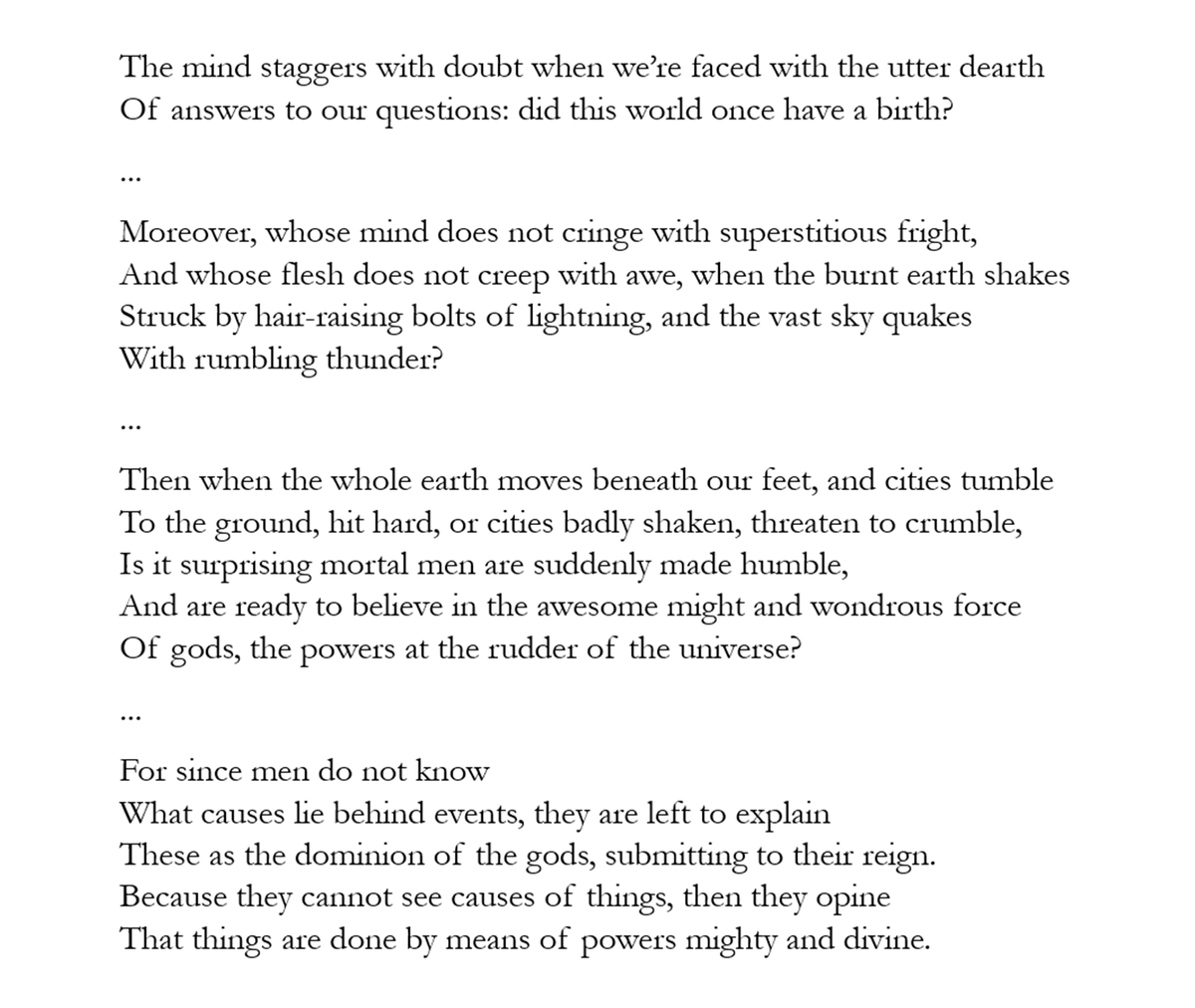
Lucretius even criticises organised religion as mere superstition.
He understood why people believed in the gods — the world is complicated and frightening — but argued that it was just a result of ignorance.
When we have no other answers we turn to divine explanations.
He understood why people believed in the gods — the world is complicated and frightening — but argued that it was just a result of ignorance.
When we have no other answers we turn to divine explanations.
10
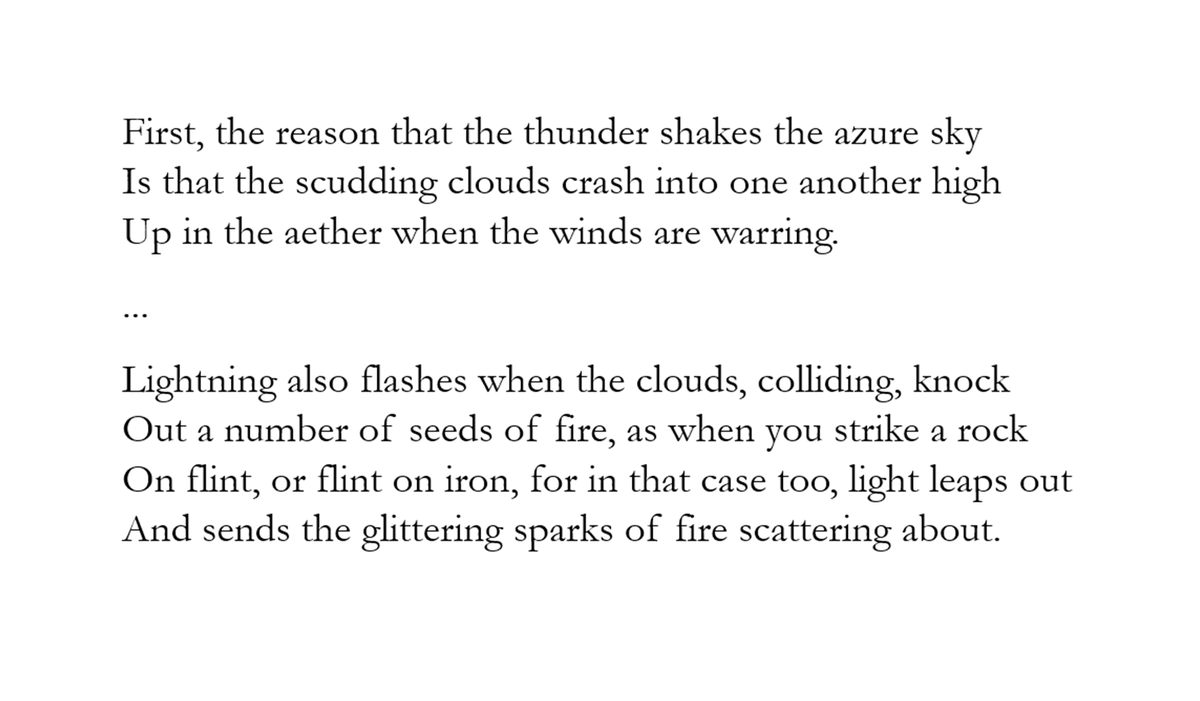
And so Epicurus argued that natural phenomena such as lightning were not the work of the gods.
Rather, as somebody who believed in cause-and-effect, in a logical and fixed cosmic order, he sought out rational, scientific explanations for what we see around us.
Rather, as somebody who believed in cause-and-effect, in a logical and fixed cosmic order, he sought out rational, scientific explanations for what we see around us.
11
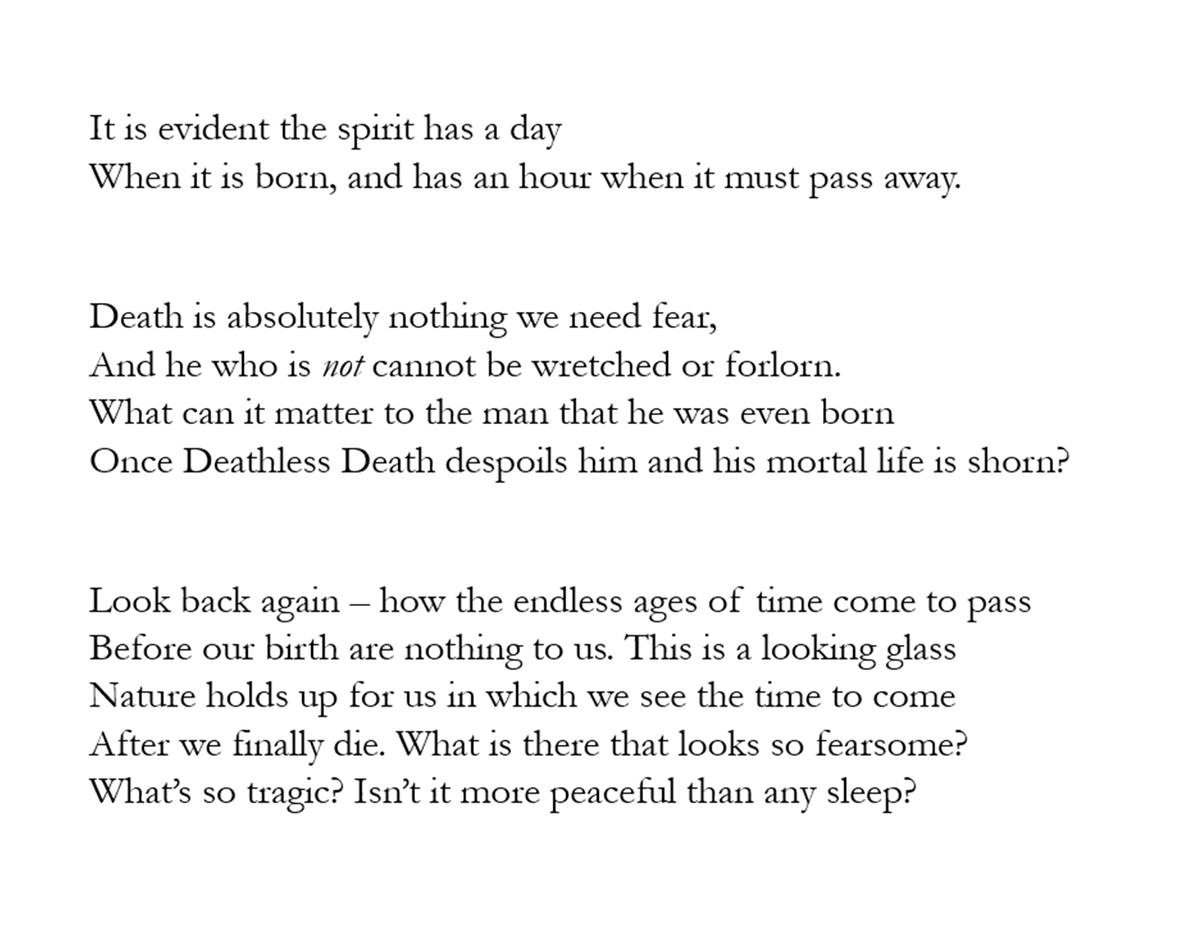
And Epicurus did not shy away from following his materialism to its logical conclusion; he applied it to humanity as well.
Thus Epicurus believed that mind and soul were phenomena arising from the material coincidence of life.
When our physical bodies perish, so do our souls.
Thus Epicurus believed that mind and soul were phenomena arising from the material coincidence of life.
When our physical bodies perish, so do our souls.
12
Still, the materialist Epicurean worldview did not preclude free will.
Rather, Epicurus believed there was a certain amount of randomness in the universe — he said atoms could "swerve" — and therefore our lives are not wholly predetermined.
We still have some freedom to choose.
Rather, Epicurus believed there was a certain amount of randomness in the universe — he said atoms could "swerve" — and therefore our lives are not wholly predetermined.
We still have some freedom to choose.
13
Hence, Epicurus said, there was no reason to fear death — it would, essentially, be like sleep.
Neither Hell nor Heaven; only nothingness.
He criticised those too attached to life, and believed that our needless fear of death is what makes life unbearable in any case.
Neither Hell nor Heaven; only nothingness.
He criticised those too attached to life, and believed that our needless fear of death is what makes life unbearable in any case.

14
All this explains Epicurus' core belief that freedom from physical and psychological pain should be a human's primary goal.
Later critics warped this to say that Epicurus believed in simply seeking pleasure, but that isn't true.
It was a peaceful state of mind that he sought.
Later critics warped this to say that Epicurus believed in simply seeking pleasure, but that isn't true.
It was a peaceful state of mind that he sought.
15
The ideal way to live, according to Epicurus, was by avoiding pain and living simply — pursuing physical pleasures only caused psychological distress, he believed.
As material creatures we have a limited lifespan; making it as peaceful as possible seemed the only logical path.
As material creatures we have a limited lifespan; making it as peaceful as possible seemed the only logical path.
16
That sounds uncontroversial — but, once upon a time, it was a radical and even dangerous belief.
Downplaying the importance of the gods and arguing that the human soul was a purely physical and thus limited phenomenon ran contrary to all other ancient philosophical views.
Downplaying the importance of the gods and arguing that the human soul was a purely physical and thus limited phenomenon ran contrary to all other ancient philosophical views.
17
This explains why (for example) Dante places Epicurus in Hell, trapped with his followers in flaming tombs.
To deny an immortal soul and to say that humans are purely material creatures, the result of random physical interactions rather than divinely-created beings, was heresy.
To deny an immortal soul and to say that humans are purely material creatures, the result of random physical interactions rather than divinely-created beings, was heresy.

18
Otherwise, in On the Nature of Things, Lucretius speculates about alien life.
That sounds surprising, but it only makes sense given Epicurus' materialist, proto-scientific worldview.
If life could arise on Earth, why shouldn't it arise elsewhere in an ordered universe?
That sounds surprising, but it only makes sense given Epicurus' materialist, proto-scientific worldview.
If life could arise on Earth, why shouldn't it arise elsewhere in an ordered universe?

19
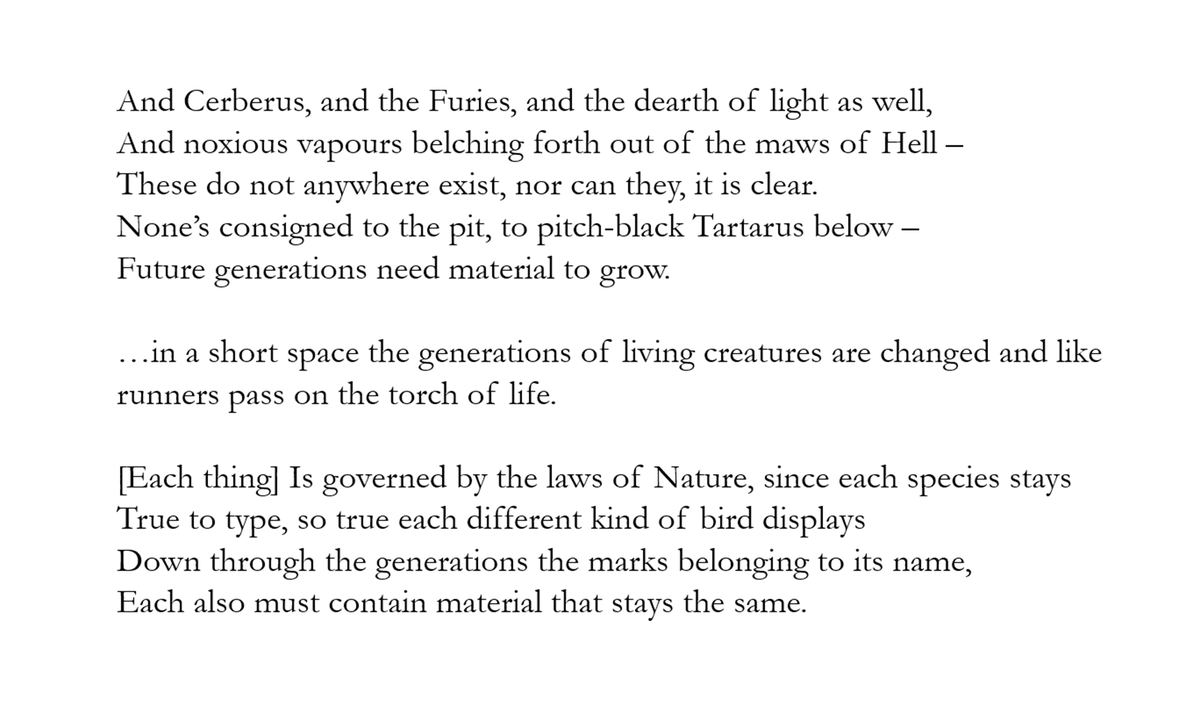
And Lucretius even seemed to propose what seems like a basic theory of evolution.
The fact that different kinds of animals retain the same traits from one generation to the next suggests they pass on a certain amount of the same material or information.
The fact that different kinds of animals retain the same traits from one generation to the next suggests they pass on a certain amount of the same material or information.
20
As there has been a Stoic revival, could there be an Epicurean revival?
Well, our worldview is already Epicurean.
Because the Scientific Revolution itself (and then the Enlightenment) were partly spurred by the revival of Epicurus' materialist beliefs in the 17th century.
Well, our worldview is already Epicurean.
Because the Scientific Revolution itself (and then the Enlightenment) were partly spurred by the revival of Epicurus' materialist beliefs in the 17th century.
21
In any case, that's a brief overview of Epicurus and the Epicureans — surely among the most interesting, and most misunderstood, of all ancient philosophical movements.
But, perhaps, their most important and enduring lesson is in the power of observation.
But, perhaps, their most important and enduring lesson is in the power of observation.
22
Because it wasn't with advanced equipment, or even with complex scientific theories, that they proposed the existence of atoms.
It was simply by observing the world around them, and reflecting on these observations logically, that the Epicureans were so far ahead of their time.
It was simply by observing the world around them, and reflecting on these observations logically, that the Epicureans were so far ahead of their time.
23
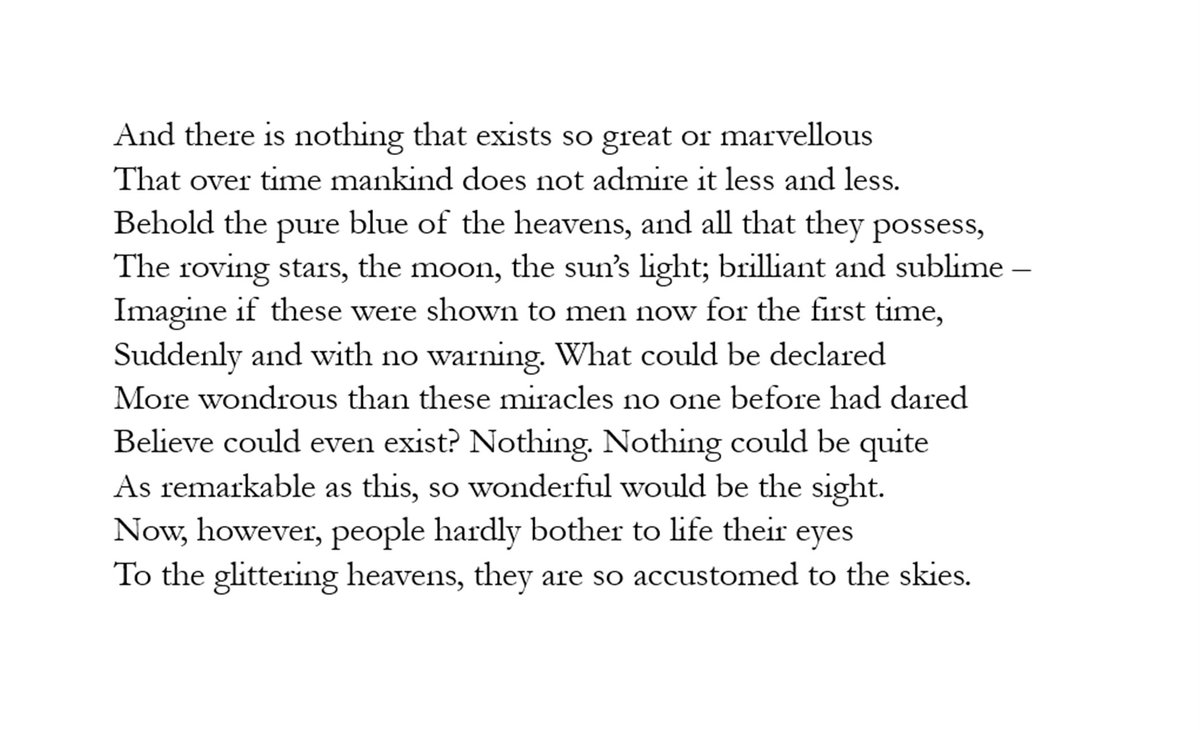
Ultimately, then, Epicureanism is really about a sense of wonder.
As Lucretius says, so long as we humans are always desperate for more there is nothing we will not get bored of.
Epicurus reminds us to look at the world with fresh, inquisitive, and grateful eyes.
As Lucretius says, so long as we humans are always desperate for more there is nothing we will not get bored of.
Epicurus reminds us to look at the world with fresh, inquisitive, and grateful eyes.