@photobiogenesis: Thoughts on the relationship b...
@photobiogenesis
15 views
Apr 13, 2025
1
Thoughts on the relationship between deuterium and diet
For some time now I've written about deuterium, the "heavy" form of hydrogen which contains an extra neutron in its nucleus
This produces a "deuteron" instead of a proton, and deuterons move through proton-driven reactions exponentially more slowly due to the kinetic isotope effect
Deuterium has been associated with reduced mitochondrial metabolism and other metabolic impairments, so it's useful to limit it in the diet
This raises the question, what's the relationship between deuterium and different chain length fats?
For some time now I've written about deuterium, the "heavy" form of hydrogen which contains an extra neutron in its nucleus
This produces a "deuteron" instead of a proton, and deuterons move through proton-driven reactions exponentially more slowly due to the kinetic isotope effect
Deuterium has been associated with reduced mitochondrial metabolism and other metabolic impairments, so it's useful to limit it in the diet
This raises the question, what's the relationship between deuterium and different chain length fats?

2
Short chain fats are more common in dairy, while medium chain fats are abundant in tropical highly saturated oils like coconut and palm kernel oil
Lipid saturation is tuned to latitude, light, and environmental temperature
This is why cold water fish are rich in highly unsaturated omega-3 fats, for example
The double bonds in unsaturated fats reduce Van der Waals forces between lipids, normally at cold temperatures this attractive force causes them to bind together rigidly
Van der Waals interactions occur when fluctuations in the electron structure of the hydrogen in lipids sync up, and double bonds work as a defect that limits this
This is also why oils from fish in cold water, and seeds which are exposed to cold winters, both tend to be highly unsaturated
Lipid saturation is tuned to latitude, light, and environmental temperature
This is why cold water fish are rich in highly unsaturated omega-3 fats, for example
The double bonds in unsaturated fats reduce Van der Waals forces between lipids, normally at cold temperatures this attractive force causes them to bind together rigidly
Van der Waals interactions occur when fluctuations in the electron structure of the hydrogen in lipids sync up, and double bonds work as a defect that limits this
This is also why oils from fish in cold water, and seeds which are exposed to cold winters, both tend to be highly unsaturated
3
In contrast, coconut and palm oil are highly saturated
Since plants aren't thermogenic in the way mammals are, they rely on ambient temperature to determine their lipid composition
High heat and light near the equator is associated with greater ROS generation, so it benefits these plants to use highly oxidation-resistant saturated fats instead
The high heat environment also dramatically increases the risk of potential fungal or bacterial infections in the fruit/seed
It turns out that medium chain fats like lauric and caprylic acid have antibiotic and antifungal effects, so these plants evolved medium-chain acyl-ACP thioesterase (MCTE) enzymes which cap fat synthesis early before they reach long chain length
Since plants aren't thermogenic in the way mammals are, they rely on ambient temperature to determine their lipid composition
High heat and light near the equator is associated with greater ROS generation, so it benefits these plants to use highly oxidation-resistant saturated fats instead
The high heat environment also dramatically increases the risk of potential fungal or bacterial infections in the fruit/seed
It turns out that medium chain fats like lauric and caprylic acid have antibiotic and antifungal effects, so these plants evolved medium-chain acyl-ACP thioesterase (MCTE) enzymes which cap fat synthesis early before they reach long chain length
4
Deuterium is also tuned to latitude, altitude, and light
The "heavy" nature of deuterium causes it to precipitate out first in rainfall, so most of the world's deuterium is found in the ocean and closer to the equator
Global weather cycles act to naturally deplete deuterium for organisms living at high altitude and high latitude
It turns out that cells use a similar "cycling" process to deplete deuterium during metabolism as well
The "heavy" nature of deuterium causes it to precipitate out first in rainfall, so most of the world's deuterium is found in the ocean and closer to the equator
Global weather cycles act to naturally deplete deuterium for organisms living at high altitude and high latitude
It turns out that cells use a similar "cycling" process to deplete deuterium during metabolism as well

5
I've talked about this before in several contexts
Glycolysis includes several key reactions in which hydrogen is taken out as water, and immediately replaced with a different hydrogen atom from water
This seems superfluous until you realize that if a deuterium is sitting at that site, it will be cleared regardless since the enzyme is selective for that hydrogen position alone
When it comes to selecting a replacement however, there are numerous water molecules to choose from so it's far more likely the reaction will occur with light hydrogen rather than deuterium
All the steps that involve these hydrogen-swap reactions are also bidirectional, so they can cycle if needed
This means glycolysis moves deuterium out of pyruvate and into cell water
Glycolysis includes several key reactions in which hydrogen is taken out as water, and immediately replaced with a different hydrogen atom from water
This seems superfluous until you realize that if a deuterium is sitting at that site, it will be cleared regardless since the enzyme is selective for that hydrogen position alone
When it comes to selecting a replacement however, there are numerous water molecules to choose from so it's far more likely the reaction will occur with light hydrogen rather than deuterium
All the steps that involve these hydrogen-swap reactions are also bidirectional, so they can cycle if needed
This means glycolysis moves deuterium out of pyruvate and into cell water

6
Beta-oxidation, the breakdown of fats into multiple molecules of acetyl-coa, uses a different mechanism that depletes deuterium less effectively
In general hydrogen atoms from lipids are fed directly into the electron transport chain without the same cycling with water seen in glycolysis
Glycolysis feeds solely into complex I of the ETC through NAD+, while beta oxidation makes use of both complex I and complex II via FAD+
Beta oxidation also produces less CO2 and ATP per mole of oxygen, though beta oxidation also creates more ATP total due to the greater caloric density of lipids vs carbs
In general hydrogen atoms from lipids are fed directly into the electron transport chain without the same cycling with water seen in glycolysis
Glycolysis feeds solely into complex I of the ETC through NAD+, while beta oxidation makes use of both complex I and complex II via FAD+
Beta oxidation also produces less CO2 and ATP per mole of oxygen, though beta oxidation also creates more ATP total due to the greater caloric density of lipids vs carbs

7
The latitude, elevation, and mechanism through which lipids are created, all influences the deuterium content of food
In general, the deuterium content of sugars and carbohydrates is higher than in fats, while animal fats are lower in deuterium than vegetable oils
Interestingly grains and industrial seed oils are some of the higher deuterium foods, while coconut oil is the lowest deuterium food tested at 110 ppm
What's the reason for this difference?
In general, the deuterium content of sugars and carbohydrates is higher than in fats, while animal fats are lower in deuterium than vegetable oils
Interestingly grains and industrial seed oils are some of the higher deuterium foods, while coconut oil is the lowest deuterium food tested at 110 ppm
What's the reason for this difference?
8
Since deuterium research is still in its infancy it's difficult to say for sure, but I'll speculate on a few mechanisms
Plants funnel protons into glucose synthesis in the Calvin cycle using six molecules of the reducing agent (electron and proton donor) NADPH
NADPH is produced via the thylakoid electron transport chain, which uses NADP+ reductase
As far as I can tell, while protons that move through the thylakoid ATPase are filtered through the ETC first, protons used by NADP+ reductase partially or completely come from the stroma side and are less deuterium depleted
This makes carbohydrates synthesized by plants inherently higher in deuterium (around 150ppm)
Plants funnel protons into glucose synthesis in the Calvin cycle using six molecules of the reducing agent (electron and proton donor) NADPH
NADPH is produced via the thylakoid electron transport chain, which uses NADP+ reductase
As far as I can tell, while protons that move through the thylakoid ATPase are filtered through the ETC first, protons used by NADP+ reductase partially or completely come from the stroma side and are less deuterium depleted
This makes carbohydrates synthesized by plants inherently higher in deuterium (around 150ppm)


9
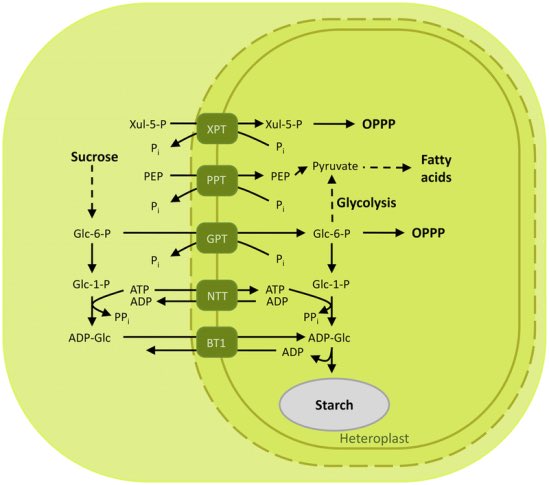
When plants synthesize lipids they funnel glucose through glycolysis to create pyruvate, which is then converted into acetyl-coa
Plants use the same fatty acid synthase enzymes, which then convert acetyl-coa to malonyl-coa which is then built into various lipids
Since glycolysis depletes deuterium plant fats are generally lower in deuterium, but not fully deuterium depleted
Laszlo Boros and Stephanie Seneff, two of the leading researchers discussing deuterium, suggest that the unexpectedly high level of deuterium in industrial seed oils may stem from the use of solvent like hexane which may act as a deuterium source
This suggests that cold pressed oils should be lower in deuterium than cheap canola or soybean oil
Plants use the same fatty acid synthase enzymes, which then convert acetyl-coa to malonyl-coa which is then built into various lipids
Since glycolysis depletes deuterium plant fats are generally lower in deuterium, but not fully deuterium depleted
Laszlo Boros and Stephanie Seneff, two of the leading researchers discussing deuterium, suggest that the unexpectedly high level of deuterium in industrial seed oils may stem from the use of solvent like hexane which may act as a deuterium source
This suggests that cold pressed oils should be lower in deuterium than cheap canola or soybean oil
10
My personal theory is that overfarming and monocrops may play a role in higher deuterium food as well
Plants might preferentially absorb lighter isotopes like deuterium from soil first, leaving heavy isotopes behind
But when light isotopes are depleted with repeat farming, soil deuterium content could increase over time
Loss of deuterium-depleting bacteria and fungi from the use of pesticides could play a role as well
Plants might preferentially absorb lighter isotopes like deuterium from soil first, leaving heavy isotopes behind
But when light isotopes are depleted with repeat farming, soil deuterium content could increase over time
Loss of deuterium-depleting bacteria and fungi from the use of pesticides could play a role as well
11
Ruminant fat tends to be more deuterium depleted, since its a
either derived from fiber fermentation into short chain fats in the gut, or produced from acetyl-coa derived from the Krebs cycle
Deuterium content of animal fat depends strongly on feed however, grain-fed fat is lower in deuterium than grains but still higher than pastured animal fat
Boros et al. have a good study on this
t.co/Jn6qXl3Xys
either derived from fiber fermentation into short chain fats in the gut, or produced from acetyl-coa derived from the Krebs cycle
Deuterium content of animal fat depends strongly on feed however, grain-fed fat is lower in deuterium than grains but still higher than pastured animal fat
Boros et al. have a good study on this
t.co/Jn6qXl3Xys
12
Light environment can also drive deuterium depletion as well, and long days with high sun exposure could improve the use of higher deuterium foods
Light stimulates various redox reactions through the photoelectric effect
Infrared light enhances function of the electron transport chain by improving oxygen binding to cytochrome C oxidase and displacing nitric oxide
These and other reactions may reduce or eliminate negative impact of deuterium on ATPase function
sciencedirect.com/science/articl…
Light stimulates various redox reactions through the photoelectric effect
Infrared light enhances function of the electron transport chain by improving oxygen binding to cytochrome C oxidase and displacing nitric oxide
These and other reactions may reduce or eliminate negative impact of deuterium on ATPase function
sciencedirect.com/science/articl…
13
On the other hand, deuterium is not an entirely negative dietary component
Rodents fed 40ppm deuterium depleted water will not lower circulating deuterium levels to below 90-100ppm, almost as if excretion is restricted with low dietary intake
romj.org/2014-0201
It turns out to be essential for growth and stability in proteins
Deuterium improves polymerization of proteins like tubulin into microtubules, and preferentially accumulates in proline in collagen
It acts as a growth and cell division stimulus, which seems to play a role in its anti-cancer effects, but could also make the use of DDW a problem in childhood development or healing
I believe that deuteration of proteins improves their stability when conducting electrons and protons, as a similar technique is used with deuterium-rich gas to stabilize silicon circuits
Overall it doesn't make sense to minimize deuterium completely in any context
Rodents fed 40ppm deuterium depleted water will not lower circulating deuterium levels to below 90-100ppm, almost as if excretion is restricted with low dietary intake
romj.org/2014-0201
It turns out to be essential for growth and stability in proteins
Deuterium improves polymerization of proteins like tubulin into microtubules, and preferentially accumulates in proline in collagen
It acts as a growth and cell division stimulus, which seems to play a role in its anti-cancer effects, but could also make the use of DDW a problem in childhood development or healing
I believe that deuteration of proteins improves their stability when conducting electrons and protons, as a similar technique is used with deuterium-rich gas to stabilize silicon circuits
Overall it doesn't make sense to minimize deuterium completely in any context
14
So where does this leave us?
Animal fat deuterium content mirrors their dietary intake, so to avoid skewing deuterium/hydrogen ratio its best to eat pastured meat or wild game
Industrial seed oils and grains are particularly high in deuterium due to processing and poor farming practices and should also be avoided
Coconut oil is an exception to the rule that deuterium normally concentrates in the ocean and near the equator, and 110ppm deuterium is close to the deuterium content of our mitochondria
Sunlight improves proton and electron flow through the ETC and enhances respiration in general, which should mitigate the impact of high deuterium intake near the equator
Animal fat deuterium content mirrors their dietary intake, so to avoid skewing deuterium/hydrogen ratio its best to eat pastured meat or wild game
Industrial seed oils and grains are particularly high in deuterium due to processing and poor farming practices and should also be avoided
Coconut oil is an exception to the rule that deuterium normally concentrates in the ocean and near the equator, and 110ppm deuterium is close to the deuterium content of our mitochondria
Sunlight improves proton and electron flow through the ETC and enhances respiration in general, which should mitigate the impact of high deuterium intake near the equator
15
Now for the controversial points:
Deuterium stabilizes the conductive proteins like tubulin and collagen, and seems to increase their stability and formation
There's no data I've seen to show a ketogenic diet will deplete deuterium
If we want to keep deuterium in proteins where it belongs, and out of the ETC, the fact that glycolysis has extra deuterium filtration built in means it's not inferior to beta-oxidation
If anything, deuterium from fats may be more likely to enter the ETC than deuterium from carbs
Because of this, I would focus on short and medium chain fats, as these tend to be lower in deuterium, and if you eat animal fat make sure it's pastured or wild game
Carbohydrate sources like fruit and vegetables matter less, but it's still important to avoid industrial grains, processed food, etc
I wouldn't use DDW outside the context of a disease like cancer personally
Deuterium stabilizes the conductive proteins like tubulin and collagen, and seems to increase their stability and formation
There's no data I've seen to show a ketogenic diet will deplete deuterium
If we want to keep deuterium in proteins where it belongs, and out of the ETC, the fact that glycolysis has extra deuterium filtration built in means it's not inferior to beta-oxidation
If anything, deuterium from fats may be more likely to enter the ETC than deuterium from carbs
Because of this, I would focus on short and medium chain fats, as these tend to be lower in deuterium, and if you eat animal fat make sure it's pastured or wild game
Carbohydrate sources like fruit and vegetables matter less, but it's still important to avoid industrial grains, processed food, etc
I wouldn't use DDW outside the context of a disease like cancer personally
16
More on seasonal eating
View Tweet
17
Deuterium as a growth regulator
View Tweet