If you want a healthy metabolic rate, digestive function, androgen...

George Ferman@Helios_Movement
25 views
Mar 31, 2024
~6 min read
1
If you want a healthy metabolic rate, digestive function, androgen levels and be healthy in general, you need a healthy thyroid.
Thread 🧵
Thread 🧵
2
Standard disclaimer that nothing in this thread is substitute for medical advice.
The thyroid gland that governs our entire metabolism is the thyroid gland.
The thyroid gland is a 2-inch-long gland that weighs less than 1 ounce and is located in the front of the neck below the larynx.
The thyroid gland that governs our entire metabolism is the thyroid gland.
The thyroid gland is a 2-inch-long gland that weighs less than 1 ounce and is located in the front of the neck below the larynx.
3
It has two lobes, one on each side of the windpipe which leads to its “butterfly” shape.
The thyroid is one of the glands that make up the endocrine system.
The glands of the endocrine system produce and store hormones and release them into the bloodstream.
The hormones then travel through the body and direct the activity of the body’s cells.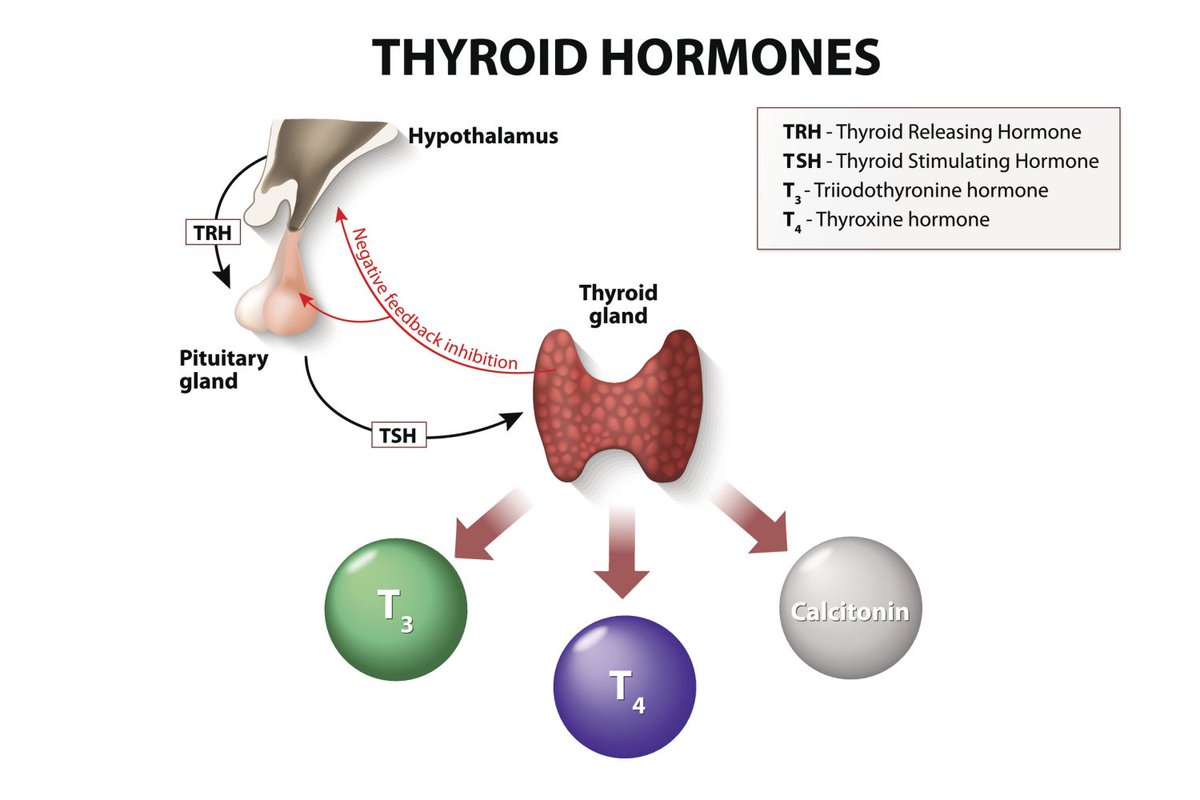
The thyroid is one of the glands that make up the endocrine system.
The glands of the endocrine system produce and store hormones and release them into the bloodstream.
The hormones then travel through the body and direct the activity of the body’s cells.
4
Thyroid hormone is what regulates metabolism and without enough thyroid hormone, most of the body’s functions slow down.
The thyroid gland makes two thyroid hormones:
-Triiodothyronine (T3)
and
-Thyroxine (T4)
T3 is made from T4 and is the more active hormone, directly affecting the tissues.
When (inactive) T4 is released into the bloodstream, it goes to the liver and other organs to be converted into (active) T3.
The thyroid gland makes two thyroid hormones:
-Triiodothyronine (T3)
and
-Thyroxine (T4)
T3 is made from T4 and is the more active hormone, directly affecting the tissues.
When (inactive) T4 is released into the bloodstream, it goes to the liver and other organs to be converted into (active) T3.
5
This conversion is known as deiodination of T4 and is a process which happens primarily within the liver and organs such as the kidneys and small intestines.
This is the primary action of the thyroid and the second one is to regulate circulating calcium levels (by using calcitonin which regulates too much calcium) along with the parathyroid and its PTH (parathyroid hormone which regulates too little calcium).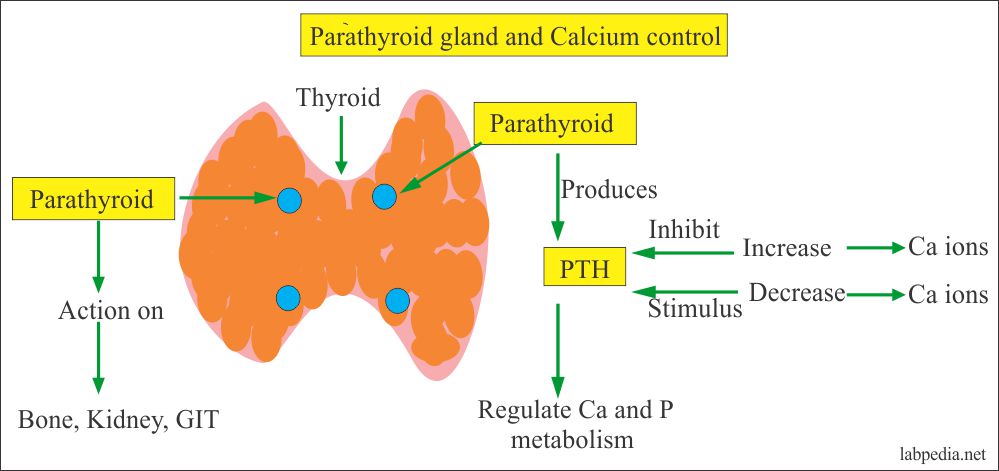
This is the primary action of the thyroid and the second one is to regulate circulating calcium levels (by using calcitonin which regulates too much calcium) along with the parathyroid and its PTH (parathyroid hormone which regulates too little calcium).
6
The thyroid gland directly communicates with the brain, the pituitary, the parathyroid, the pancreas, the liver, the adrenal glands and the intestinal system.
Thyroid hormone production is regulated by thyroid-stimulating hormone (TSH), which is made by the pituitary gland in the brain.
When thyroid hormone levels in the blood are low, the pituitary releases more TSH.
When thyroid hormone levels are high, the pituitary responds by dropping TSH production.
Thyroid hormone production is regulated by thyroid-stimulating hormone (TSH), which is made by the pituitary gland in the brain.
When thyroid hormone levels in the blood are low, the pituitary releases more TSH.
When thyroid hormone levels are high, the pituitary responds by dropping TSH production.
7
Hypothyroidism is a disorder that occurs when the thyroid gland does not make enough thyroid hormone to meet the body’s needs.
There are 11 typical signs of suboptimal thyroid function and hence suboptimal metabolic function.
These are:
#1: Chronic fatigue
#2: Not being hungry in the morning
#3: Low body temperature and slowed heart rate
#4: Thinning hair (which is very different than hair loss)
#5: Dry skin
#6: High LDL
#7: Insomnia
#8: Low libido
#9: Inability to put on muscle mass
#10: High prolactin
#11: Hearing problems
There are 11 typical signs of suboptimal thyroid function and hence suboptimal metabolic function.
These are:
#1: Chronic fatigue
#2: Not being hungry in the morning
#3: Low body temperature and slowed heart rate
#4: Thinning hair (which is very different than hair loss)
#5: Dry skin
#6: High LDL
#7: Insomnia
#8: Low libido
#9: Inability to put on muscle mass
#10: High prolactin
#11: Hearing problems
8
Now a typical thyroid panel test includes:
1)TSH
2)Total T4
3)Total T3
4)Reverse T3
5)Free T4
6)Free T3
7)Thyroid antibodies
Now most people do not have an actual thyroid problem but a conversion problem.
The active thyroid hormones, are converted in small amounts on organs such as the small intestines and the kidneys and in large amounts in the liver (70-80%).
1)TSH
2)Total T4
3)Total T3
4)Reverse T3
5)Free T4
6)Free T3
7)Thyroid antibodies
Now most people do not have an actual thyroid problem but a conversion problem.
The active thyroid hormones, are converted in small amounts on organs such as the small intestines and the kidneys and in large amounts in the liver (70-80%).
9
So, the conversion problem is what needs to be addressed in order to help thyroid performance in a lot of people.
Which are the most common things that cause conversion problems and how can we address them?
First, not having a healthy liver.
x.com/Helios_Movemen…
Which are the most common things that cause conversion problems and how can we address them?
First, not having a healthy liver.
x.com/Helios_Movemen…
10
Second of all, enough thyroid supportive nutrients in the diet.
These are:
0) Sunlight.
1) Some natural copper
2)Selenium which is also required for the synthesis of thyroid hormones
Important note: some people don’t pay attention to vitamin C when it comes to thyroid but vitamin C affects the entire endocrine system and also a deficiency affects selenium metabolism which will directly affect thyroid.
3)Zinc which is required for the synthesis of thyroid hormones but also the function of T3 receptors.
4) Vitamin C
5) Some vitamin A + B12
6)Calcium
If calcium levels drop too low in the blood, parathyroid hormone (PTH) will signal the bones to release calcium into the bloodstream. At the same time, PTH signals the kidneys to release less calcium in the urine.
8) Some iodine (kelp, seafood etc)
7) Some carbohydrates
These are:
0) Sunlight.
1) Some natural copper
2)Selenium which is also required for the synthesis of thyroid hormones
Important note: some people don’t pay attention to vitamin C when it comes to thyroid but vitamin C affects the entire endocrine system and also a deficiency affects selenium metabolism which will directly affect thyroid.
3)Zinc which is required for the synthesis of thyroid hormones but also the function of T3 receptors.
4) Vitamin C
5) Some vitamin A + B12
6)Calcium
If calcium levels drop too low in the blood, parathyroid hormone (PTH) will signal the bones to release calcium into the bloodstream. At the same time, PTH signals the kidneys to release less calcium in the urine.
8) Some iodine (kelp, seafood etc)
7) Some carbohydrates
11
Then we have gut issues.
Part of deiodination happens in the small intestines, so an unhealthy gut will directly affect our thyroid.
This happens because thyroid hormone in a healthy gut reacts with acetic acid which activates it and transforms T4 into T3.
Part of deiodination happens in the small intestines, so an unhealthy gut will directly affect our thyroid.
This happens because thyroid hormone in a healthy gut reacts with acetic acid which activates it and transforms T4 into T3.
12
Then you need to understand the basics of oxidative stress.
Example: pubmed.ncbi.nlm.nih.gov/23219737/
Oxidative stress UNDER THIS CONTEXT for the brain-fried Tik Tok intellectuals, is characterized by the overproduction of reactive oxygen species (ROS), which can induce mitochondrial DNA mutations, damage the mitochondrial respiratory chain, alter membrane permeability, and influence Ca2+ homeostasis and mitochondrial defense systems in general.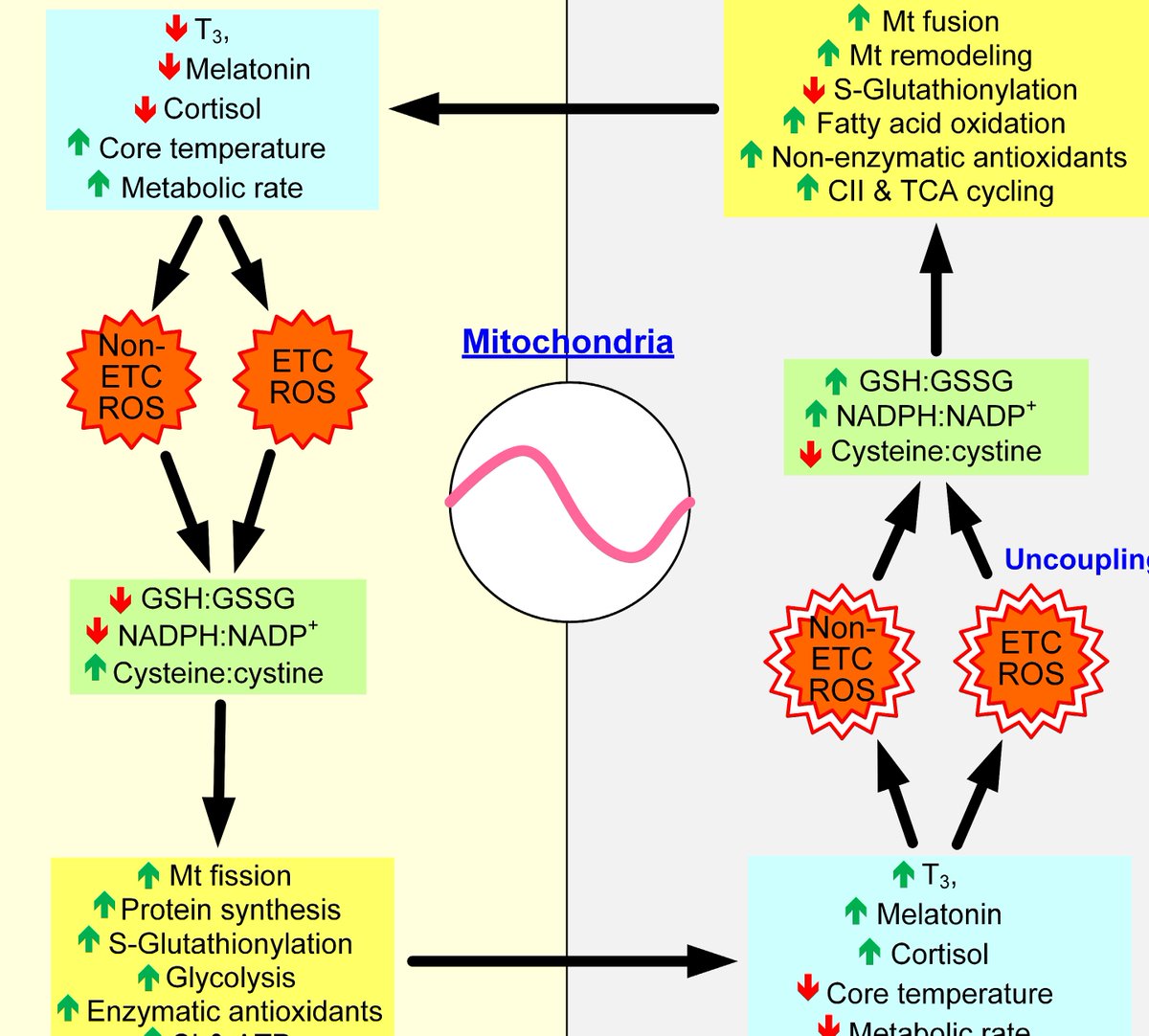
Example: pubmed.ncbi.nlm.nih.gov/23219737/
Oxidative stress UNDER THIS CONTEXT for the brain-fried Tik Tok intellectuals, is characterized by the overproduction of reactive oxygen species (ROS), which can induce mitochondrial DNA mutations, damage the mitochondrial respiratory chain, alter membrane permeability, and influence Ca2+ homeostasis and mitochondrial defense systems in general.
13
So when there is an imbalance between free radical production and their detoxification problems will occur.
Free radicals are unstable compounds that lead to cell destruction and chronic inflammation.
An atom or group of atoms with an unpaired electron is called a free radical.
A free radical can steal electrons from a stable molecule, creating a new free radical and initiating a chain reaction.
Free radicals are unstable compounds that lead to cell destruction and chronic inflammation.
An atom or group of atoms with an unpaired electron is called a free radical.
A free radical can steal electrons from a stable molecule, creating a new free radical and initiating a chain reaction.
14
This electron-grabbing is called oxidation and can set up a chain reaction, creating new free radicals and damaging important molecules along the way, similar to how one falling domino can bring down countless more.
Antioxidants are molecules that can donate an electron to stabilize and neutralize free radicals.
An antioxidant can stop the free radical chain reaction in its tracks by donating an electron and then the antioxidant itself becomes a free radical.
But antioxidants are not very reactive themselves and have processes for quick stabilization.
Free radicals are a natural byproduct of metabolic reactions and of exercise, and it’s normal to have low levels of free radicals in the body.
Antioxidants are molecules that can donate an electron to stabilize and neutralize free radicals.
An antioxidant can stop the free radical chain reaction in its tracks by donating an electron and then the antioxidant itself becomes a free radical.
But antioxidants are not very reactive themselves and have processes for quick stabilization.
Free radicals are a natural byproduct of metabolic reactions and of exercise, and it’s normal to have low levels of free radicals in the body.
15
With enough antioxidants present, free radicals can be kept in check so that they aren’t dangerous.
So free radical development is unavoidable, but human bodies have adapted by setting up and maintaining defense mechanisms that reduce their impact.
The body’s two major defense systems are free radical detoxifying enzymes and antioxidants.
So free radical development is unavoidable, but human bodies have adapted by setting up and maintaining defense mechanisms that reduce their impact.
The body’s two major defense systems are free radical detoxifying enzymes and antioxidants.
16
Free radical detoxifying enzyme systems are responsible for protecting the insides of cells from free radical damage.
An antioxidant is any molecule that can block free radicals from stealing electrons. antioxidants act both inside and outside of cells.
The three major enzyme systems and the chemical reactions they catalyze are:
1)Superoxide Dismutases (SOD).
They are essential for free radical detoxification and these enzymes either have manganese, copper or zinc as a cofactor.
An antioxidant is any molecule that can block free radicals from stealing electrons. antioxidants act both inside and outside of cells.
The three major enzyme systems and the chemical reactions they catalyze are:
1)Superoxide Dismutases (SOD).
They are essential for free radical detoxification and these enzymes either have manganese, copper or zinc as a cofactor.
17
2)Catalase.
These enzymes convert hydrogen peroxide to water and oxygen and finish the detoxification process that SOD starts.
3)Glutathione Peroxidases.
These selenium dependent enzymes also convert hydrogen peroxide to water and oxygen.
There are many different antioxidants in food as well.
Antioxidant vitamins (Vitamin E, Vitamin C) donate their electrons to free radicals to stabilize them for example.
These enzymes convert hydrogen peroxide to water and oxygen and finish the detoxification process that SOD starts.
3)Glutathione Peroxidases.
These selenium dependent enzymes also convert hydrogen peroxide to water and oxygen.
There are many different antioxidants in food as well.
Antioxidant vitamins (Vitamin E, Vitamin C) donate their electrons to free radicals to stabilize them for example.
18
Also, a very effective and free tool that will greatly reduce oxidative stress is grounding or as often is referred to as “earthing”.
The earth contains an endless supply of electrons which can be used in order to neutralize free radicals in the body.
This happens since the surface of the earth possesses a limitless and continuously renewed supply of free or mobile electrons as a consequence of a global atmospheric electric circuit.
A direct earth connection enables both diurnal electrical rhythms are free electrons to flow from the earth to the body and neutralize the positively charged free radicals,
The earth contains an endless supply of electrons which can be used in order to neutralize free radicals in the body.
This happens since the surface of the earth possesses a limitless and continuously renewed supply of free or mobile electrons as a consequence of a global atmospheric electric circuit.
A direct earth connection enables both diurnal electrical rhythms are free electrons to flow from the earth to the body and neutralize the positively charged free radicals,
19
And on a last note, ditching sodium fluoride is also a non negotiable.
That's it.
Leave a like or RT if you found something useful.
x.com/Helios_Movemen…
That's it.
Leave a like or RT if you found something useful.
x.com/Helios_Movemen…
20
For more on various health topics such as gut health, testosterone, skin issues, hair health etc, check this:
fitandball.gumroad.com/l/thesystem23?…
fitandball.gumroad.com/l/thesystem23?…