@culturaltutor: This is The Titan's Goblet, pa...
@culturaltutor
50 views
Feb 25, 2024
1
This is The Titan's Goblet, painted by an artist called Thomas Cole in 1833.
And nearly two hundred years later its true meaning is still a mystery...
And nearly two hundred years later its true meaning is still a mystery...

2
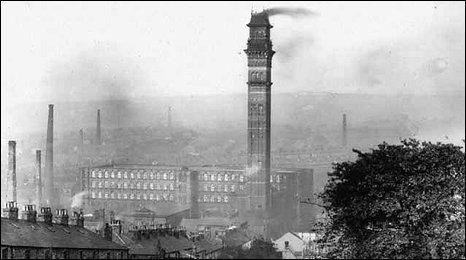
Thomas Cole was born in 1801 in Lancashire, England, which had recently been transformed by the Industrial Revolution into a land of chimneystacks, mills, factories, and smoke.
He taught himself to engrave and paint by reading books and studying the works of other artists.
He taught himself to engrave and paint by reading books and studying the works of other artists.
3
In 1818 his family emigrated to the United States, where they settled first in Ohio and then Philadelphia.
And then, in 1825, came the crucial moment: they moved to Catskill, New York.
There the young Thomas was exposed to the vast, untamed American wilderness...
And then, in 1825, came the crucial moment: they moved to Catskill, New York.
There the young Thomas was exposed to the vast, untamed American wilderness...

4
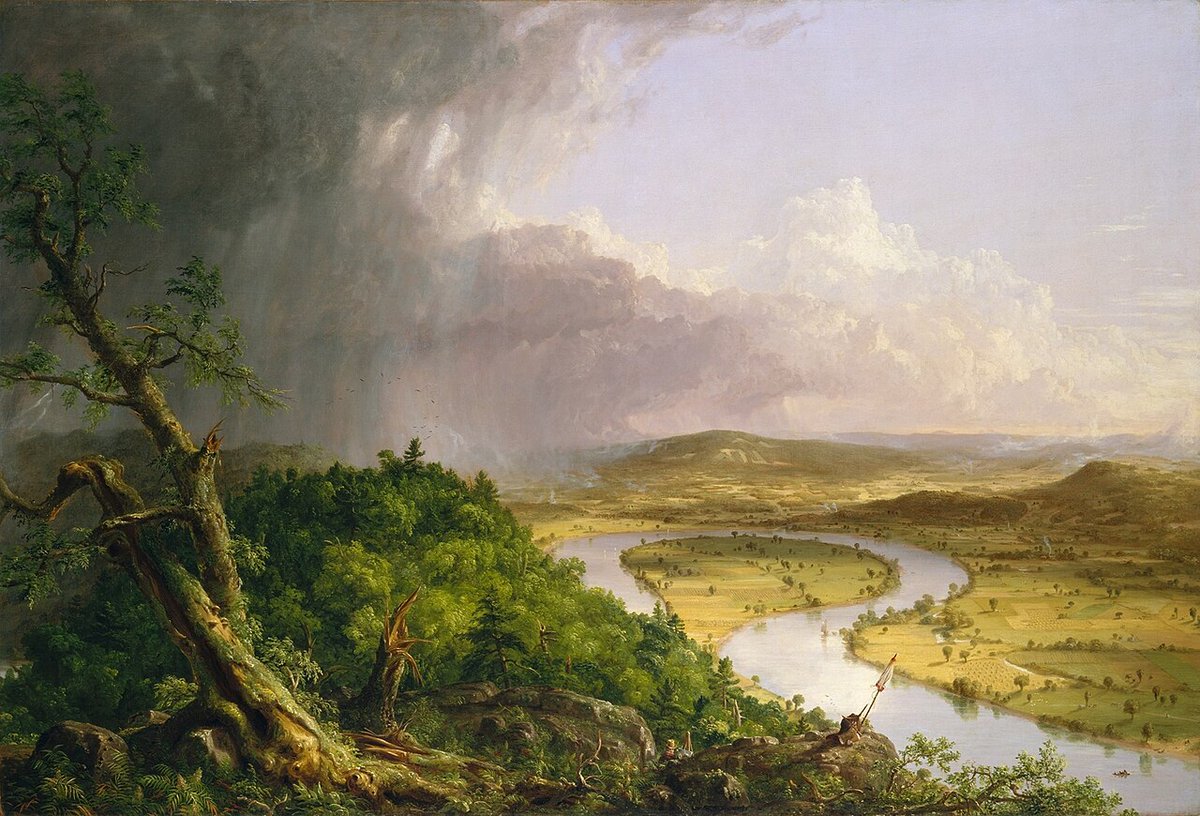
The contrast with his native Lancashire, polluted and darkened by industry, could not have been stronger — perhaps even more than the people who lived there, Cole realised how extraordinary was the beauty of the American landscape.
And so he started painting it.
And so he started painting it.
5
Cole quickly made a name for himself with these landscapes.
Being self-taught his technique was unusual, but Cole found a way of mixing detailed realism with a heightened atmosphere and fantastical scale.
He found patrons, sent his work to exhibitions, and built a career.
Being self-taught his technique was unusual, but Cole found a way of mixing detailed realism with a heightened atmosphere and fantastical scale.
He found patrons, sent his work to exhibitions, and built a career.


6
Romanticism was in full swing by then — an artistic movement which had reacted against the Industrial Revolution and the Enlightenment by embracing the beauty, mystery, and power of nature.
Landscape art wasn't new — but now it became much more dramatic, intense, and stirring.
Landscape art wasn't new — but now it became much more dramatic, intense, and stirring.

7
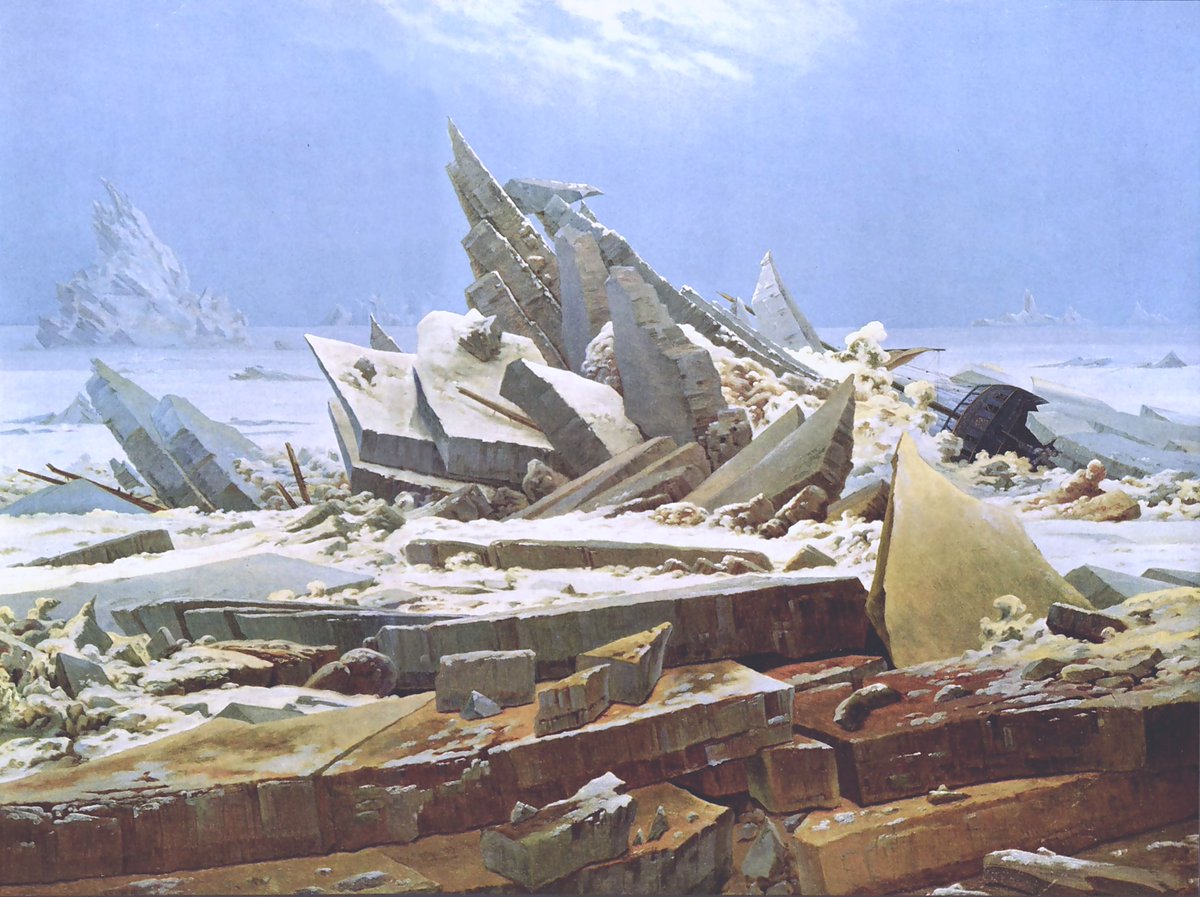
European Romanticism tended to be dark, even bleak; there painters like to portray humanity helpless against the cataclysmic might of nature.
In the work of Caspar David Friedrich we find a warning for scientists and industrialists who want to subdue and rationalise the world.
In the work of Caspar David Friedrich we find a warning for scientists and industrialists who want to subdue and rationalise the world.
8
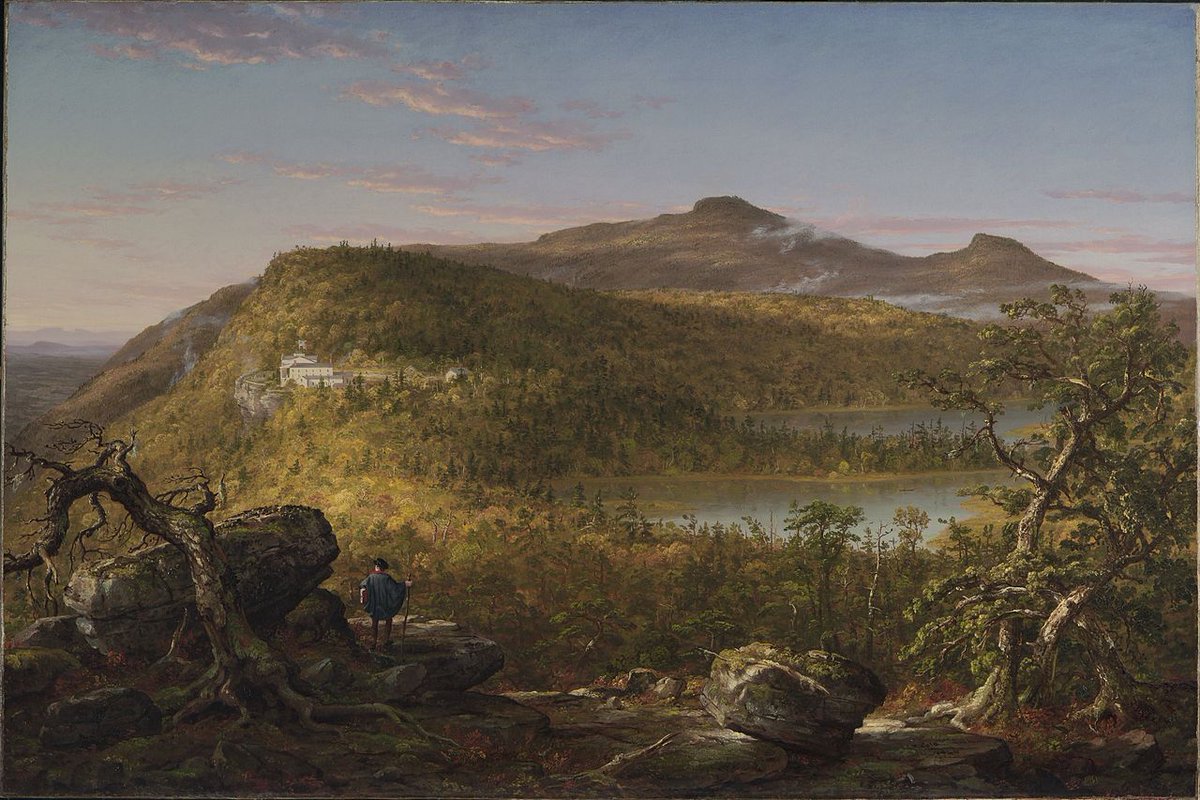
Cole used many of the same stylistic elements as his European counterparts. And, like them, having seen what humans had done to the English countryside, he was a Romantic through and through.
But his art focussed on the beauty of nature rather than its power to destroy.
But his art focussed on the beauty of nature rather than its power to destroy.
9
And, at times, Cole even seems to depict a world in which humans and nature need not be opposite forces.
That dark European Romanticism had seemingly transformed, in America, into a more optimistic movement.
That dark European Romanticism had seemingly transformed, in America, into a more optimistic movement.

10
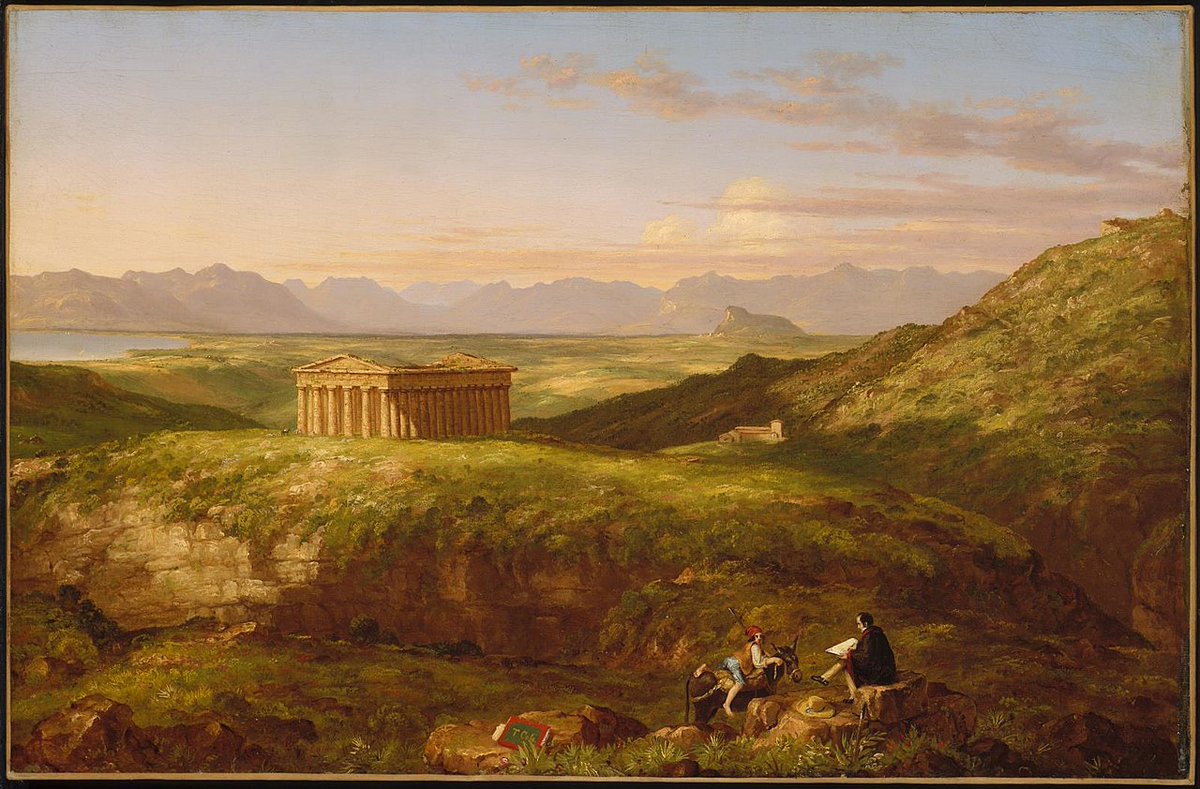
Cole made two return trips to Europe so he could visit Italy, where he painted the Roman ruins of the Campagna, cityscapes of Florence, and Mount Etna in Sicily.
The classic Romantic imagery of ruins, but here more picturesque than foreboding.
The classic Romantic imagery of ruins, but here more picturesque than foreboding.


11
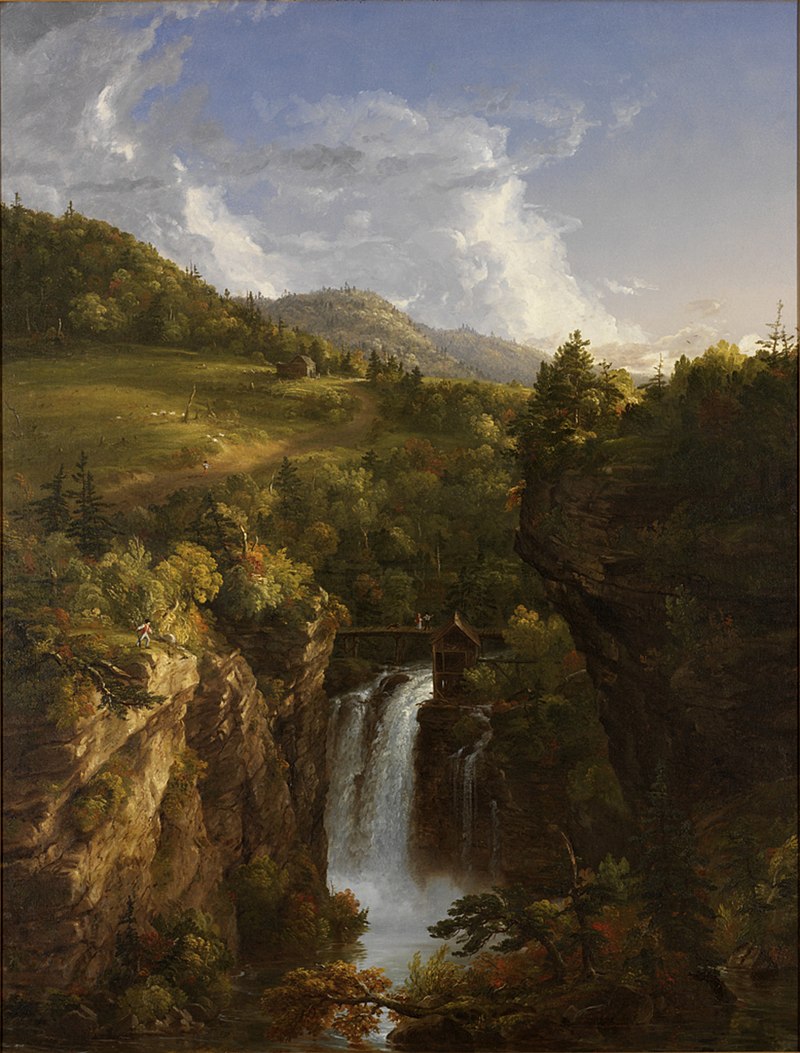
Soon enough Cole started influencing other painters and even took on students of his own.
And so the Hudson River School was born, starting in the 1840s and continuing right through to the end of the 19th century.
A positive, uniquely American form of Romanticism.
And so the Hudson River School was born, starting in the 1840s and continuing right through to the end of the 19th century.
A positive, uniquely American form of Romanticism.

12
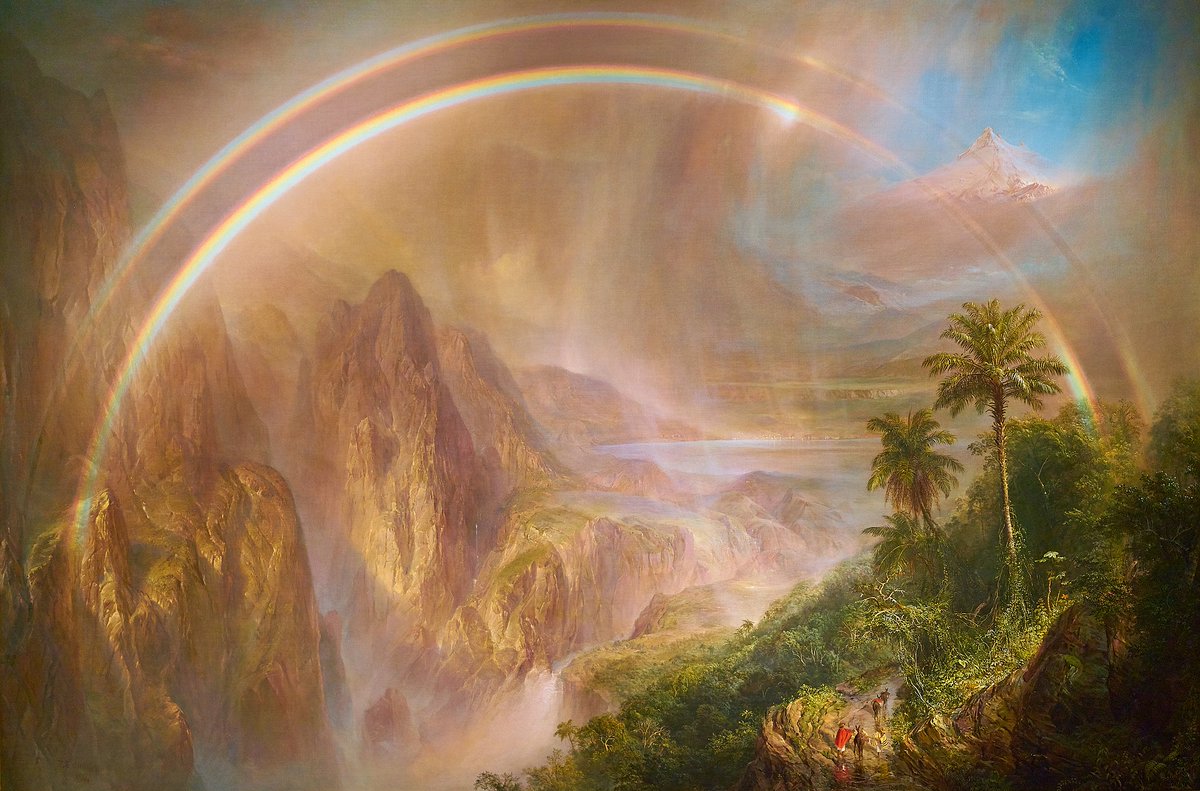
Cole's star pupil was Frederic Edwin Church, who would by far exceed him as the greatest American landscape artist of the 19th century.
Church learned much from Cole, but he corrected his teacher's faults and achieved an unprecedented level of precision, beauty, and balance.
Church learned much from Cole, but he corrected his teacher's faults and achieved an unprecedented level of precision, beauty, and balance.
13
So Thomas Cole was, if not the best landscape artist of his era in America, ultimately the most influential.
But he did not only paint the real wilderness; Cole was an imaginative and literary — even visionary — man, who drew inspiration from many sources...
But he did not only paint the real wilderness; Cole was an imaginative and literary — even visionary — man, who drew inspiration from many sources...

14
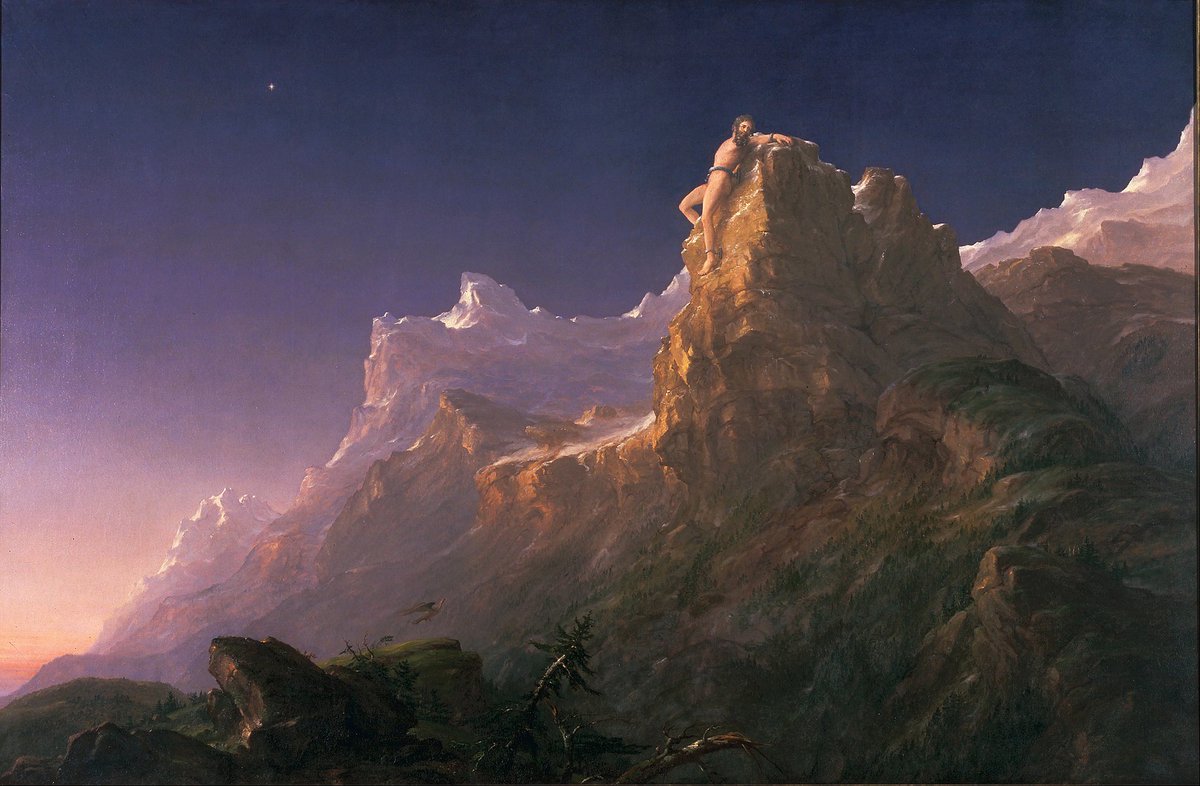
Whether the Romantic poetry of Lord Byron, Greek legend, or the Bible, Cole was always interested in imaginary and fictional landscapes of immense mythological power.
Here Cole depicts Prometheus, chained to a rock for having stolen fire from the gods and given it to humanity.
Here Cole depicts Prometheus, chained to a rock for having stolen fire from the gods and given it to humanity.
15
Cole might even be at his best in these mythological landscapes, freed from the constraints of a real wilderness — which, as we have seen, his pupils could paint better.
As in The Expulsion from the Garden of Eden, they are a better match for Cole's powerful imagination:
As in The Expulsion from the Garden of Eden, they are a better match for Cole's powerful imagination:

16
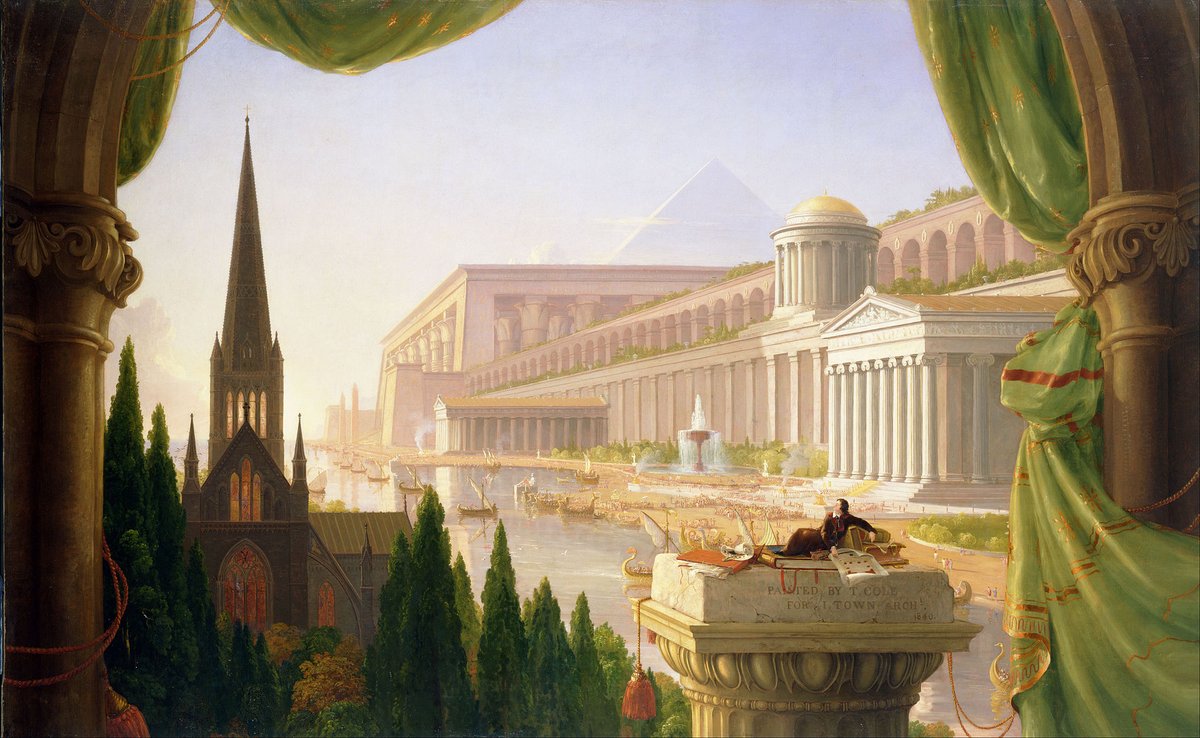
And Cole did not only draw from existing myths and stories — he also created his own, whether through vast and complex allegories or simply by letting his imagination run free, as he did with The Architect's Dream:
17
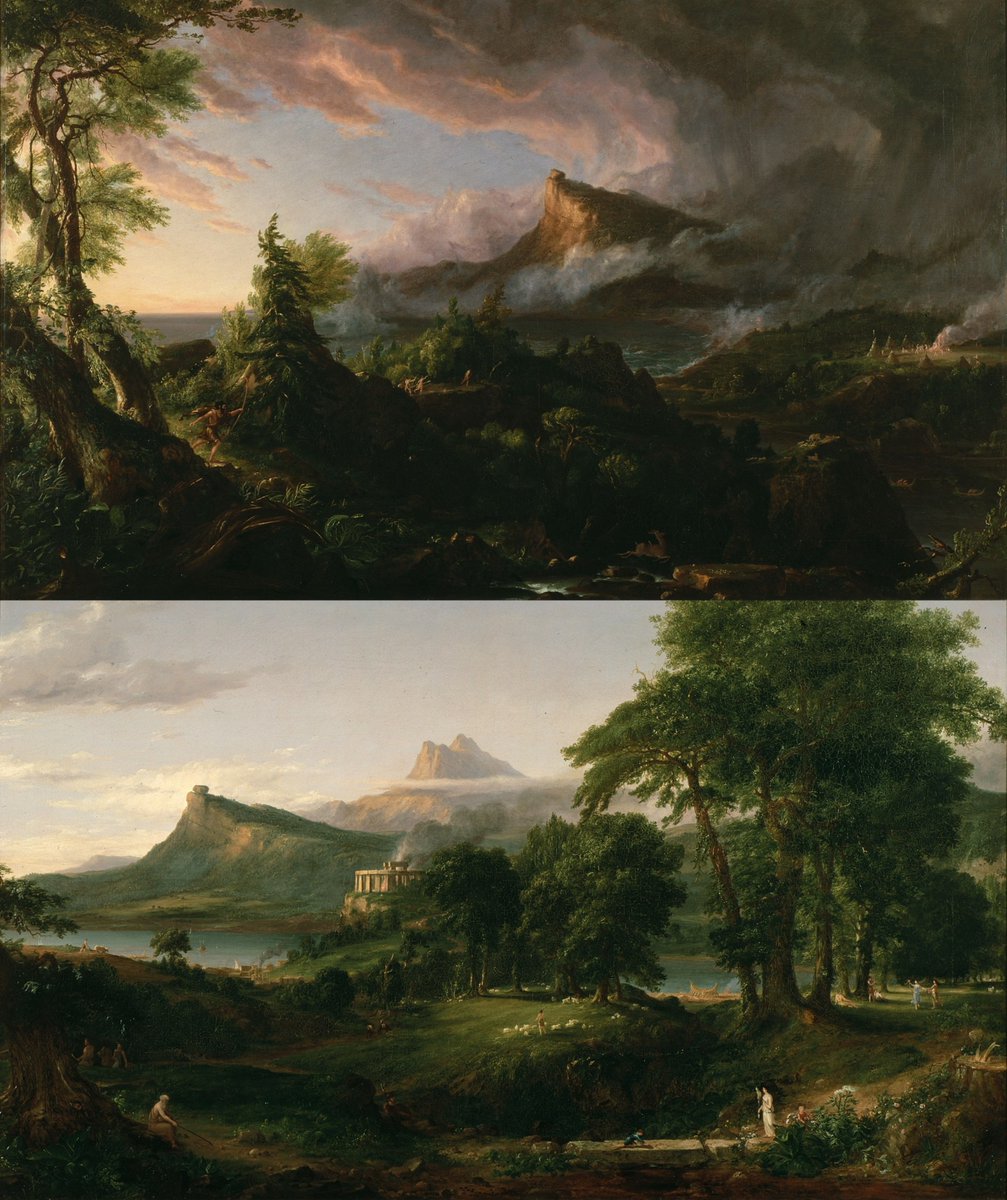
His masterpiece in this regard was a five part series called The Course of Empire, which depicted the rise and fall of an ancient civilisation from its origins to its zenith and final, total destruction.
Each painting shows the same place at a different point in time.
Each painting shows the same place at a different point in time.
18
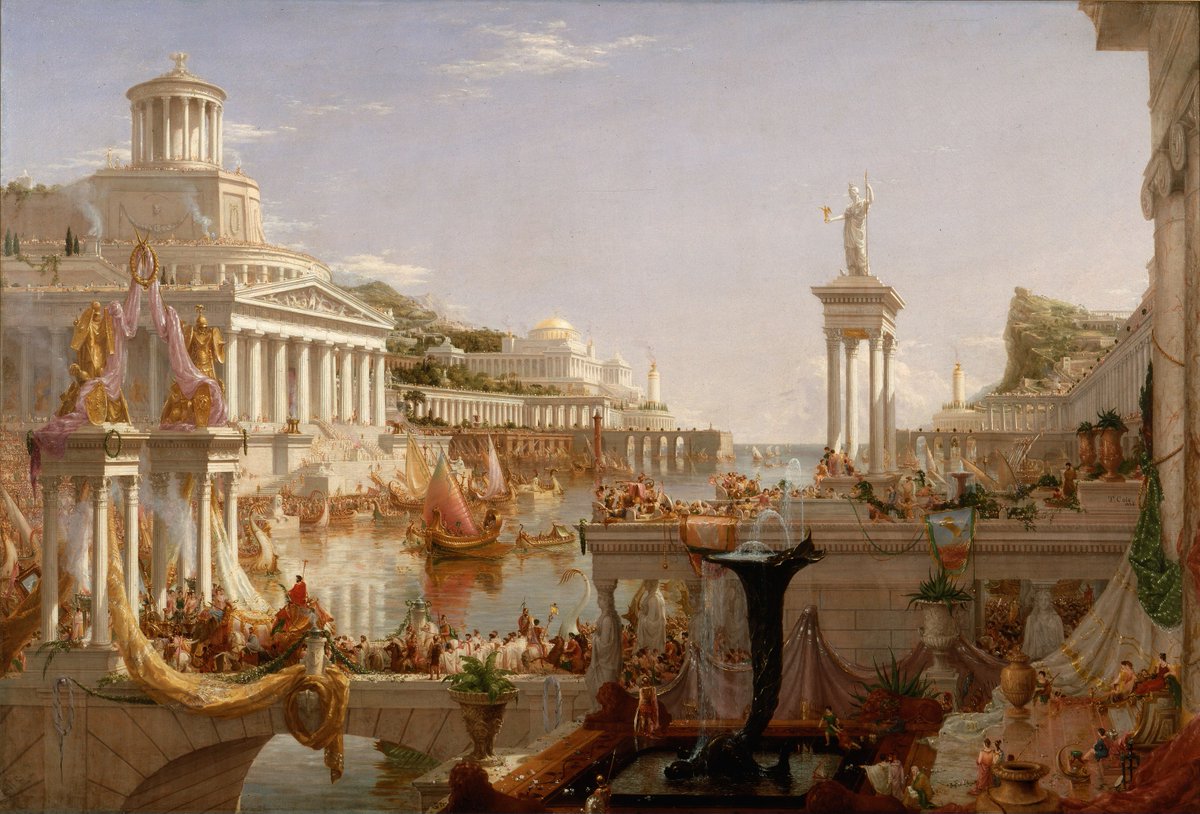
Those first two stages (each filled with details that reveal the evolution of this allegorical civilisation) are followed by The Consummation of Empire.
The whole valley has been transformed into a glorious city of marble — but there are signs of decadence and decline.
The whole valley has been transformed into a glorious city of marble — but there are signs of decadence and decline.
19
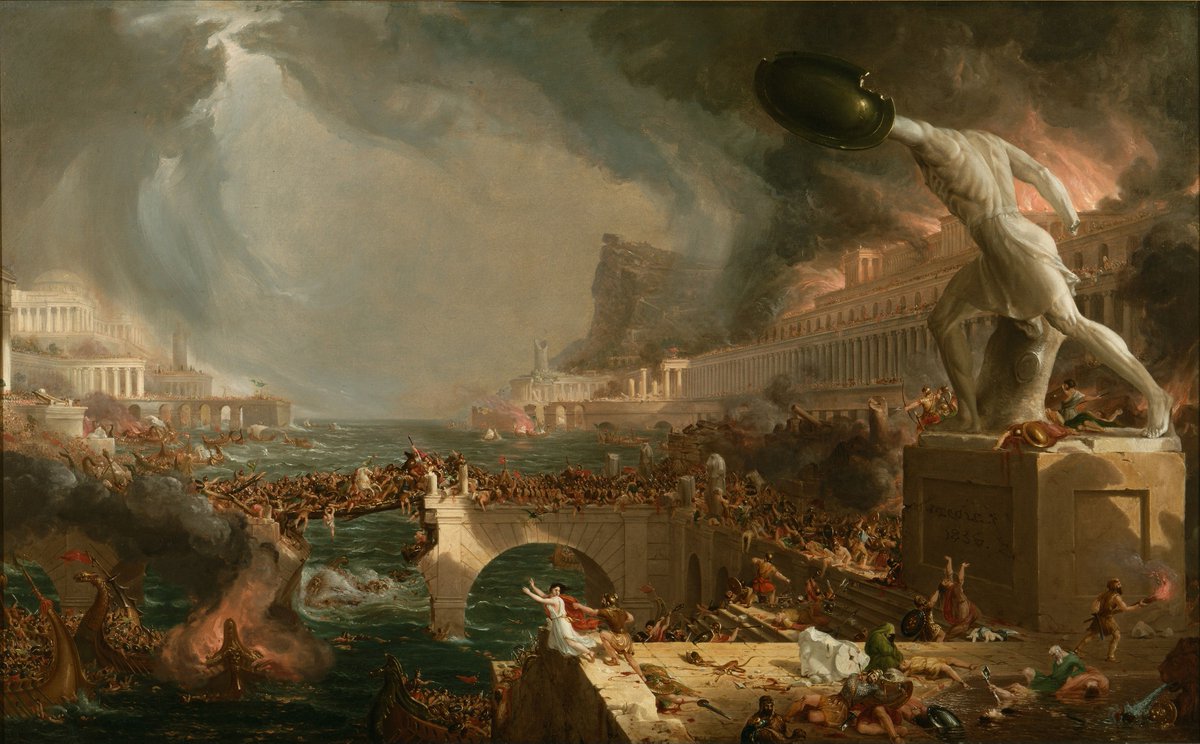
And so next comes Cole's most famous painting, The Destruction of Empire, in which the great civilisation that became too proud is now torn to pieces, apparently both by civil war and natural catastrophe.
It is, Cole would have said, the way of all things.
It is, Cole would have said, the way of all things.
20
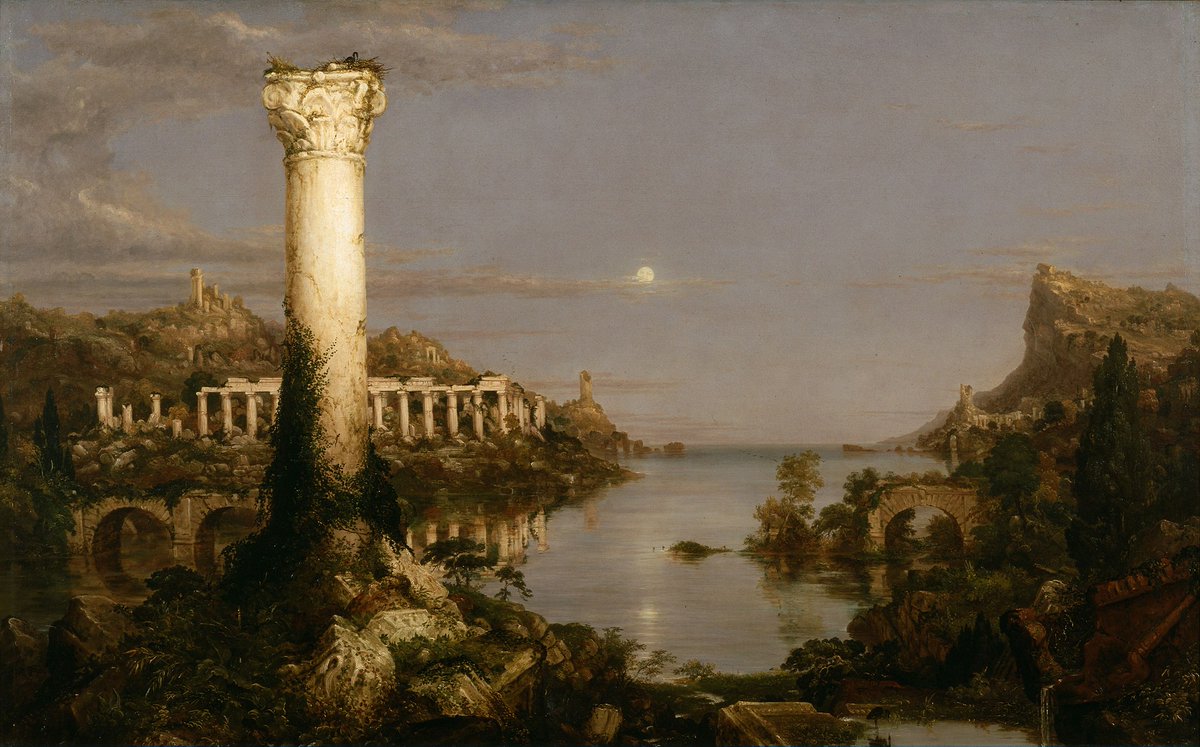
The Course of Empire, which was inspired by the poetry of Byron, is almost like a Romantic manifesto. Its pathos — that all must inevitably fade, however glorious or powerful — was crucial to the Romantic imagination.
As we see in the final painting, Desolation.
As we see in the final painting, Desolation.
21
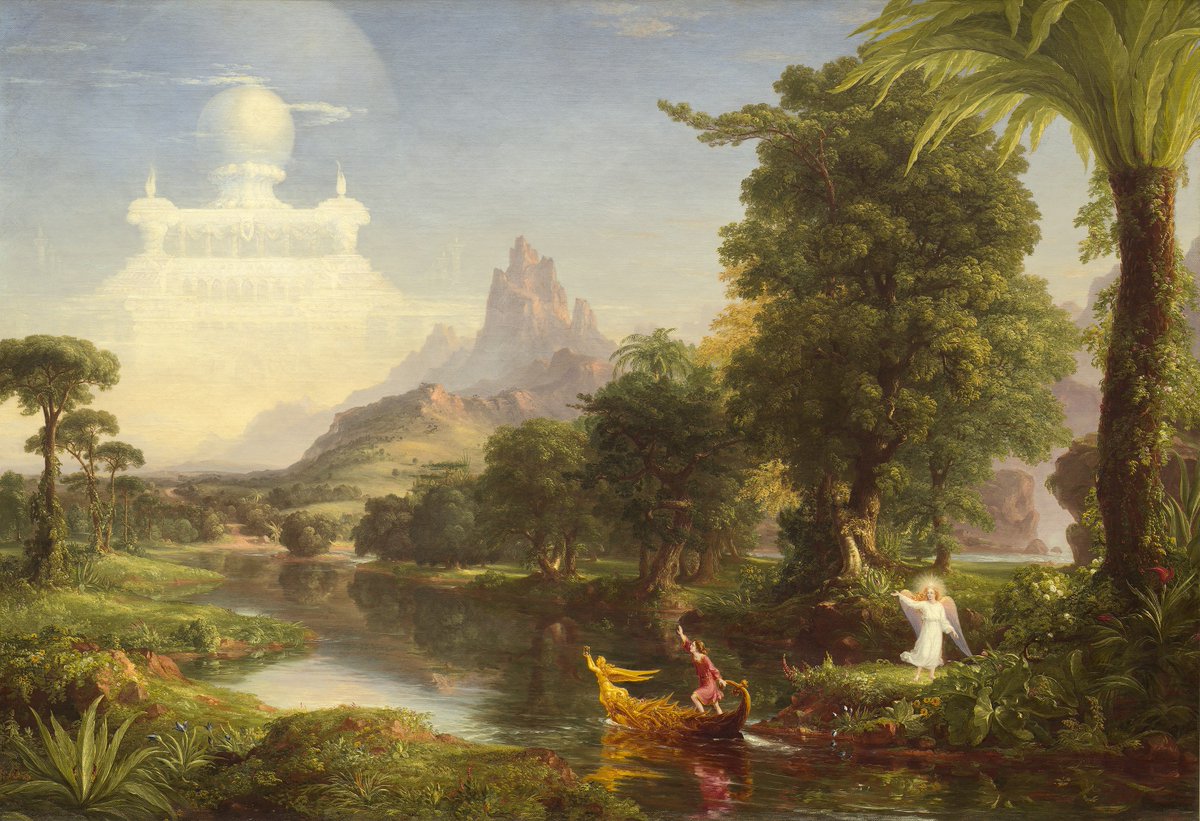
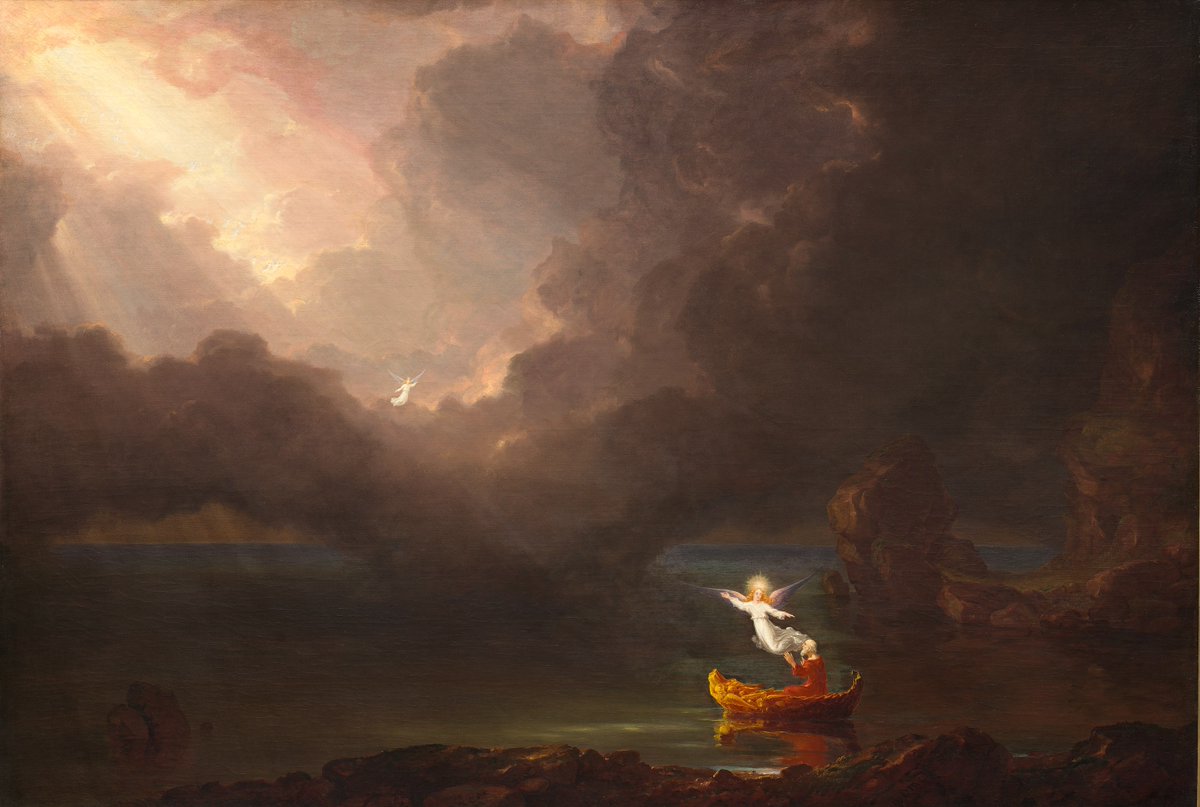
Cole made another allegorical series in 1842, this time rather more mysterious and symbolic, called The Voyage of Life.
We see four allegories for the different stages of our lives: Childhood, Youth, Manhood, and Old Age.
We see four allegories for the different stages of our lives: Childhood, Youth, Manhood, and Old Age.


22
Which brings us, finally, to The Titan's Goblet.
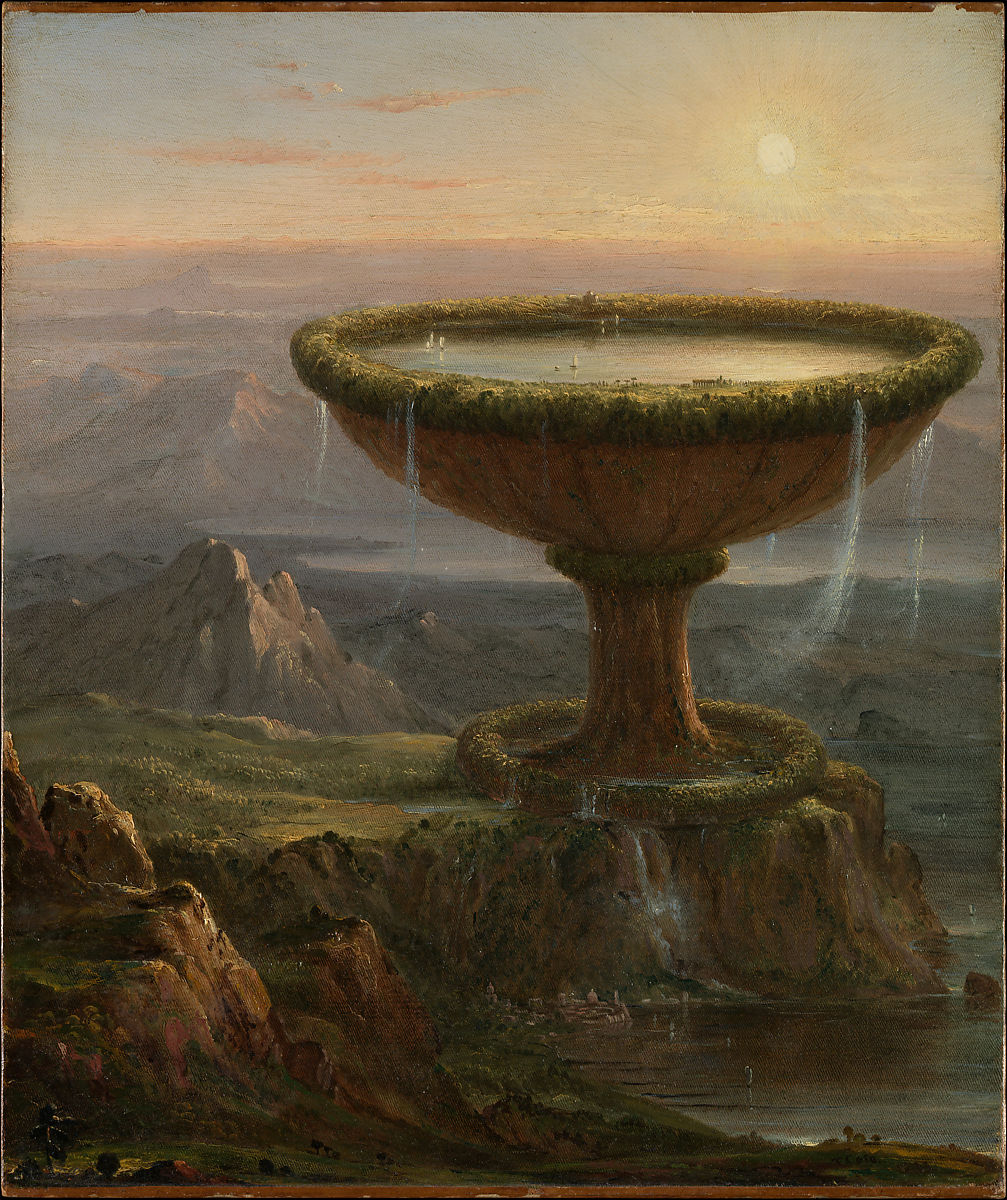
What inspired it and what it means we can only guess, but suffice to say there were few (if any) paintings of the era so strangely fantastical, so vividly imaginative, so visually and conceptually striking, as this.
What inspired it and what it means we can only guess, but suffice to say there were few (if any) paintings of the era so strangely fantastical, so vividly imaginative, so visually and conceptually striking, as this.
23
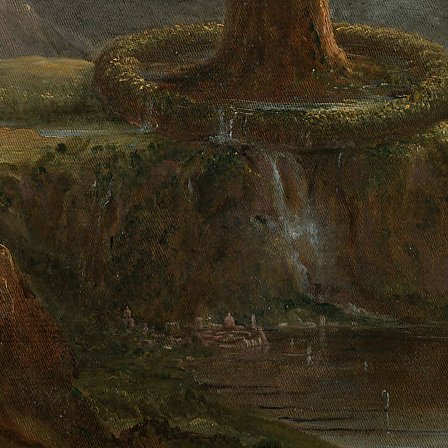
Cole employed all the skills he had learned from painting landscapes, not least conjuring a sense of colossal scale and populating it with tiny details and scenes to tell his story.
Notice the temples along the forested rim of the goblet, and the ships on in its peaceful waters:
Notice the temples along the forested rim of the goblet, and the ships on in its peaceful waters:

24
Then, where the water has overflown and cascaded to the ground, another civilisation emerging; this is a triumph of pure, cosmological mythology.
And it is an enduring, enigmatic masterpiece of the Romantic Era.
And it is an enduring, enigmatic masterpiece of the Romantic Era.
25
And here is Thomas Cole himself.
A self-taught artist who saw the American landscape with fresh eyes and influenced a generation of artists thereafter.
And, even more than that, surely one of the most imaginative landscape artists there has ever been.
A self-taught artist who saw the American landscape with fresh eyes and influenced a generation of artists thereafter.
And, even more than that, surely one of the most imaginative landscape artists there has ever been.
