@SahilBloom: How to stop procrastinating....
@SahilBloom
42 views
Jan 10, 2024
1
How to stop procrastinating.
The 5-Step Method:
The 5-Step Method:
2
I've spent most of my life as a procrastinator. This meant I only worked on the urgent—rarely the long-term important.
But I found a way to fight back.
The 5-Step Method:
(1) Awareness
(2) Deconstruction
(3) Plan Creation
(4) Stake Creation
(5) Action
Let's walk through each:
But I found a way to fight back.
The 5-Step Method:
(1) Awareness
(2) Deconstruction
(3) Plan Creation
(4) Stake Creation
(5) Action
Let's walk through each:
3
Awareness
As with most mental hurdles, the first step is becoming aware of the problem.
Procrastination is defined as the action of postponing or delaying something.
It's not new.
Ancient Greek philosophers called it Akrasia—acting against your better judgement.
As with most mental hurdles, the first step is becoming aware of the problem.
Procrastination is defined as the action of postponing or delaying something.
It's not new.
Ancient Greek philosophers called it Akrasia—acting against your better judgement.
4
We procrastinate when it's easier to delegate a task to our future self.
I categorize procrastination-prone tasks into two types:
• Type I: Big & Scary
• Type II: Small & Boring
Type I is the most damning.
These are the long-term important projects—the growth creators.
I categorize procrastination-prone tasks into two types:
• Type I: Big & Scary
• Type II: Small & Boring
Type I is the most damning.
These are the long-term important projects—the growth creators.
5
Schedule a daily assessment of your day-to-day actions.
Ask a few questions:
• Am I proud of the actions I am taking on these big projects?
• Am I doing what I should be doing?
If you answer “no”—great! You're aware of your procrastination and can proceed to the next step...
Ask a few questions:
• Am I proud of the actions I am taking on these big projects?
• Am I doing what I should be doing?
If you answer “no”—great! You're aware of your procrastination and can proceed to the next step...
6
Deconstruction
The driver of Type I procrastination is that big & scary projects are...well...big & scary.
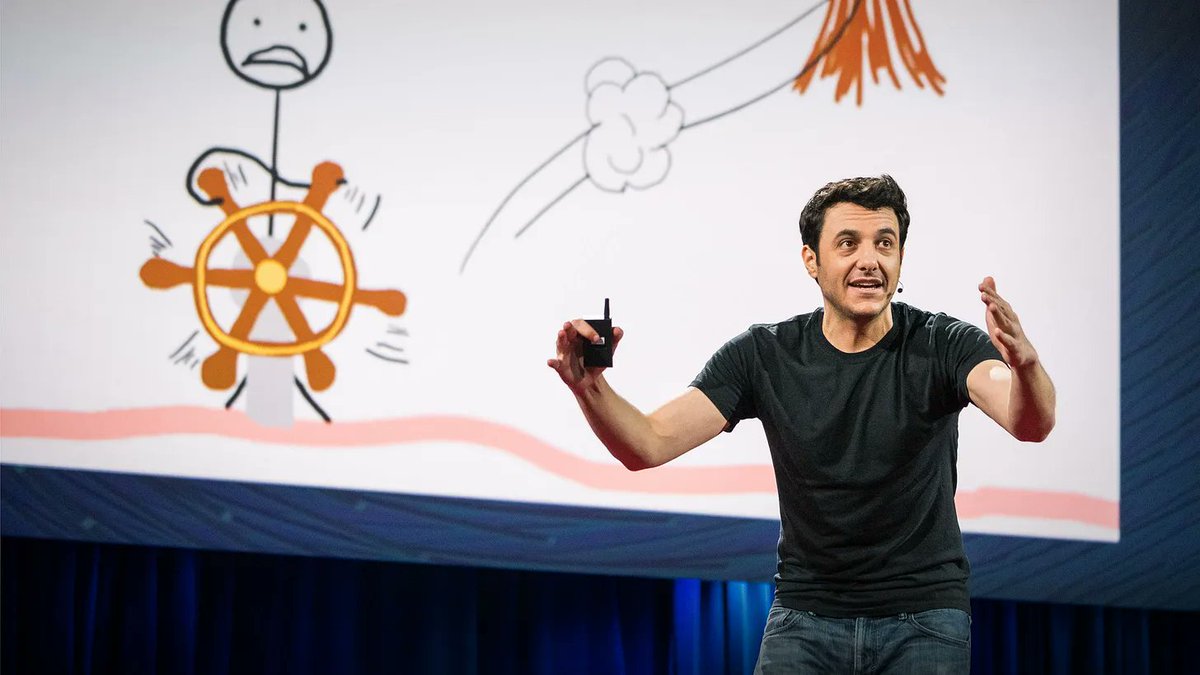
In his famous Ted Talk, @waitbutwhy uses the example of a senior thesis.
If you define the project as "write my 100-page thesis" you are pre-wired for procrastination.
The driver of Type I procrastination is that big & scary projects are...well...big & scary.
In his famous Ted Talk, @waitbutwhy uses the example of a senior thesis.
If you define the project as "write my 100-page thesis" you are pre-wired for procrastination.
7
It's critical to deconstruct the big and scary project into small and incremental tasks.
In the example of the senior thesis, the tasks might be:
• Gather important research
• Annotate key pieces
• Craft thesis outline
• Etc.
The Goal: Convert intimidating into manageable.
In the example of the senior thesis, the tasks might be:
• Gather important research
• Annotate key pieces
• Craft thesis outline
• Etc.
The Goal: Convert intimidating into manageable.
8
Plan Creation
Now you need a plan of attack.
The plan should be:
• Specific—exactly what you'll do
• Time Bound—when you'll do it
Important: We tend to overestimate what we can do in a day—lean towards less ambitious time bounds to give yourself easy wins early.
Now you need a plan of attack.
The plan should be:
• Specific—exactly what you'll do
• Time Bound—when you'll do it
Important: We tend to overestimate what we can do in a day—lean towards less ambitious time bounds to give yourself easy wins early.
9
I find it helpful to create a project document.
Write down the specific tasks under each major deconstructed pillar of the project.
Write down your timeline for starting and completing each.
Once complete, hide the future pillars to avoid intimidation.
Focus on the present.
Write down the specific tasks under each major deconstructed pillar of the project.
Write down your timeline for starting and completing each.
Once complete, hide the future pillars to avoid intimidation.
Focus on the present.
10
Stake Creation
This is perhaps the most important—and most overlooked—step of the framework.
You can create—and raise—stakes as a means to driving better outcomes.
A few ideas:
• Public declaration
• Social pressure
• Reward or penalty
This is perhaps the most important—and most overlooked—step of the framework.
You can create—and raise—stakes as a means to driving better outcomes.
A few ideas:
• Public declaration
• Social pressure
• Reward or penalty
11
Public Declaration: State your intentions publicly. It makes it harder to flake!
Social Pressure: Plan to meet a friend somewhere to do the initial work.
Reward or Penalty: Plan a reward or penalty if you do/don't do what you're supposed to.
Mental games can be very effective.
Social Pressure: Plan to meet a friend somewhere to do the initial work.
Reward or Penalty: Plan a reward or penalty if you do/don't do what you're supposed to.
Mental games can be very effective.
12
Action
Action is the hardest part—specifically the first action, the first motion.
But remember: a body in motion tends to stay in motion.
@waitbutwhy calls it the Dark Woods vs. Dark Playground Decision.
@JamesClear calls it the Procrastination-Action Line.
It's important!
Action is the hardest part—specifically the first action, the first motion.
But remember: a body in motion tends to stay in motion.
@waitbutwhy calls it the Dark Woods vs. Dark Playground Decision.
@JamesClear calls it the Procrastination-Action Line.
It's important!


13
To get started, you can try the following:
• Plan a "sync session”—meet a friend for that initial movement (h/t @Julian).
• Reward movement—attach a small reward to completing initial movement (e.g. a walk).
• Lion technique—commit to a short sprint followed by rest.
• Plan a "sync session”—meet a friend for that initial movement (h/t @Julian).
• Reward movement—attach a small reward to completing initial movement (e.g. a walk).
• Lion technique—commit to a short sprint followed by rest.
14
The hardest part is just getting started.
Give yourself a quick win—winning is contagious. Small wins become big wins.
It’s a winning flywheel.
Make sure to work in line with your energy. Schedule focused sprints during times of day when your creative energy is abundant.
Give yourself a quick win—winning is contagious. Small wins become big wins.
It’s a winning flywheel.
Make sure to work in line with your energy. Schedule focused sprints during times of day when your creative energy is abundant.
15
The entire framework is intended to be dynamic and iterative.
Constantly assess and tweak your plan and process. Find new ways to raise the stakes and get moving.
It's not perfect, but this framework will help you bust through the walls of procrastination.
I guarantee it.
Constantly assess and tweak your plan and process. Find new ways to raise the stakes and get moving.
It's not perfect, but this framework will help you bust through the walls of procrastination.
I guarantee it.
16
To summarize, the 5-Step Method for how to stop procrastinating:
(1) Awareness
(2) Deconstruction
(3) Plan Creation
(4) Stake Creation
(5) Action
Follow me @SahilBloom for more.
This will be built out into a procrastination guide. Subscribe to get it! getrevue.co/profile/sahilb…
(1) Awareness
(2) Deconstruction
(3) Plan Creation
(4) Stake Creation
(5) Action
Follow me @SahilBloom for more.
This will be built out into a procrastination guide. Subscribe to get it! getrevue.co/profile/sahilb…
17
Oh, and if you’ve been living under a rock and somehow haven’t seen it, the @waitbutwhy Ted Talk on procrastination is SO GOOD. youtube.com/watch?v=arj7oS…
18
I should have seen the “BOOKMARKING THIS FOR LATER” jokes coming.
🤣🤣🤣
🤣🤣🤣
19
Wonderful visualization of this method by @SachinRamje!

20
Here’s a 1 tweet summary…
The 5-Step Method:
(1) Awareness—become aware you are procrastinating.
(2) Deconstruction—break the big into the small.
(3) Plan Creation—create a real plan of attack.
(4) Stake Creation—establish public stakes.
(5) Action—create initial movement.
The 5-Step Method:
(1) Awareness—become aware you are procrastinating.
(2) Deconstruction—break the big into the small.
(3) Plan Creation—create a real plan of attack.
(4) Stake Creation—establish public stakes.
(5) Action—create initial movement.
21
Even my Mom is trolling me…
